Incorporating water-efficient commercial laundry systems is crucial for businesses in healthcare, hospitality, and textile rental industries, especially as drought conditions continue to worsen. In fact, over 400 million cubic meters of water are polluted annually by laundry processes, accounting for 20% of the world’s available freshwater.
For industries like healthcare, hospitality, textile rental, and government laundries, implementing water-efficient solutions supports sustainability goals and helps lower utility costs and maintain service quality. So, how does a commercial laundry system drought solution work effectively?
This article explores various water-efficient commercial laundry system types and practices that can drive efficiency in your high-volume laundry operations.
Key Takeaways
Implementing water-efficient commercial laundry systems reduces water consumption, helping laundries meet sustainability goals and lower utility costs in high-volume environments.
Optimizing load sizes and sorting garments based on soil level reduces water waste, improving throughput and ensuring on-time performance.
Energy-efficient machines and water recycling systems help reduce energy usage and overall water consumption, significantly lowering operating costs in large laundries.
Using biodegradable and low-suds detergents reduces chemical waste and water usage, contributing to sustainability goals while maintaining cleaning performance in industrial laundries.
Water-efficient systems reduce environmental impact and provide measurable financial savings, enhance yield improvement, and improve cost per unit in commercial laundry operations.
Impact of Commercial Laundry Systems on Water Conservation
Commercial laundry systems are notorious for consuming large amounts of water, especially in high-volume industries such as healthcare, hospitality, and textile rental. Water-efficient systems are a key part of minimizing environmental impact while improving cost per unit and operational efficiency.
The following impacts show how modern systems reduce water consumption:
Reduced Water Consumption: Advanced water-efficient washers use less water per cycle, significantly lowering overall water usage without compromising performance.
Water Recycling: Implementing closed-loop water systems can allow laundries to reuse rinse water, reducing the amount of fresh water required in each cycle.
Optimized Water Usage: Machines equipped with sensors can detect load size and soil level, adjusting water usage accordingly to maximize efficiency and minimize waste.
For VPs of Operations and Plant Managers, investing in water-efficient systems directly leads to improved throughput, reduced water consumption, and lower utility costs.
Heavy manual work in soil sorting, loading/unloading, and garment sorting often drives up labor costs and creates variability in productivity. Softrol’s material handling solutions, including automated soil sort systems and RFID-enabled garment sorting, streamline these processes, significantly reducing manual labor while improving pounds per labor hour (PLH).
Next, let's see how efficient load management helps minimize water usage while maintaining throughput and wash quality.
Smart Load Management for Commercial Laundry Systems
Smart load management is a critical strategy for optimizing water usage in commercial laundry operations. It ensures that every cycle uses the appropriate amount of water based on load size, fabric type, and soil level.
Full Loads vs. Partial Loads
Managing full and partial loads effectively is essential for water efficiency. Running full loads helps ensure that each cycle maximizes water usage, while partial load optimization prevents water waste.
Maximizing Water Efficiency: Full loads ensure that each wash cycle uses the least amount of water per garment.
Reducing Waste: Smart machines adjust water usage for partial loads to ensure water is not wasted.
Optimized Labor: By running full loads, labor resources are better allocated, improving pounds-per-labor-hour.
For Plant Managers and Engineering Managers, managing full and partial loads based on real-time data improves yield and reduces scrap rates.
Sorting for Water Efficiency
Sorting laundry based on fabric type, soil level, and washing requirements ensures that each load is processed efficiently, optimizing water usage.
Fabric-Specific Cycles: Garments requiring intensive washing (e.g., medical linens) can be treated separately to use more water efficiently.
Soil Level-Based Sorting: Items with less soil are washed using less water, improving water conservation.
Increased Throughput: Sorting allows for quicker wash cycles and minimizes rewash rates, optimizing turnaround time.
Also Read: Overview of Softrol Chemical Systems
Production Managers can use sorting to improve overall throughput and water efficiency, resulting in reduced operational costs. But the right drought-friendly equipment can cut water usage while improving productivity and reducing utility costs.
Choosing Drought-Friendly Commercial Laundry Equipment
For VPs of Operations and Maintenance Managers, investing in water-efficient equipment offers long-term savings and helps meet sustainability goals.
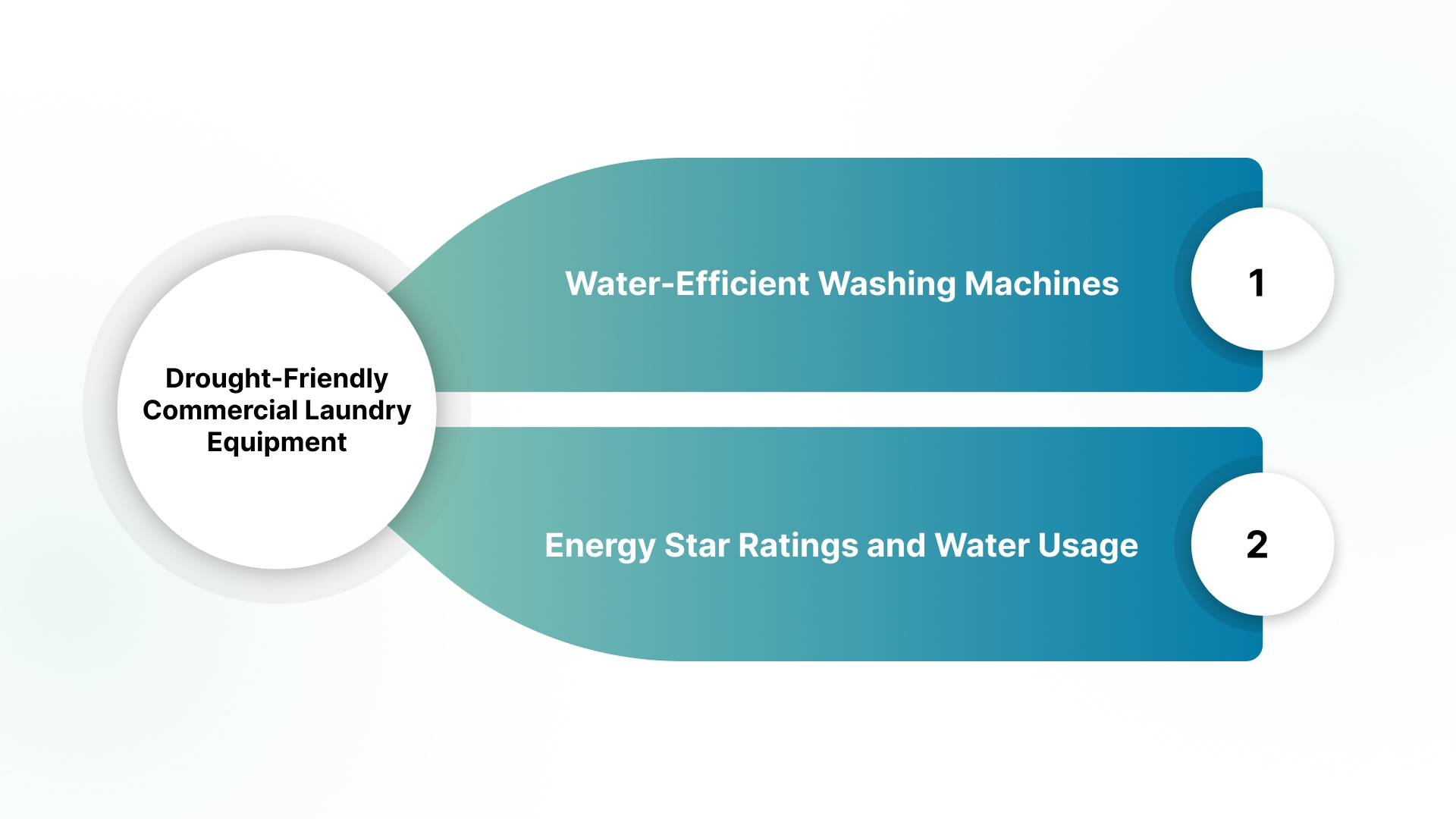
Water-Efficient Washing Machines
Investing in high-efficiency washers can significantly reduce water consumption while maintaining performance, which is especially important for textile rental and government laundries handling large volumes of linens.
Low-Water Machines: Modern machines use advanced water management technology to minimize water use without compromising wash quality.
Smart Sensors: Machines with sensors detect load size and soil level, adjusting water usage accordingly.
Cost per Unit: Though initial costs may be higher, these machines result in significant long-term savings in water and energy costs.
Explore these brochures to see how Softrol’s real-time data tracking and automated material handling reduce operational downtime and optimize water usage in high-volume laundry operations.
Plant Managers can use these machines to improve cost per unit, enhance throughput, and reduce downtime by increasing machine uptime.
Energy Star Ratings and Water Usage
Choosing Energy Star-rated machines ensures that your facility minimizes both water and energy consumption, which contributes to lower utility bills and a smaller carbon footprint.
Energy Star Certification: Machines with this rating use less water and energy, improving overall energy efficiency.
Water Usage Labels: Machines with low water consumption ratings allow you to select equipment optimized for water-saving.
Meeting Sustainability Goals: These machines help facilities meet both water conservation and energy-saving goals.
Also Read: Softrol Catalyst Dual Inject System
For VPs of Operations and Engineering Managers, Energy Star machines provide cost savings and help meet both water and energy efficiency goals. Next, let’s look at the water-saving techniques to optimize washing cycles.
Water-Saving Washing Techniques for Commercial Laundry Systems
In addition to equipment, adopting water-saving washing techniques can further reduce water usage in commercial laundries.
Cold Water Washing
Washing with cold water can provide substantial savings in both water and energy consumption, making it an excellent choice for industries like healthcare and hospitality.
Energy and Water Savings: Cold water washing eliminates the need for heated water, which reduces energy use and water consumption.
Fabric Preservation: Cold water washing helps preserve the quality of linens and uniforms, reducing scrap rates and extending garment life.
Reduced Carbon Footprint: This method contributes to carbon footprint reduction, making it ideal for businesses aiming to meet sustainability targets.
In plant management, cold water washing helps improve yield, reduce scrap rates, and lower utility costs.
Quick Wash and Eco Cycles
Quick wash and eco cycles are designed to reduce water and energy usage, especially for lightly soiled items. These cycles optimize washing performance while conserving resources.
Shorter Wash Cycles: Quick wash programs use less water and energy, providing fast service for lightly soiled garments.
Eco Cycles: Many machines feature eco-cycles that use less water and energy without sacrificing cleaning performance.
Optimized Throughput: These cycles are ideal for textile rental businesses that need to process high volumes quickly.
Also Read: Softrol’s UtiliPulse System
By implementing quick wash and eco cycles, Engineering Managers can reduce downtime and improve turnaround time, all while saving water. However, choosing the right eco-friendly detergents can significantly improve water efficiency.
Drought-Conscious Detergent Choices for Commercial Laundry Systems
Selecting the right detergent is crucial to both water efficiency and cleaning performance. Eco-friendly detergent choices can reduce water consumption while maintaining high cleaning standards.
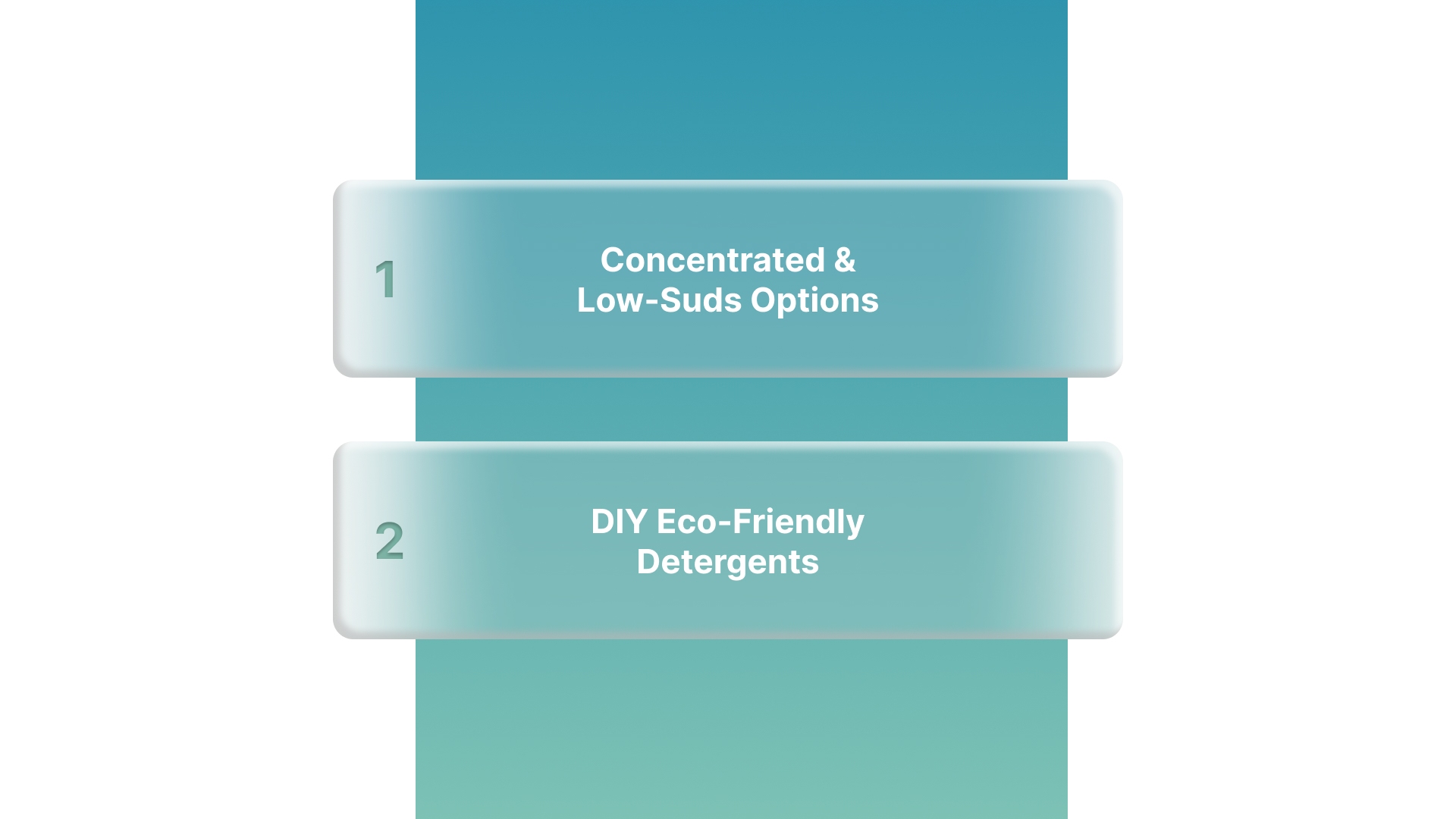
Concentrated and Low-Suds Options
Concentrated and low-suds detergents require less water to rinse, helping reduce water usage in high-volume laundries.
Concentrated Detergents: These detergents are more efficient, requiring less water and reducing chemical consumption while still achieving optimal cleaning performance.
Low-Suds Detergents: These are specifically designed for high-efficiency washers, using less water during rinse cycles.
Reduced Chemical Consumption: Using concentrated detergents reduces the need for excess chemicals, which lowers overall operational costs.
For VPs of Operations and Plant Managers, choosing the right detergent can improve cost per unit and chemical efficiency, ensuring both environmental and cost savings.
Also Read: Total Plant Management with Softrol Systems
DIY Eco-Friendly Detergents
For smaller operations or those seeking cost-effective solutions, DIY eco-friendly detergents offer an alternative to commercial options, with the added benefit of being customizable.
Homemade Detergents: Eco-conscious businesses can make their own detergents using natural ingredients to reduce chemical waste and water consumption.
Biodegradable Options: Choosing biodegradable, concentrated detergents ensures that water used in washing is cleaner when recycled, reducing environmental impact.
Cost-Effective: Homemade detergents are typically less expensive than commercial alternatives, offering a sustainable and budget-friendly solution.
Inconsistent chemical dosing and wash formulas often lead to rewash, increasing costs and reducing linen lifespan. Softrol addresses this with its Wash Aisle Systems and Catalyst Chemical Systems, which ensure precise chemical dosing and automate wash cycle coordination. This results in more consistent wash quality, reducing chemical waste, lowering rewash rates, and improving operational efficiency. For Plant Managers, this means higher productivity and cost savings without compromising linen quality.
Now that we’ve covered detergents and techniques, let’s explore water-efficient systems that help you stay resilient during droughts.
Types of Water-Efficient Commercial Laundry Systems for Drought Resilience
Adopting water-efficient systems tailored to the specific needs of your laundry operation can enhance drought resilience while improving overall efficiency. Here’s a breakdown of the different types of commercial laundry systems, how they operate, and the specific use cases across industries like healthcare, hospitality, textile rental, and industrial laundries.
Laundry System Type | How It Operates | Use-Cases Across ICP Industries |
Tunnel Washers | Tunnel washers use a continuous process to wash large volumes of textiles. Water and detergent are circulated through the system for multiple wash stages. | - Textile rental companies processing large volumes of linens. - Hospitals and VA facilities managing patient linens. - Industrial laundries with high throughput demands. - Hotels requiring constant clean linen for guests. |
Ozone Laundry Systems | Ozone laundry systems use ozone gas to sanitize fabrics while using cold water, reducing water and energy consumption. | - Healthcare and hospitality industries focused on pathogen control with cold water use. - Hospitals requiring a higher level of sanitation. - Hotels that need to sanitize linens quickly with minimal water use. |
Continuous Batch Washers | These systems operate in a batch style but allow for continuous processing of textiles, optimizing water and detergent use. | - Large-scale industrial laundries needing high-volume, high-throughput capabilities. - Textile rental companies that provide linens on a large scale. - Government laundries processing large quantities of workwear. |
Washer-Extractors | These machines operate like large washing machines but also extract water during the wash cycle, reducing the amount of water used for rinsing. | - Uniform and workwear rental laundries with smaller-scale operations. - Healthcare facilities where garments need thorough washing but on a smaller scale. - Textile rental businesses serving smaller clients with varied garment types. |
Water Recycling Systems | These systems capture and filter rinse water for reuse, reducing the need for fresh water in subsequent wash cycles. | - Textile rental and industrial laundries aiming to reduce water footprint. - Hospitals and VA facilities that manage large volumes of laundry with limited water access. - Hotels and resorts seeking sustainable practices for large laundry operations. |
Bottlenecks in material flow, such as soil sort backlogs and rail congestion, reduce throughput and increase overtime costs. Softrol’s Laundry Rail Systems and Virtual Rail technology resolve these issues by automating textile transport and providing real-time visibility of item locations. This ensures a smooth flow from intake to wash aisle and storage, improving tunnel utilization and increasing on-time performance.
Understanding the environmental footprint of your laundry operations is key to improving sustainability and reducing water consumption.
What is the Environmental Impact of Commercial Laundry Systems?
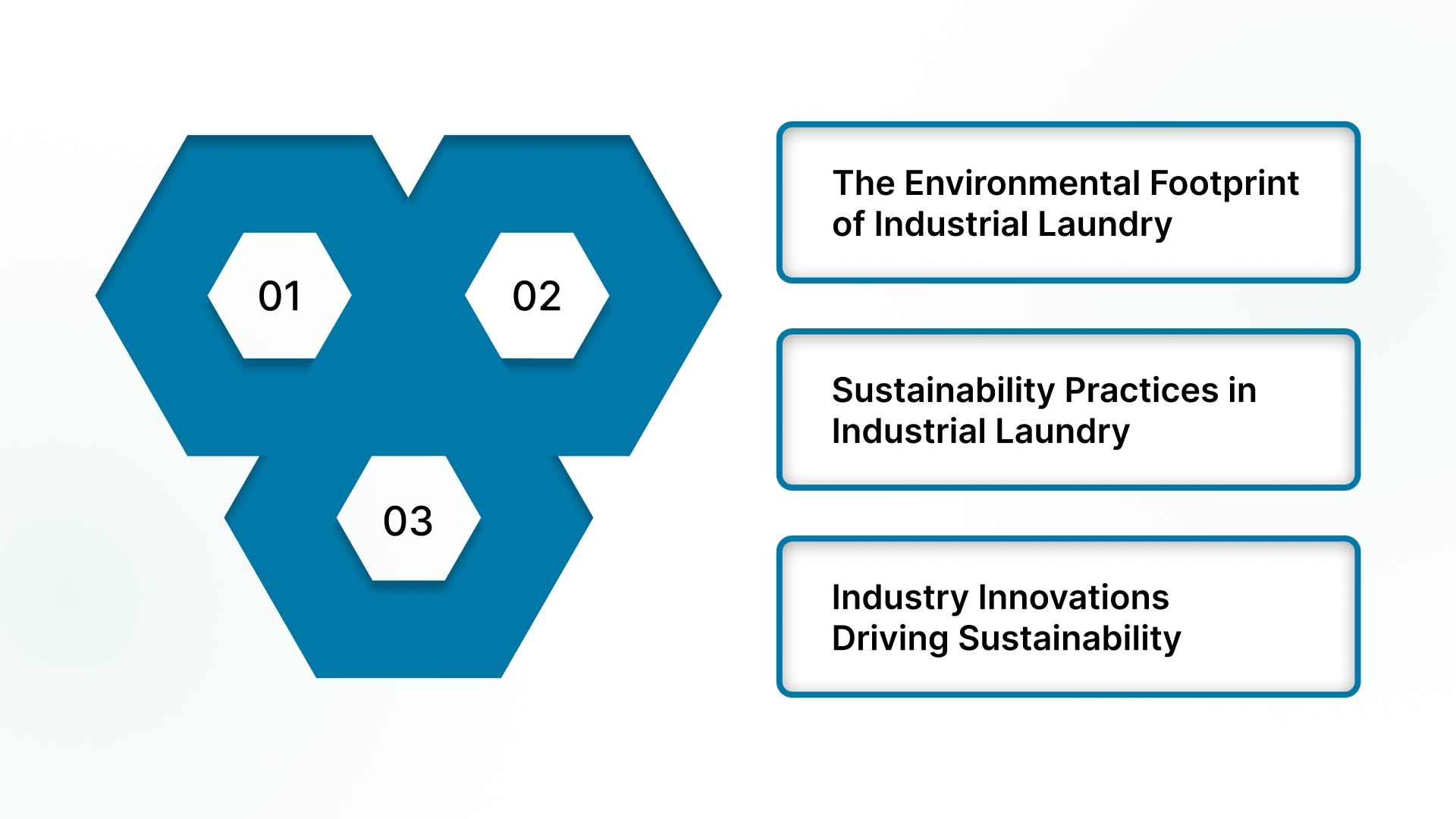
Commercial laundries have a significant environmental impact, especially in terms of water consumption, energy use, and chemical waste. Here’s a breakdown of the environmental footprint and sustainability practices in industrial laundry:
1. The Environmental Footprint of Industrial Laundry
Commercial laundry operations are large consumers of water, energy, and chemicals. Identifying strategies to reduce these consumptions can improve both sustainability and cost-efficiency.
Water Consumption: Laundry operations typically consume a significant amount of water per cycle. Adopting water-efficient washers and closed-loop water systems can reduce water use while maintaining cleaning standards.
Saves thousands of gallons of water per year in high-volume laundries.
Ensures sustainable water management, especially in drought-prone areas.
Energy Use: Laundry equipment, especially dryers and washers, consumes large amounts of energy. Transitioning to energy-efficient machines and renewable energy sources like solar power helps cut energy consumption.
Energy Star-rated equipment reduces energy bills and carbon emissions.
Renewable energy integration reduces dependence on fossil fuels and lowers operating costs.
Need a replacement part? Softrol Systems offers immediate support to help you find and order the exact parts for your commercial laundry system.
Chemical Usage: Traditional industrial detergents can be harmful to the environment. Biodegradable detergents and eco-friendly additives minimize the chemical impact on the environment.
Reduces harmful chemical runoff into water systems.
Ensures compliance with environmental regulations and helps preserve local ecosystems.
2. Sustainability Practices in Industrial Laundry
Sustainability in industrial laundry focuses on reducing resource consumption, improving energy efficiency, and transitioning to greener chemicals. These practices ensure that laundries meet their operational goals while minimizing their environmental impact.
Water Conservation Strategies: High-efficiency washers and water reuse systems allow for significant water savings while meeting high standards of cleanliness and hygiene.
Closed-loop water systems recycle water used in rinsing, further reducing water usage.
Facilitates cost savings by reducing water and sewer fees, particularly in high-volume settings like textile rental and healthcare laundries.
Energy-Efficient Technologies: Transitioning to energy-efficient dryers and washers and incorporating solar power helps laundries cut their energy consumption, reducing their carbon footprint.
Solar panels can offset energy costs, particularly for laundries operating on a large scale (e.g., industrial laundries).
Use of variable-speed motors adjusts energy consumption based on demand, improving performance and reducing unnecessary energy use.
Green Chemicals: The use of biodegradable detergents and eco-friendly additives in industrial laundries reduces chemical waste and the environmental impact of laundry operations.
These alternatives ensure non-toxic, biodegradable detergents that don’t harm aquatic ecosystems.
Provides safer working conditions for employees by reducing exposure to harsh chemicals.
3. Industry Innovations Driving Sustainability
Innovation plays a key role in driving sustainability within commercial laundries. Smart systems, recycling, and the circular economy are transforming how laundries use water and energy, pushing industries towards a more sustainable future.
Advanced Laundry Systems: Smart washing machines equipped with IoT connectivity optimize water and energy use by adjusting settings based on the load size, fabric type, and soil level.
Reduces water and energy usage by automatically adjusting wash cycles based on real-time data.
Helps track KPIs like water consumption per load and energy savings, leading to improved sustainability.
Circular Economy: The circular economy model encourages the reuse and recycling of both water and textiles, significantly reducing waste and promoting sustainability.
Water recycling systems allow laundries to reuse rinse and wash water, reducing reliance on fresh water.
Textiles that are damaged or discarded are recycled, ensuring that materials are reused rather than sent to landfills.
Smart Data Analytics for Sustainability: New laundry systems with advanced analytics capabilities collect real-time data on water usage, energy consumption, and chemical efficiency, enabling laundries to optimize their sustainability efforts.
Provides actionable insights to improve water efficiency, energy savings, and chemical management.
Allows for precise tracking of performance metrics like scrap rate and cost per unit, improving operational efficiency and aligning with sustainability goals.
Hybrid Renewable Energy Systems: Integrating solar and wind power into commercial laundry systems allows laundries to reduce dependence on grid electricity, decreasing carbon emissions and utility costs.
Supports green energy initiatives for large-scale laundries in hospitality or healthcare sectors.
Facilitates compliance with regulatory requirements for sustainable business practices.
Also Read: LOIS provides vital, real-time data from anywhere!
Softrol’s RFID solutions can help you enhance water efficiency, streamline material handling, and improve productivity while reducing waste.
Optimize Water Efficiency and Sustainability with Softrol’s RFID Solutions for Industrial Laundries
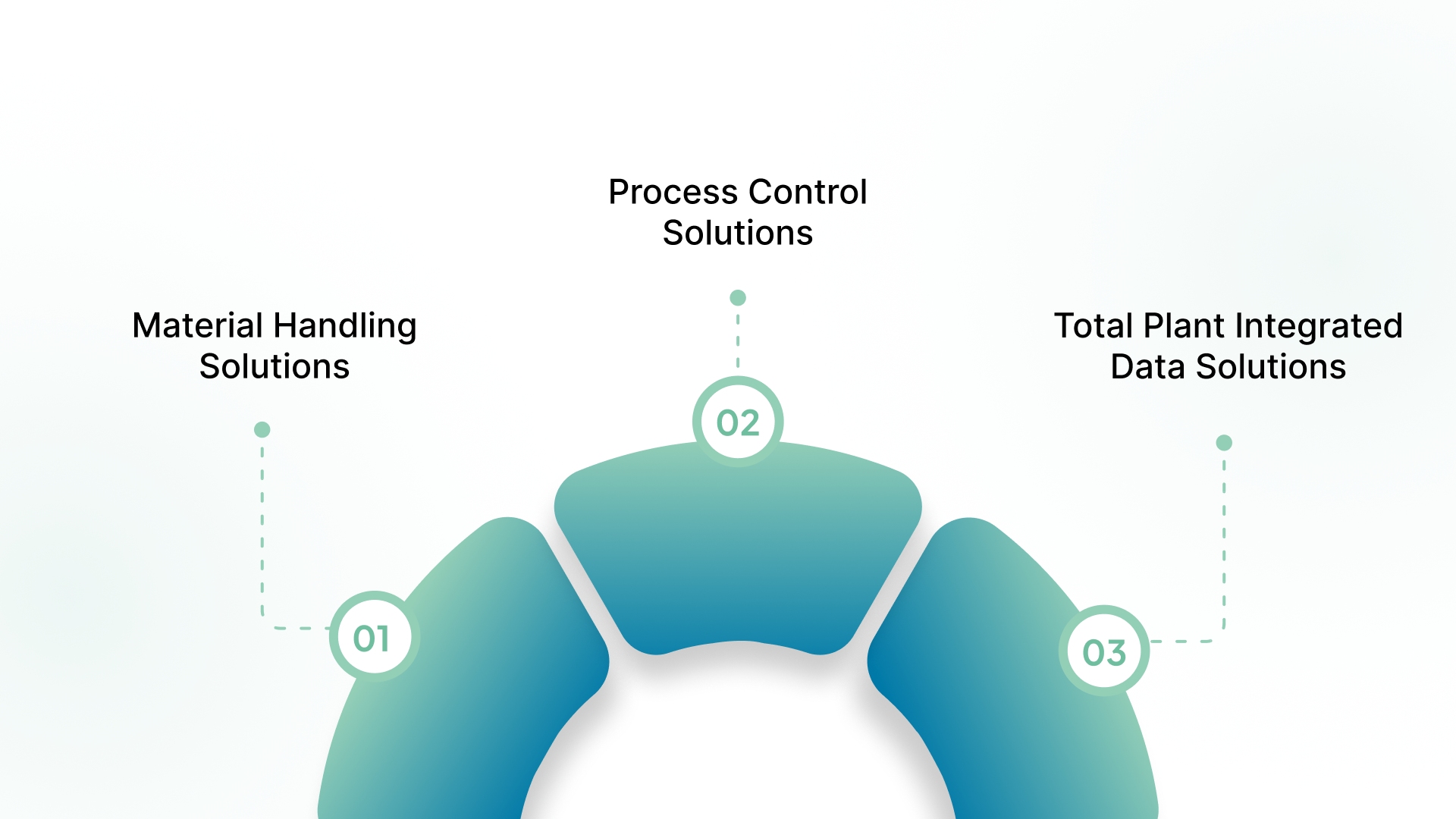
Softrol’s industrial laundry RFID solutions provide tailored systems designed to enhance water efficiency and streamline operations for high-volume laundries, especially in the face of rising drought concerns. With a focus on process optimization, inventory control, and data visibility, Softrol helps businesses in healthcare, hospitality, and textile rental reduce water usage, improve throughput, and cut operational costs.
Here are 3 Softrol solutions built to address your unique needs, from reducing chemical waste to optimizing wash cycles.
1. Material Handling Solutions
Softrol’s material handling systems reduce water consumption by improving linen sorting and transport efficiency, ensuring better throughput and water usage across high-volume laundries.
Soil Sort Systems: Automates classification of soiled goods by fabric type, customer, or wash requirement, improving sorting efficiency and reducing manual labor.
Laundry Rail Systems: Monorail systems optimize material flow, reduce labor, and free up floor space, enhancing throughput without wasting water on inefficient handling.
Garment Sort Systems: Automatically sorts garments, reducing staffing and minimizing manual handling, thus optimizing overall water usage across sorting areas.
Virtual Rail: Software visualizes the movement of goods in real-time, helping supervisors identify bottlenecks, improve process flow, and optimize water usage across departments.
2. Process Control Solutions
Softrol’s process control solutions ensure consistent wash quality with optimized chemical use and water-saving wash cycles, lowering costs and improving overall sustainability in your operations.
Wash Aisle Systems: Automates wash cycle sequencing and integrates chemical systems, reducing water usage by optimizing washing efficiency and ensuring consistent wash formulas.
Catalyst Chemical Systems: Flow-meter-based chemical dosing optimizes water use by ensuring accurate chemical delivery, reducing waste, and ensuring consistent textile quality.
3. Total Plant Integrated Data Solutions
Softrol’s data solutions provide real-time visibility into water consumption, wash cycle efficiency, and throughput, enabling plant managers and VPs of Operations to make data-driven decisions for improved water conservation.
PulseNet Productivity Systems (PPS): Monitors water usage alongside labor productivity, enabling managers to optimize staffing and improve efficiency while minimizing water waste.
Plant Management Information Systems: Aggregates data from material handling, wash aisles, and utilities to provide a comprehensive view of water efficiency, helping identify and address inefficiencies.
Shipping and Tracking Systems: Softrol’s Softrak and MTrak tools ensure accurate item-level tracking and delivery management, improving traceability and reducing shipping errors. They also help monitor inventory and ensure on-time delivery, optimizing overall water usage during processing and shipping.
LOIS (Laundry Operation Information System): Offers remote reporting and analytics for real-time data, helping executives and managers monitor water consumption, production metrics, and overall efficiency across multiple plants. LOIS PM Tracker specifically helps monitor maintenance schedules, ensuring that all equipment is running efficiently without wasting water or energy.
Check out this customer success story about how Softrol supports Gildan Activewear with ChemPulse chemical injection systems.
Conclusion
From smart load management to water-saving techniques and drought-conscious detergent choices, every step taken towards water efficiency contributes to long-term drought resilience. For Plant Managers, VPs of Operations, and Engineering Managers, the right investments in water-efficient technologies and systems ensure lower operational costs, higher throughput, and better service levels, all while helping the industry meet sustainability goals.
Softrol provides water-efficient commercial laundry systems that utilize material handling, process control, and integrated data solutions to optimize wash cycles, reduce water waste, and improve operational efficiency. By automating sorting, controlling chemical usage, and providing real-time performance tracking, Softrol helps laundries reduce their water footprint and improve overall productivity.
Contact us today to learn more about how Softrol can help your operation achieve sustainability goals and cost savings.
FAQs
How can water-efficient laundry systems reduce utility costs for my operation?
Water-efficient systems reduce water usage, energy consumption, and chemical waste, directly lowering utility bills, especially in high-volume environments like textile rental or healthcare.
What are the key benefits of implementing water recycling in my laundry facility?
Water recycling systems allow laundries to reuse rinse water, decreasing freshwater demand, reducing waste, and improving the cost per unit for operations with high-volume needs.
How can I ensure my commercial laundry equipment meets sustainability goals?
Choose Energy Star-rated machines and high-efficiency washers, optimize water usage, and switch to eco-friendly detergents to meet both sustainability and operational performance goals.
Can water-saving practices impact my throughput or productivity?
Yes, optimizing water usage through smart load management and eco-cycles improves throughput, reduces downtime, and helps maintain on-time performance while saving resources.
What is the ROI for investing in water-efficient laundry systems?
The ROI is significant, with reduced water and energy bills, improved pounds-per-labor-hour, and enhanced operational efficiency, leading to long-term savings and sustainable practices.