Introduction
Hotel laundry operations represent a massive financial commitment for mid-size properties, typically costing $75,000-$200,000+ annually, with linen replacement alone accounting for 25% of total expenses. This translates to roughly $18,750-$50,000 per year spent just replacing damaged, stained, or missing linens.
These costs create serious operational challenges. Uncontrolled linen expenses force hotel managers into impossible trade-offs—cut corners on quality and risk guest satisfaction, or maintain standards and watch profit margins erode. Many properties discover they're spending $200-$500 per occupied room annually on total laundry operations, a figure that shocks owners when the full scope becomes visible.
The encouraging reality: leading properties systematically reduce total laundry costs by 25-35% without compromising guest experience. These savings come from addressing root causes—operational decisions, visibility gaps, and reactive management—rather than implementing arbitrary budget cuts that damage service quality.
Laundry costs spiral when management is reactive rather than systematic. Poor visibility into cost drivers, inadequate staff training, and deferred maintenance compound into inefficiencies that grow quietly — and expensively — over time.
This article examines those inefficiencies across three strategic lenses:
- Upfront decisions — equipment selection, linen quality, and inventory sizing
- Ongoing management — cost monitoring, staff training, and preventive maintenance
- Operational context — facility layout, workflow design, and automation
You'll leave with a practical framework for identifying where your property's costs originate — and how to address them.
Key Takeaways
- Hotel laundry costs accumulate across six drivers: linen loss, labor inefficiency, utility waste, chemical overuse, equipment downtime, and rewash cycles
- Leading properties achieve 25-35% cost reductions by treating laundry as a data-driven operation with real-time visibility and process controls
- No single fix works everywhere—savings depend on matching strategies to your operation's specific cost drivers
- RFID tracking cuts linen loss 15-20%, automated chemical dosing saves 15-25% on chemicals, and preventive maintenance reduces breakdowns 60-75%
How Costs Around Hotel Laundry Typically Build Up
Hotel laundry costs accumulate through hundreds of daily micro-decisions rather than appearing as dramatic single expenses. Small failures stack up fast:
- A towel damaged by improper chemical dosing costs $8–10 to replace
- A load rewashed due to poor stain treatment doubles labor, chemical, and utility costs for those items
- Overtime paid because equipment sat idle during shift changes compounds across dozens of occurrences monthly
Daily utility consumption and incremental linen degradation compound over months. Equipment breakdowns requiring emergency repairs create sudden expense spikes. Bulk linen replacement becomes necessary when inventory falls below operational par levels, forcing $15,000–$75,000 emergency purchases.
What makes this difficult to address is that most of these costs stay invisible until something breaks down at scale. Properties rarely track cost-per-pound processed, rewash rates, or linen loss percentages.
By the time managers notice — through a blown budget or a spike in guest complaints about linen shortages — months of inefficiency have already eroded the bottom line.
Key Cost Drivers for Hotel Laundry
Linen Loss and Premature Replacement
Linen loss represents the single largest controllable cost driver. Hotels lose 20-30% of inventory annually to theft, damage from improper washing, permanent staining, and simple misplacement. For a typical 150-room property, this translates to $18,750 in annual replacement costs, while luxury properties with poor controls can exceed $50,000 annually.
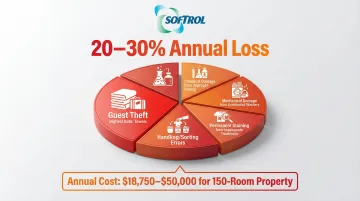
The loss mechanisms compound:
- Guest theft (towels have the highest theft rates)
- Chemical damage from improper dosing or wrong product selection
- Mechanical damage from overloaded washers or aggressive cycles
- Permanent staining from inadequate treatment protocols
- Items lost during handling or sorting processes
Labor Inefficiency
Labor typically consumes 35-55% of total laundry costs, making it the largest single expense category. Inefficiency here multiplies quickly when staff lack proper training on loading procedures, stain treatment protocols, and equipment operation.
Common labor cost drivers include:
- Underloaded washers that waste resources per pound processed
- Overloaded machines that reduce mechanical action and require rewash
- Poor stain treatment requiring double handling of items
- Equipment downtime forcing overtime or rushed processing
- Inefficient workflows with excessive material handling distances
Utility Consumption
Water, natural gas, and electricity account for 10-25% of OPL costs. Equipment type dramatically impacts these expenses. Top-loading commercial washers consume nearly 50% more energy and twice as much water as front-loading machines.
High-extract washers (400+ G-force) remove more moisture during the spin cycle, reducing drying time—the most energy-intensive part of the process. For a property processing 1,000 pounds daily, optimizing extraction speeds and dryer cycle selection alone can reduce energy costs by 10-15% annually.
Chemical Waste and Improper Dosing
Chemicals represent 5-10% of the budget, but improper dosing creates both direct costs (wasted chemicals) and indirect costs (linen damage, rewash requirements). Manual dosing leads to overuse, under-dosing that fails to remove stains, and wrong product selection for water conditions.
Automated chemical dispensing can reduce chemical costs by 15-25% compared to manual systems by delivering precise amounts matched to load weight, soil level, and water chemistry.
Compounding Interactions
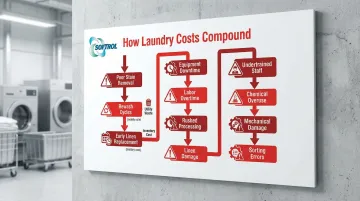
These cost drivers don't exist in isolation—they interact and compound. Each failure cascades into the next:
- Poor stain removal → rewash cycles (utility waste) or early linen replacement (inventory cost)
- Equipment downtime → labor overtime and rushed processing that damages linens
- Undertrained staff → chemical overuse, mechanical damage, and sorting errors
Address root causes, not just visible symptoms.
Cost-Reduction Strategies for Hotel Laundry
Not all laundry costs share the same root cause. Some stem from equipment choices made years ago, others from daily management habits, and still others from facility-level conditions. Matching your strategy to the actual source of cost is what separates one-time savings from lasting improvement.
Strategies That Reduce Costs by Changing Decisions
Equipment Selection and Sizing
Choosing properly sized, high-efficiency equipment reduces costs by optimizing water and energy consumption per pound processed. Properties typically process 8-12 pounds of laundry per occupied room per day—a 150-room hotel at 70% occupancy generates roughly 1,000 pounds daily.
Equipment sizing consequences:
- Undersized equipment: Forces constant machine operation, leading to overtime or outsourcing during peak periods
- Oversized equipment: Results in underloading that wastes water, chemicals, and energy while reducing mechanical action and cleaning quality
- High-extract washers: Remove more moisture (400+ G-force), significantly reducing drying time and associated energy costs
Linen Quality and Specification
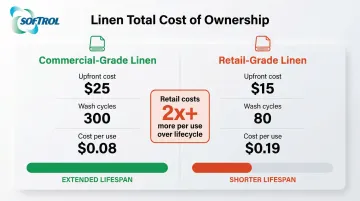
Investing in commercial-grade linens with appropriate construction for institutional use reduces replacement frequency. Commercial-grade cotton fabrics last 200 wash cycles when properly maintained, while optimized handling can extend this to 390-400 cycles. Retail-grade alternatives often fail after 70-100 cycles.
Total cost of ownership calculations demonstrate that higher upfront costs yield lower lifecycle costs. A $25 commercial sheet lasting 300 washes costs $0.08 per use, while a $15 retail sheet lasting 80 washes costs $0.19 per use—more than double the lifecycle expense.
Inventory Par Level Optimization
Establishing correct par levels (typically 3-4 par for full-service hotels) prevents both excessive inventory costs and emergency replacement expenses. The standard is one set in the room, one in the laundry, and one resting on the shelf—this rest period allows cotton fibers to rehydrate, preventing brittleness and extending lifespan.
RFID tracking systems help properties identify optimal par levels based on actual usage patterns rather than estimates, cutting linen purchasing costs by 15-20% by eliminating unnecessary safety stock.
Chemical System Selection
Automated chemical dispensing systems eliminate manual dosing errors that waste chemicals and damage linens. These systems deliver precise chemical amounts matched to water conditions, soil levels, and fabric types, reducing detergent usage by up to 20% while extending linen life by preventing chemical burn damage.
Strategies That Reduce Costs by Changing How Hotel Laundry Is Managed
Real-Time Monitoring and Data Analysis
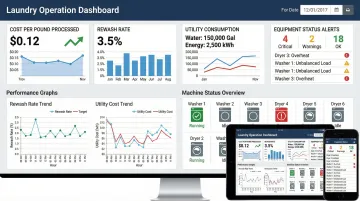
Implementing systems that track key performance indicators—cost per pound processed, rewash rates, utility consumption per load, linen loss percentages—enables data-driven decisions that identify cost problems before they compound.
Systems like Softrol's LOIS (Laundry Operation Information System) provide real-time visibility into plant performance, allowing managers to access operational data remotely via smartphones, tablets, or PCs. The system sends immediate alerts when issues arise, enabling managers to address problems within minutes rather than discovering them weeks later through monthly utility bills or inventory audits.
Comprehensive Staff Training Programs
Training staff on proper linen handling, stain identification and treatment, correct loading procedures, and equipment operation reduces costs across multiple dimensions. Effective training can reduce rewash rates from 5% down to 1%—every rewash doubles labor, chemical, and utility costs for that load.
Training impacts:
- Reduced linen damage rates through proper sorting and handling
- Improved first-pass cleaning success through correct chemical application
- Optimized equipment operation maximizing throughput per labor hour
- Lower reject rates (typically 3-5% nationally) through quality awareness
Preventive Maintenance Protocols
Scheduled equipment maintenance prevents costly emergency repairs and downtime that forces overtime labor or outsourcing. Preventive maintenance reduces unplanned equipment breakdowns by 60-75% and extends equipment service life by 40%.
Simple maintenance like cleaning dryer lint screens and ducts prevents extended drying times that waste energy—neglecting this causes 90% of operations to over-dry by an average of 6 minutes per load, inflating utility costs over time.
Stain Treatment and Quality Control
Implementing systematic stain treatment protocols and quality inspection checkpoints reduces rewash cycles and premature linen replacement. 70% of laundry professionals cite stain removal as their biggest challenge, yet proper pre-treatment and spot cleaning can reduce linen replacement costs by capturing stains before they become permanent.
Since linen replacement accounts for 25% of total laundry budgets, effective stain treatment directly recovers a significant portion of this expense while reducing rewash rates that compound labor and utility costs.
Strategies That Reduce Costs by Changing the Context Around Hotel Laundry
Facility Layout and Workflow Optimization
Laundry facility design affects labor productivity, processing speed, and error rates. Effective layouts separate soiled and clean sides to prevent cross-contamination, minimize material handling distances to reduce labor hours, and create efficient sorting and folding stations that maximize throughput per operator.
Properties that optimize workflow report significant reductions in labor hours per pound processed. Some implementations achieve 35% increases in operator productivity simply by eliminating unnecessary movement and creating logical process flow.
Automation Integration for Chemical Dosing and Material Handling
Automation reduces costs by eliminating human error in chemical dosing, adjusting cycle settings based on load type, and improving process consistency. Softrol's integrated systems combine chemical controls, machine automation, and data management to coordinate every stage of the wash process.
Key outcomes from automation integration:
- Reduces chemical waste through precise, repeatable dosing
- Lowers utility consumption through optimized cycle settings
- Decreases labor requirements through automated material handling
- Improves cleaning consistency by applying correct formulas to each load type
Water Treatment and Utility Management
Addressing hard water, iron content, or other water quality issues at the facility level reduces chemical requirements and improves cleaning efficiency. Water softening systems eliminate mineral buildup that requires extra chemicals and damages linens, while ozone systems can reduce chemical costs and improve linen lifespan by enhancing cleaning power without harsh additives.
Utility monitoring systems track water, natural gas, and electricity consumption in real-time, enabling managers to identify waste patterns and optimize resource usage across all equipment.
Conclusion
Reducing hotel laundry costs by 25-35% requires identifying where costs originate in your specific operation—whether from upfront decisions about equipment and inventory, ongoing management practices around training and monitoring, or operational context issues like facility layout and automation. Generic cost-cutting measures often miss the mark by treating symptoms rather than causes.
Effective cost reduction has three defining characteristics:
- Strategic: Targets root causes, not surface-level symptoms
- Contextual: Matches solutions to your property's specific cost drivers
- Continuous: Uses real-time data to catch emerging inefficiencies before they compound
Properties that treat laundry as a data-driven operation—rather than a routine housekeeping function—consistently land in that 25-35% savings range while maintaining, or improving, guest experience.
Frequently Asked Questions
How much should hotel laundry cost per room or per pound processed?
Industry benchmarks show $0.50-$1.50 per pound processed for on-premise laundry depending on property type and efficiency levels. Full-service hotels typically spend $200-$500 per occupied room annually on total laundry operations including linen replacement, with mid-size properties averaging around $500 per room.
Why is hotel laundry service so expensive compared to residential laundry?
Commercial laundry costs reflect industrial-scale utility consumption, professional-grade chemicals, labor for sorting and folding, and ongoing linen replacement. Hospitality quality standards also require rewashing any items that don't meet guest-ready conditions — a bar that residential laundry simply doesn't face.
What is linen loss and how much does it cost hotels?
Linen loss covers theft, washing damage, permanent staining, and handling errors. Hotels typically lose 20-30% of inventory annually, with replacement costs running $15,000-$75,000 for a 150-room property — and towels see the highest theft rates.
How to reduce laundry costs without compromising guest experience?
Four approaches consistently deliver results without affecting guest satisfaction:
- Real-time monitoring to catch waste before it compounds
- Staff training to cut damage and rewash cycles
- Optimized chemical systems for first-pass cleaning success
- Automation to remove costly handling errors
How many towels and linens do hotels lose annually?
A 150-room hotel might lose 500-1,500 towels annually along with proportional losses of sheets and other linens, with towels experiencing higher theft rates due to size and perceived value. RFID tracking systems can reduce loss rates by up to 50% by providing visibility into inventory movement and enabling rapid identification of missing items.
How do hotels do their laundry—on-premise or outsourced?
Larger properties (150+ rooms) typically run on-premise laundry (OPL) for tighter cost control, while smaller properties outsource to avoid capital investment. The decision hinges on processing volume (800+ pounds daily generally justifies OPL), available capital, space, labor, and total cost of ownership per pound processed.