What is a flatwork ironer used for?
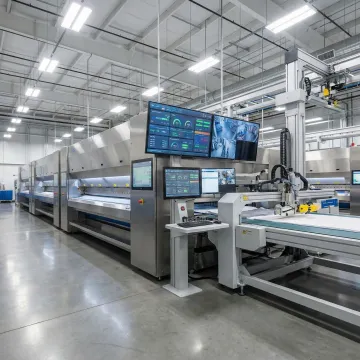
A flatwork ironer is industrial finishing equipment used in commercial laundries to press and finish flat textile items such as bed sheets, tablecloths, towels, and other linens. The machine uses heated rotating cylinders (rollers) to remove wrinkles and moisture while creating a smooth, professional finish. Flatwork ironers are essential in hospitality, healthcare, and institutional laundry operations where high-volume finishing of flat goods is required. Modern flatwork ironers can be integrated with automation controls to manage feeding, processing speeds, temperature regulation, and coordination with upstream sorting systems and downstream folding equipment.
Can ironing be automated?
Yes, flatwork ironing can be highly automated using advanced control systems and material handling equipment. Softrol's automation solutions can synchronize flatwork ironers with feeding conveyors, downstream folding machines, and sorting systems to create a continuous automated workflow. Automated controls manage machine sequencing, processing parameters, goods transfer between equipment, and real-time data collection. This automation eliminates manual handling, reduces labor requirements, ensures consistent processing quality, and provides management with comprehensive production data. Systems like AutoPulse enable single-operator management of entire finishing lines from centralized control stations.
What is flatwork in laundry?
Flatwork refers to flat textile items processed in commercial and industrial laundries, as opposed to shaped garments or hanging goods. Common flatwork items include bed sheets, pillowcases, tablecloths, napkins, towels, and similar flat linens used in hospitality, healthcare, and institutional settings. Flatwork requires specialized finishing equipment (flatwork ironers) and often follows a different processing path through the laundry than garments. Efficient flatwork processing is critical for high-volume laundry operations, as these items typically represent a significant portion of production volume and benefit greatly from automation and control systems that optimize throughput and quality.
How does flatwork ironer automation reduce labor costs?
Flatwork ironer automation reduces labor costs by eliminating manual material handling and enabling single-operator management of multiple machines. Automated feeding systems remove the need for operators to manually load items, while integrated controls coordinate equipment sequencing without human intervention. Real-time production monitoring through systems like PPS identifies efficiency opportunities and has demonstrated the ability to increase pounds per operator hour by up to 35%. Automated data collection also reduces administrative labor by automatically documenting production metrics, equipment performance, and processing parameters without manual record-keeping.
Can flatwork ironer automation integrate with existing equipment?
Yes, Softrol's flatwork ironer automation solutions are designed to integrate seamlessly with most existing industrial laundry equipment. Our engineering team conducts a comprehensive assessment of your current machinery configuration and develops customized control systems that work with your specific ironer models, feeding systems, and downstream equipment. We design control interfaces, establish communication protocols, and program sequencing logic that coordinates your existing equipment into an automated workflow. This integration approach protects your capital investment while adding the benefits of automation, real-time monitoring, and data management capabilities.
What kind of data does flatwork ironer automation provide?
Flatwork ironer automation systems provide comprehensive operational data including production throughput (pieces per hour, pounds processed), machine utilization rates, processing parameters (temperature, speed settings), equipment downtime and reasons, operator productivity metrics, and quality indicators. Systems like LOIS provide 24/7 remote access to this data from any device, with real-time alerts for operational issues. UtiliPulse monitoring tracks energy consumption including steam, electricity, and gas usage. This data enables management to identify bottlenecks, optimize processes, track labor efficiency, monitor equipment health, and make informed decisions to improve overall finishing operations.
How long does flatwork ironer automation installation take?
Installation timelines vary based on system complexity and facility requirements, but typically range from one to four weeks for standard flatwork ironer automation projects. The process includes initial assessment and design, control system programming, hardware installation, equipment integration, testing, and operator training. Softrol's experienced technical team works to minimize disruption to your ongoing operations during installation. We develop a detailed project schedule with milestone reviews and coordinate installation activities around your production requirements. Following installation, we provide comprehensive commissioning and training to ensure your team can confidently operate and manage the automated systems.
What support is available after flatwork ironer automation installation?
Softrol provides comprehensive ongoing support including 24/7/365 technical assistance via phone or email through our customized service support system. Our ticket-based process effectively resolves and tracks service issues with full documentation of resolutions. Remote monitoring capabilities through LOIS enable proactive support, often identifying and addressing potential issues before they impact operations. We provide system updates, optimization recommendations based on operational data analysis, preventative maintenance support, and additional training as needed. Our support commitment ensures your automation investment continues delivering maximum efficiency and reliability throughout its operational life.