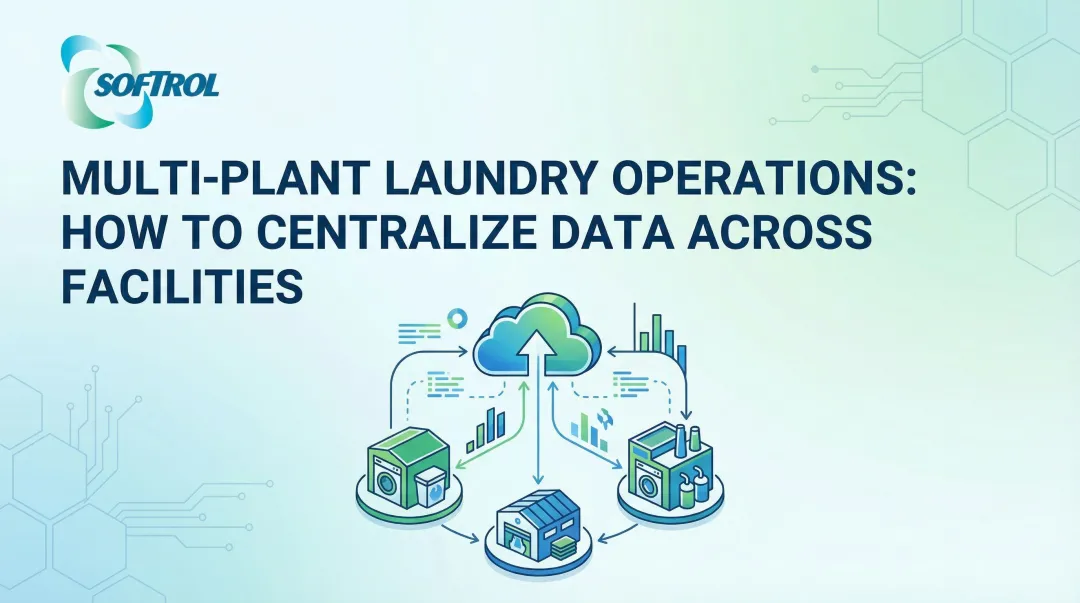
Ever feel like your plant runs well one day and slips the next? Those swings drain time, raise labor hours, and create planning issues that affect every department in large commercial and industrial laundries.
Your team works hard, but manual tracking and delayed numbers make quick decisions tough. You need clearer insight into labor, output, and where time gets lost before it spreads across the floor. That pressure hits plant leaders every single day.
In this blog, we will explore why stronger production visibility matters, what a modern productivity system delivers, how it fits into an automated plant, the gains leaders can expect, and how daily decisions improve across busy laundry operations.
Key Takeaways:
PPS helps leaders see labor activity and production flow with clearer detail across every shift.
Stronger visibility supports earlier action when delays, idle time, or equipment pauses appear.
The system fits into existing plant routines without disrupting soil, cleaning, or finishing processes.
Case results show higher output, better labor control, and fewer reporting burdens for supervisors.
Pairing PPS with rail, wash aisle, sort, chemical, or LOIS systems strengthens plant-wide control.
Why High-Volume Plants Need Stronger Productivity Control
High-volume plants, such as textile rental and uniform or workwear rental operations, face constant pressure to keep labor steady, protect margins, and maintain predictable throughput across every shift and cost center. Leaders need stronger productivity control because minor issues compound quickly, raising costs and reducing the consistency customers expect each day.
Here are the core pressures that make tighter productivity control essential:
Rising Labor Pressure: Labor consumes 35 to 55% of total costs, so unclear work activity makes it harder to contain hours during busy production periods.
Energy and Supply Costs Tighten Margins: Energy and supplies account for 15 to 35 per cent of costs, and weak production visibility limits your ability to respond as hours begin drifting upward.
Throughput Variability Hurts Daily Targets: Shifts fall behind when operators slow, machines pause, or tasks change at the last minute, and weak insight keeps supervisors from correcting these issues early.
Limited Floor Visibility Delays Action: Manual reporting hides problems for hours, making it challenging to spot rising idle time or unbalanced lines before they cut into daily volume.
Maintenance Gaps Accelerate Wear: Missed early signals cause extra strain on equipment, and without better tracking, those issues grow into stoppages that push labor hours higher.
Demand Fluctuations Challenge Planning: Laundry volume swings across customer groups, and limited production data makes it difficult to schedule staff or adjust lines with confidence.
Downtime Disrupts Flow Fast: Unplanned stops create immediate slowdowns across connected work areas, and without stronger insight, leaders cannot react before delays spread.
Multi-Site Operations Need Consistent Data: Plants working under the same brand require clear comparisons, and gaps in reporting make it harder to hold locations to steady performance standards.
Once you understand the pressures facing production teams, the next step is seeing how better activity tracking supports your daily decisions across every department.
Also Read: Plant Performance with LOIS System
How Softrol PPS Helps You Run a More Efficient Plant

A plant can only perform well when leaders see what is happening on the floor and act before delays spread across shifts. Softrol PulseNet Productivity Systems (PPS) supports this by giving teams clearer insight into labor activity, production flow, and the signals that guide better daily decisions.
Here is how the system helps you run a more controlled and predictable operation:
Real-Time Insight Into Labor Activity:
PPS stations record SmartCard logins, task selections, and work pauses automatically, giving leaders a live view of operator activity across soil, clean, and finishing areas. The system continues capturing activity even if the central PC loses connection, because each station stores data locally until the link returns. The monitor program highlights slow areas on message centers, showing counts and timing details that help supervisors shift staff before delays spread across multiple cost centers.
Clear View of Productive and Non-Productive Time:
PPS separates hours linked to output from indirect time like machine waits or setup periods, using predefined task standards created during system setup. Daily Operator Performance Reports display these categories clearly, showing where time went, why certain hours did not generate output, and which cost centers repeatedly fall behind. Leaders use these details to balance staff, adjust work assignments, and correct recurring issues that affect throughput during heavy production days.
Accurate Operator Identification:
Every operator receives a SmartCard containing a unique identifier, which ties tasks, counts, and timestamps to the correct person without manual steps. This makes performance discussions clearer because leaders see precise logs showing who handled each action, when it occurred, and how long each task required. If a rework spike appears in finishing, drill-down views immediately show which operators handled the work tied to those bundles, reducing confusion and guesswork.
On-Site Data Ownership:
PPS stores information locally in a plant-managed SQL database, giving leaders direct access to all reporting without sending anything off-site for processing. Supervisors can pull near-current views of output, load, and delays whenever questions arise, helping them make quicker corrections during busy periods. Local control also supports faster troubleshooting because diagnostic tools highlight connection issues, station errors, or missing reads from a single screen.
Reports That Support Faster Decisions:
All reports pull directly from station-level data, allowing leaders to review output by shift, day, department, or cost center with accurate counts and hours. Daily Plant Production Reports show seven-day trends, helping managers understand where demand dips or rises, and where labor adjustments should occur. Cost center task lists reveal gaps between standards and actual output, giving teams a clearer basis for staffing plans, supply decisions, and process changes.
After seeing what the system delivers, the next question is how it fits inside your current setup across soil, clean, and finishing areas.
If you want a deeper look at how these controls support commercial or industrial laundries, download the brochure for clear details built around daily plant decisions.
Where Softrol PPS Fits Inside a Modern Laundry Operation

Softrol PPS fits into a modern laundry plant by working alongside your current equipment, reporting structure, and production routines without requiring major workflow changes. The system connects through stations placed at key floor locations, giving owners, operations leaders, and plant managers clearer insight without changing current departmental processes.
Here is how the system fits into your existing operation:
SmartCard Stations in Current Work Areas: Stations sit beside your existing feeders, folders, sorters, or soil areas, allowing operators to record work without disrupting established production steps.
Device Types for Every Department Setup: Plants can match stations to single operators, teams, soil weighing, bulk fold activity, daywork tasks, or shared departments based on current layouts and staffing.
Continuous Reporting Across All Cost Centers: The system captures task choices, counts, work time, idle periods, machine pauses, and sorting details, giving each department cleaner data to support daily planning.
No Loss of Data During Short Outages: Devices store information locally during brief interruptions, keeping your reporting intact and preventing gaps that might affect labor or throughput decisions.
Monitor Screen for Daily Oversight: Supervisors can check device status, confirm readings, view logs, and detect issues from a single location, enabling faster action without changing floor routines.
Reports That Match Existing Management Needs: The dashboard presents operator performance, plant output, labor usage, quality results, and weekly summaries in a format that fits your current review process.
Fits Partial or Full Automation: PPS supports plants using tunnels, ironers, folders, or manual stations by reporting activity around those assets, giving leaders a clearer view of how each area performs.
Supports Future Growth Without Rework: Plants can add stations or expand the reporting scope as volume grows, allowing the system to adjust alongside your production changes without significant disruption.
Seeing how the system fits into your plant becomes clearer when you review results achieved by teams facing similar volume and staffing challenges.
Also Read: How Softrol's Productivity Tracking Saves You Money
Real Plant Results: What Changes When PPS Enters the Operation
Plants often want clearer proof of how a production system fits into existing operations and delivers gains without major changes to equipment or staffing. Faultless Linen provides a useful example because their new plant needed early control, clearer insight, and better daily output during the first months of operation.
Case studies like this help leaders see how structured reporting strengthens labor use, supports faster decisions, and stabilizes production flow. Here is a concise overview of their experience:
Category | Details |
Core Challenge |
|
Solution Applied |
|
Result |
|
Before forming plans, you need a clear view of where PPS ends and where other systems are required to support full-plant control.
See more examples that highlight how textile rental and uniform rental plants improved labor use through clearer insight adopted by plant managers and supervisors.
What PPS Is Not And What It Doesn’t Solve Alone
PPS gives stronger visibility into labor and production activity, but some areas of the plant still need systems that manage movement, washing, chemical use, sorting, or higher-level control. The table below shows where PPS fits and where another system is required for full support.
Area | PPS Limitations | What Else You Need |
Goods Movement | PPS reports labor and counts, but cannot move goods or route items through production zones. | Rail Systems or Soil Sort Systems handle movement and sorting, giving PPS steadier conditions to record. |
Wash Aisle | PPS tracks operator tasks but does not control wash cycles, dryer programs, or machine settings. | Wash Aisle Systems manages washer and dryer functions, supporting stronger labor tracking around wash activity. |
Garment Sorting | PPS shows operator activity but cannot classify garments or direct them through large sorting setups. | Garment Sort Systems route items precisely, helping PPS reflect accurate work around sorting tasks. |
Chemical Delivery | PPS reports labor but does not measure chemical dosing, water flush events, or delivery accuracy. | Chemical Systems like Catalyst manage dosing, improving the consistency of production results tied to PPS data. |
Enterprise Visibility | PPS focuses on labor and counts, but does not combine all plant functions into one enterprise view. | LOIS Systems give cross-site access, alerts, and broader reporting that complements PPS information. |
Plant-Wide Reporting | PPS shows production activity, but cannot connect every department without an additional management layer. | Management Systems merges PPS data with wash, sort, shipping, and chemical details for full oversight. |
Outbound Tracking | PPS reports operator work but does not handle outbound item counts or shipment-level tracking needs. | Shipping Systems such as Softrak or MTrak manage outgoing volume with clearer item history and detail. |
If you want stronger control across movement, washing, sorting, or shipping, you can explore Softrol solutions that connect directly with your existing operation.
Conclusion
Leaders in high-volume laundry plants need clearer visibility, steadier throughput, and stronger control over daily labor activity to keep operations predictable across every shift. PPS gives your team the structure, reporting, and timing needed to make better decisions without altering your existing production setup. When paired with the right supporting systems, it becomes a dependable foundation for stronger performance across the entire plant.
If you want to see how this approach can support your operation, contact us for a walkthrough tailored to your plant’s current needs and goals.
FAQs
Does PPS require major changes to existing equipment?
No. PPS stations are placed beside your current equipment and do not require mechanical changes. They record operator activity without altering how the machines operate.
Can PPS support plants with high turnover or seasonal labor?
Yes. PPS assigns every task to a specific operator through SmartCard logins, giving supervisors clearer insight into new or temporary staff without adding extra steps.
How long does it take staff to learn the system?
Most operators adapt quickly because PPS uses simple task selections and clear prompts. Supervisors gain confidence once they see how each station reports activity.
Can PPS help plants prepare for growth or higher volume?
Yes. Plants can add stations in phases, allowing the reporting structure to expand as production needs grow without disrupting established work areas.
Does PPS support remote access for leaders working offsite?
PPS data can be viewed through systems like LOIS, which provide access to production information across devices and locations based on each user’s permission level.