In laundry operations, such as those in healthcare, hospitality, textile rental, linen supply, and government facilities, process control is essential. These industries face unique challenges, including large daily volumes of linens and garments, high labor and utility costs, and the need to meet strict delivery and quality service levels.
Demand for laundry care in commercial spaces is expected to grow at a CAGR of 6.7% from 2025 to 2030. This growth is driven by innovative formulations that address tougher stains and odors, particularly in hotels and healthcare facilities, making laundry process control even more crucial for optimizing operations.
This article will explore the principles of laundry process control, its benefits for commercial and industrial laundries, and ten key best practices tailored for those in linen rental, textile supply, government laundries, and uniform rental sectors.
Key Takeaways
Automated sorting and rail systems streamline material handling, boosting throughput and reducing labor in high-volume laundries, especially in healthcare and textile rental.
Process control systems, like Catalyst Chemical Systems, optimize chemical dosing, reducing rewash rates and improving cost efficiency across laundry operations.
Real-time data via PulseNet and LOIS provides insights into pounds-per-labor-hour, chemical usage, and wash performance, enabling data-driven decisions to enhance throughput.
Predictive maintenance using IoT systems minimizes downtime, improving equipment uptime and preventing delays in key assets like tunnels and dryers.
Automated chemical dosing and load optimization reduce chemical waste and maintain wash quality while controlling utility costs in uniform rental and hospitality laundries.
What is Laundry Process Control?
Laundry process control refers to the strategic management and optimization of every stage in the laundry process—from sorting to washing, drying, and finishing. In industries like hospitals, VA facilities, textile rental laundries, and industrial laundries, process control systems allow plant managers, operations directors, and engineering teams to regulate variables such as wash time, water temperature, chemical dosage, and drying efficiency.
High utility bills, excessive labor, and equipment wear-and-tear can easily erode profit margins. So implementing a process control strategy can help stabilize costs, improve overall throughput, achieve high-quality results, and maximize plant uptime for operations like pounds-per-labor-hour, rewash rates, and on-time performance.
Also Read: Auto-Sortation Myths with Softrol Systems
Now that we understand laundry process control, let’s explore its key benefits in high-volume environments.
7 Key Benefits of Laundry Process Control for Commercial and Industrial Laundries
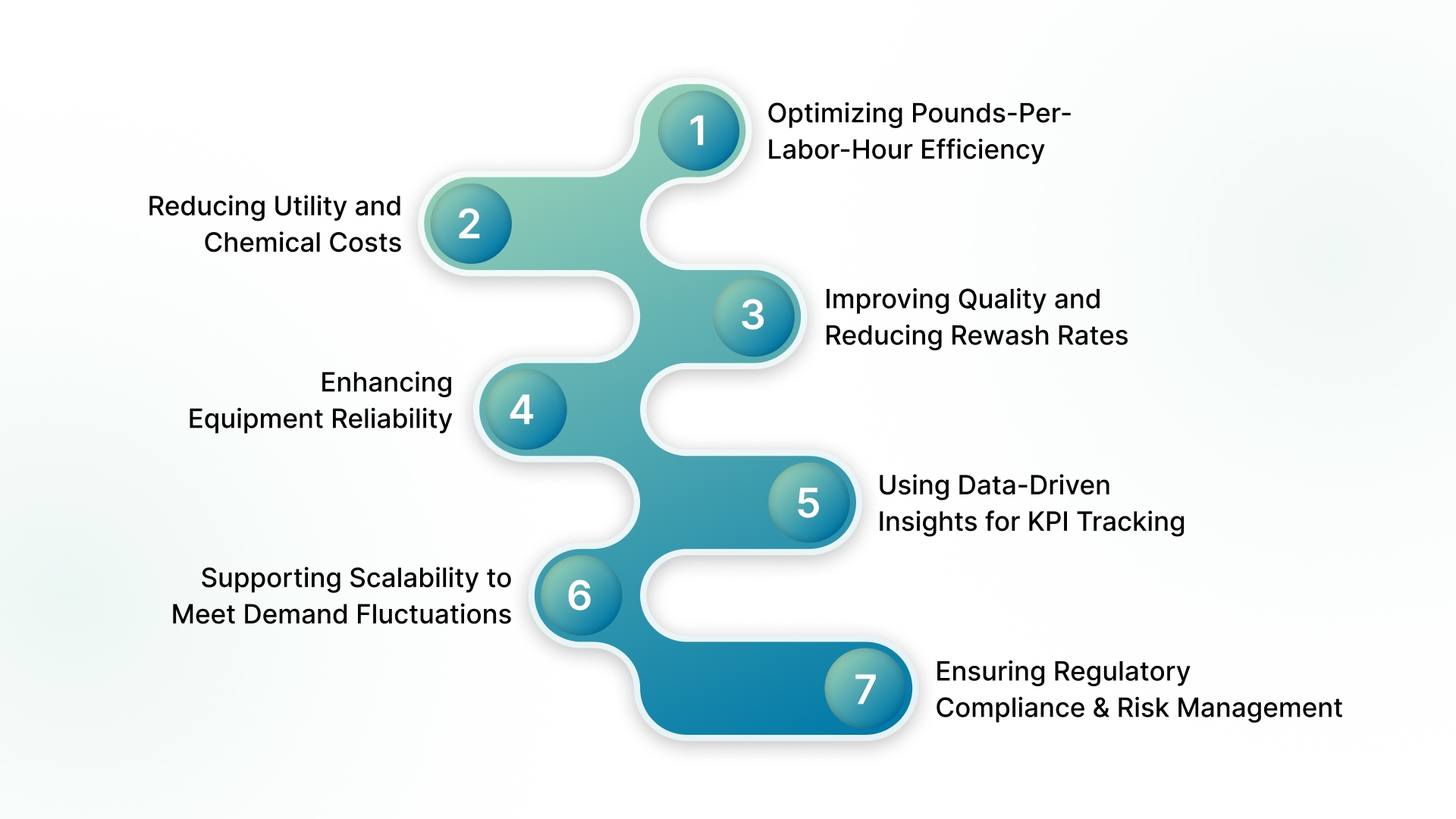
Laundry process control drives operational efficiency, reduces utility costs, and enhances service levels. Here are the top benefits that businesses can achieve through effective process control.
Optimizing Throughput and Pounds-Per-Labor-Hour Efficiency
In high-volume laundries, such as those in hospitality, healthcare, or uniform rental, optimizing throughput is essential for profitability. Laundry process control standardizes wash cycles and minimizes downtime, increasing pounds-per-labor-hour.
Reducing Utility and Chemical Costs for Better Margin Control
Water, energy, and chemicals represent high operational costs. With laundry process control, facilities can optimize water and energy use while automating chemical dosing. Precise chemical delivery reduces waste, cuts excess costs, and helps keep utility expenses in check, all while maintaining wash quality.
Improving Quality and Reducing Rewash Rates
Ensuring consistent quality is critical in sectors like healthcare. Laundry process control regulates wash and rinse cycles, ensuring linens are cleaned effectively in the first cycle. By reducing rewash rates, laundries save labor and utilities while meeting strict quality standards.
Enhancing Equipment Reliability and Maximizing Operational Uptime
For large laundries, equipment uptime is essential to meet production goals. Laundry process control systems enable predictive maintenance, reducing unexpected failures by monitoring key performance metrics. Automated alerts and real-time tracking help minimize downtime, ensuring that equipment operates efficiently and deadlines are met.
Using Data-Driven Insights for KPI Tracking
Laundry process control integrates with plant-wide data systems, providing critical insights into performance metrics like chemical usage, wash cycle times, and throughput. This data enables IT and operations teams to make informed decisions, while multi-plant benchmarking helps identify best practices and optimize operations.
Supporting Scalability to Meet Demand Fluctuations
As laundries scale, process control systems adapt to increased volumes and changing customer demands. By integrating material handling, wash systems, and chemical controls, these systems offer the flexibility needed to handle seasonal peaks or expanded services.
Softrol’s Material Handling Solutions streamline the flow of soiled goods from sorting to washing through Soil Sort Systems that automate sorting by wash classification or Softrol Rail that transports linens seamlessly. Since these solutions free up floor space, managers can track material flow and optimize labor usage, leading to better pounds-per-labor-hour performance.
Ensuring Regulatory Compliance and Risk Management
In regulated environments like healthcare and government facilities, maintaining compliance is crucial. Laundry process control ensures that every step, from wash cycles to chemical use, meets industry standards. This guarantees adherence to hygiene, sterilization, and safety regulations, reducing compliance risks and safeguarding operational integrity.
Also Read: Improve Plant Automation through Softrol's Wash Aisle Controls
These benefits are actionable through specific steps designed to streamline laundry operations in high-demand settings.
7 Steps in Laundry Process Control for High-Volume Operations
Laundries must ensure each step of the process is tightly controlled to meet quality standards, improve pounds-per-labor-hour, and reduce rewash rates. Below are the essential steps for a smooth, efficient laundry process from start to finish.
1. Sorting and Segregation
Sorting linens and garments by type, color, and soil level is a crucial first step. Automated sorting systems ensure materials are classified accurately. In institutional laundries, this step is crucial for ensuring that linens requiring specialized treatment (such as hospital gowns or uniforms) are processed separately.
Sorting System Efficiency Checklist:
Action | Benefit |
Implement automatic sorting solutions | Improve sorting accuracy and reduce labor costs |
Use RFID or barcode scanning | Track linens more effectively throughout the process |
Classify items based on fabric type, soil level, and customer | Ensure proper handling of each item, improving quality and compliance |
2. Pre-Wash (Soaking and Spray)
The pre-wash stage involves soaking or spraying linens with detergent to loosen heavy soils or stains before the main wash. By controlling the detergent dosage and soak time, laundries can ensure the most efficient use of chemicals, reducing waste and improving wash performance.
Pre-Wash Control Checklist:
Action | Benefit |
Regulate detergent dosing based on fabric and soil level | Prevent overuse of chemicals and reduce waste |
Adjust soak time according to material type | Maximize stain removal without damaging delicate fabrics |
Monitor detergent application in real-time | Ensure optimal chemical efficiency and reduce operational costs |
3. Main Wash Cycle
The main wash cycle, where detergent, water, and temperature are controlled, directly impacts linen cleanliness and operational efficiency. Advanced control systems allow laundries to optimize wash conditions based on the fabric type and soil level, ensuring high-quality results with minimal rewash.
Main Wash Optimization Checklist:
Action | Benefit |
Fine-tune wash cycle times and temperatures | Ensure effective cleaning without over-washing, conserving energy |
Control chemical dosages with precision | Minimize detergent waste and improve wash quality |
Adjust wash parameters for different fabrics | Maintain consistent cleaning performance across various linen types |
4. Rinsing
After the main wash, linens are rinsed to remove detergent and soil residues. Water temperature and rinse times must be carefully controlled to minimize water usage and ensure that detergents are thoroughly removed. Laundry process control systems allow for precise monitoring of rinse cycles, reducing excess water consumption.
Rinsing Efficiency Checklist:
Action | Benefit |
Regulate rinse time based on soil and fabric type | Ensure thorough detergent removal while saving water |
Monitor and control water flow | Minimize excess water use, reducing utility bills |
Optimize rinse cycle parameters | Guarantee effective detergent removal and prevent rewash |
Also Read: What Features Make Softrol Rail Better?
5. Drying
Drying is one of the most energy-intensive stages in the laundry process. By controlling drying times and temperatures based on the fabric type and load size, laundries can reduce energy consumption while ensuring linens are properly dried without over-drying, which can lead to fabric damage.
Drying Control Checklist:
Action | Benefit |
Optimize drying times based on linen type | Reduce energy consumption while preventing over-drying |
Use moisture-sensing technology | Adjust drying cycles to conserve energy and protect fabric integrity |
Manage load sizes to optimize dryer efficiency | Ensure uniform drying and reduce cycle time |
6. Finishing
After drying, linens may undergo additional finishing processes, such as pressing, folding, or packaging. Automated finishing equipment streamlines this step, allowing for faster turnaround times. Process control ensures that finishing equipment operates within set parameters, delivering high-quality results.
Finishing Process Automation Checklist:
Action | Benefit |
Implement automated pressing and folding systems | Speed up processing time and reduce labor costs |
Use modular finishing systems | Adapt to different linen types and sizes, ensuring consistent results |
Integrate with sorting and tracking systems | Improve packaging accuracy and delivery timelines |
7. Inspection and Delivery
The final step involves inspecting linens for quality, ensuring they meet industry standards and customer expectations. Any linens that don't meet these standards are sent back through the system. The final product is packaged and prepared for delivery, ensuring it meets the required service levels.
Inspection & Delivery Optimization Checklist:
Action | Benefit |
Automate quality checks with vision systems | Improve inspection accuracy, reducing the risk of defects slipping through |
Use automated tracking systems for final delivery | Ensure accurate and timely deliveries without errors |
Integrate packaging automation | Reduce labor costs and ensure consistent packaging quality |
Softrol’s Process Control Solutions offer precise control over your wash cycles, chemical dosing, and drying processes to ensure consistent quality. With Wash Aisle Systems and Catalyst Chemical Systems, you can automate and optimize washing parameters, ensuring that every batch of linens meets your quality standards while reducing rewash rates and utility costs.
Following these steps, it’s crucial to apply the best practices that will maintain high performance and reduce inefficiencies.
10 Best Practices for Laundry Process Control
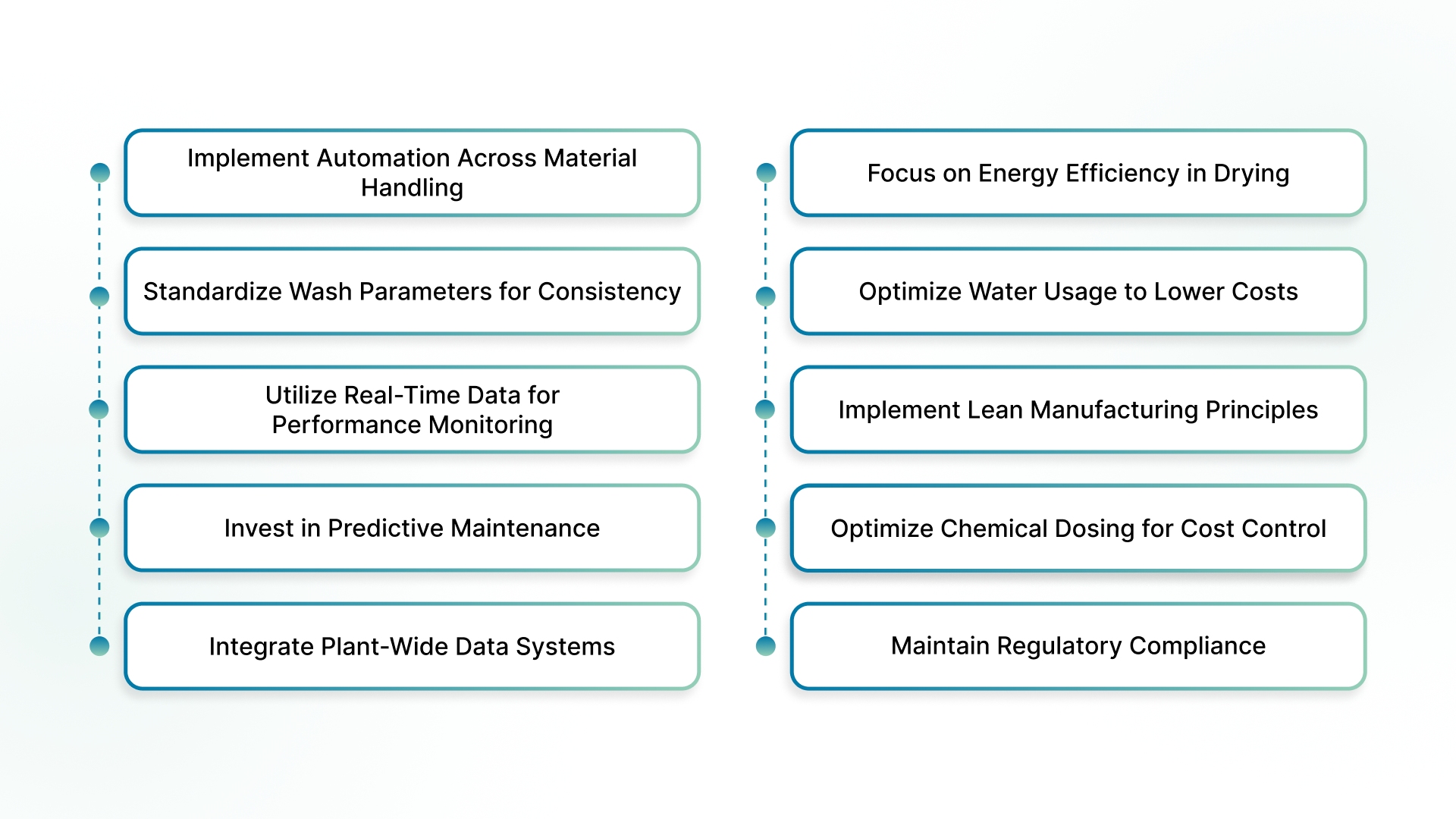
In healthcare facilities, textile rental services, and uniform laundries, process control is essential for optimizing throughput, reducing labor costs, and maintaining on-time delivery. The following best practices will help plant managers streamline operations and meet stringent service levels.
Implement Automation Across Material Handling
Automated sorting, transport, and rail systems help streamline the laundry process, minimizing manual labor and reducing bottlenecks.
Pro Tip: Invest in automated material handling systems that integrate with existing wash and chemical processes.
Standardize Wash Parameters for Consistency
Standardizing wash cycles across different types of linens and garments ensures consistent results and reduces variability. With process control systems, parameters like wash time, temperature, and detergent dosage are consistently monitored and adjusted as needed.
Pro Tip: Use data from previous wash cycles to fine-tune standard settings.
Here’s a video showcasing the Softrol Garment Sort Systems, which highlights their efficiency in automating the sorting process and improving workflow in high-volume laundry operations.
Utilize Real-Time Data for Performance Monitoring
Implement systems that monitor key performance indicators (KPIs) like throughput, pounds-per-labor-hour, and energy consumption in real-time. This data allows plant managers and IT teams to track performance and make data-driven decisions.
Pro Tip: Set up alerts for abnormal performance trends so that corrective actions can be taken immediately.
Invest in Predictive Maintenance
Regular maintenance and predictive analytics help minimize downtime. Monitoring the condition of critical equipment like washers, dryers, and rail systems ensures they operate at peak efficiency and avoid unexpected breakdowns.
Pro Tip: Use condition monitoring sensors to track the health of machines and prevent costly repairs.
Integrate Plant-Wide Data Systems
Implement plant-wide data systems that integrate with existing equipment and software. This integration provides centralized visibility of operations, which helps managers and decision-makers make informed, strategic decisions.
Pro Tip: Use multi-plant benchmarking to compare performance across locations and identify best practices. Softrol’s Total Plant Integrated Data & Software provides real-time insights into every aspect of your laundry operations. With the PulseNet Production System (PPS) and LOIS, you can monitor key performance metrics like throughput, pounds-per-labor-hour, wash cycle time, and chemical consumption.
Focus on Energy Efficiency in Drying
Drying is one of the most energy-intensive parts of the laundry process. By optimizing drying temperatures, load sizes, and cycle times, laundries can reduce their energy consumption and lower operating costs.
Tip: Implement variable frequency drives (VFDs) on dryers to optimize energy use during drying cycles.
Optimize Water Usage to Lower Costs
Water is a high cost in high-volume laundries. By implementing water-saving technologies, such as reverse osmosis or water recycling systems, laundries can reduce their water consumption and cut costs.
Tip: Use water reclamation systems to reuse rinse water in subsequent cycles.
Implement Lean Manufacturing Principles
Lean principles, such as minimizing waste, reducing cycle time, and improving flow, are essential for maximizing efficiency in laundry operations. By identifying areas of waste and optimizing processes, laundries can increase throughput and reduce costs.
Tip: Conduct regular Kaizen events to identify inefficiencies and implement continuous improvements.
Optimize Chemical Dosing for Cost Control
Automated chemical dosing systems ensure that the right amount of detergent is used in each wash cycle, reducing waste and improving cost efficiency. Proper chemical dosing also prevents fabric damage, which can lead to costly replacements.
For fast customer service and quick replacement parts, check out how Softrol Systems can meet your needs.
Pro Tip: Regularly audit chemical consumption to identify opportunities for further cost savings.
Maintain Regulatory Compliance
Ensuring compliance with industry standards and regulations is vital, especially in healthcare and government facilities. Implementing laundry process control systems helps businesses maintain consistent cleanliness and hygiene standards while ensuring compliance.
Tip: Regularly audit processes to ensure adherence to local and industry-specific regulations.
Also Read: Plant Performance with LOIS System
After applying these best practices, it's time to upgrade your laundry operations with Softrol’s advanced solutions.
Softrol's All-Inclusive Process Control Solutions to Grow Your Laundry Operations
For high-volume laundry operations in industries such as healthcare, hospitality, textile rental, and uniform rental services, optimizing every aspect of the laundry process is critical to improving throughput, reducing costs, and maintaining high service levels. Softrol offers integrated solutions that streamline operations, reduce utility and labor costs, and provide full plant-wide visibility.
Here's how Softrol’s tailored solutions can support your laundry facility’s growth and performance goals.
1. Material Handling Solutions
Softrol’s material handling solutions help high-volume laundries move garments, linens, and flatwork through the plant as efficiently as possible. Automating sorting, transportation, and storage, these systems help plant managers meet throughput targets, maximize pounds-per-labor-hour, and free up valuable floor space.
Soil Sort Systems: Automated sorting systems categorize soiled goods by customer, fabric type, or wash classification, ensuring smooth material flow and reducing labor costs.
Laundry Rail Systems: Softrol Rail transports soiled and clean goods with real-time tracking, predictive maintenance, and minimal downtime, optimizing material handling for better throughput.
Garment Sort Systems: Automate garment sorting by customer or route, reducing manual sorting efforts and integrating with inventory and shipping modules for more accurate tracking and delivery.
2. Process Control Solutions
Softrol’s process control solutions enable precise management of wash cycles, chemical dosing, and drying processes, ensuring high-quality output with reduced rewash rates, directly impacting labor and utility costs.
Wash Aisle Systems: Softrol’s wash aisle systems precisely control bath parameters and cycle times, reducing the risk of rewash and increasing throughput.
Catalyst Chemical Systems: Automate precise chemical dosing to ensure consistent application, improving chemical efficiency and reducing chemical costs while maintaining high wash quality.
Integration for Optimal Wash Cycles: Softrol’s process control systems automatically adjust wash cycles based on fabric type, soil level, and customer requirements.
Here’s a customer story about how West Michigan Uniform upgraded its equipment with Softrol's MicroPulse controllers and AutoPulse automation to enhance its garment wash aisle control system.
3. Total Plant Integrated Data Solutions
Softrol’s integrated data systems provide visibility into real-time performance, allowing plant managers to make data-driven decisions.
PulseNet Productivity System (PPS): Collects real-time data from equipment and material handling systems, allowing managers to monitor key KPIs like pounds-per-labor-hour, rewash rates, and utility consumption.
LOIS – Laundry Operation Information System: Provides operators with access to real-time plant data from any device, enabling managers to track KPIs, set alerts, and monitor multi-plant performance for continuous improvement.
Management Information Systems: Softrol integrates key data from material handling, process control, and productivity systems into a unified dashboard.
Softrol’s integrated solutions are designed to meet the unique challenges of high-volume laundry operations, ensuring your facility operates at peak efficiency and delivers superior results every time.
Conclusion
By adopting best practices in automation, chemical dosing, equipment maintenance, and data monitoring, laundry facility owners and plant managers can streamline their commercial laundry operations. From healthcare to textile rental and government laundries, laundry process control enables businesses to meet strict delivery deadlines, enhance service levels, and improve profitability.
By integrating Material Handling Solutions, Process Control Solutions, and Total Plant Integrated Data & Software by Softrol, laundries can streamline workflows, stabilize wash processes, and gain real-time insights into operational performance. With Soil Sort Systems, Softrol Rail, Wash Aisle Systems, and PulseNet Production System (PPS), you can improve throughput, reduce rewash rates, and optimize resource use.
Contact us to see how we can enhance your laundry process control and drive continuous improvement across your facility.
FAQs
How can automated sorting improve my laundry operations?
Automated sorting reduces manual labor, increases sorting accuracy, and speeds up processing, improving pounds-per-labor-hour and reducing errors, especially in high-volume settings.
What’s the impact of real-time data on laundry performance?
Real-time data from Softrol’s PulseNet and LOIS enables immediate adjustments, helping optimize throughput, identify bottlenecks, and track KPIs like pounds-per-labor-hour and chemical usage.
How does predictive maintenance affect equipment reliability?
By using real-time monitoring, predictive maintenance reduces unplanned downtime, extends equipment life, and ensures high uptime, preventing costly delays and maintaining service levels.
What are the benefits of using automated chemical dosing systems?
Automated dosing systems ensure accurate chemical application, reducing waste and overuse, while maintaining wash quality and lowering chemical costs in large-volume laundries.
How can I manage labor costs more effectively?
Implementing automated sorting systems and tracking pounds-per-labor-hour with PulseNet allows better labor allocation, reducing manual work and optimizing labor efficiency in high-volume laundries.