Have rising linen losses and constant recounts started to drain your plant’s time and budget? Many laundry operations feel stuck with gaps they can’t see and errors they can’t trace.
RFID is gaining fast adoption for this reason, with the laundry RFID market projected to grow at a 13.1% CAGR through 2035. Plants are turning to it because RFID can support tracking rates near 99%, helping teams cut waste and regain control of item flow.
In this blog, we’ll explore RFID asset tracking costs, key cost drivers in laundry plants, ROI factors, risks to plan for, and a case study showing the gains a plant achieved with RFID-driven sorting.
Key Takeaways:
RFID adoption in laundry plants is growing rapidly due to its ability to reduce linen losses and improve tracking accuracy (up to 99%).
RFID costs include tags ($0.10–$1.00 per tag), readers, antennas ($1,000–$25,000 total), and software ($1,000–$60,000 per year).
ROI benefits for high-volume plants include reduced linen losses (up to 50%), labor savings (33%), and lower purchasing costs (15-20%).
Risks to consider during RFID implementation include poor read coverage, high tag wear, and wiring challenges.
Case study: Vogue Linen improved sorting flow and reduced overhead costs with RFID-driven sorting, processing up to 1,200 garments per hour.
RFID Cost Components for Laundry Operations
RFID cost in a laundry plant comes from several parts. Tags are only one piece. The full spend includes hardware, software, site work, and ongoing service. Each item plays a role in how smooth and accurate your tracking will be.
Here is a clear breakdown of the main cost areas:
RFID Tags
Laundry plants need active and passive RFID tags that can withstand heat, water, and chemicals. Active tags, with their own battery, offer longer range and higher cost ($0.35–$1.00 per tag). Passive tags, which rely on the reader’s energy, are more affordable ($0.10–$0.50 per tag) and suited for short-range tracking.
The ranges below outline common spending patterns based on order size and textile type.
Tag Type / Volume | Estimated Cost Range | Notes |
500–2,000 tags | $125–$1,000 total | Entry use for small operations. |
2,000–10,000 tags | $500–$5,000 total | Common for mid-sized plants. |
10,000+ tags | $2,500–$20,000 total | Typical for large tagging projects. |
Tag spending varies by several on-site and purchasing factors that influence total project cost.
Factors affecting tag cost:
Durability needs: Stronger materials raise cost yet support higher usage levels.
Attachment work: Sewing or heat application increases labor time.
Order volume: Larger orders reduce per-tag spending over time.
Retrofit needs: Tagging older stock raises handling hours and project cost.
Readers and Antennas
Readers and antennas create the fixed tracking points used across soil sort, rail lines, and clean-side exits, with full hardware builds often ranging between $10,000 and $25,000 based on read zones. Plants with many choke points usually need more antennas to manage steady movement.
The table below outlines typical spending across hardware items used in laundry settings.
Hardware Item | Estimated Cost Range | Notes |
Fixed readers | $1,000–$4,000 each | Used at high movement checkpoints. |
Handheld readers | $500–$3,000 each | Supports audits and exceptions. |
Antennas | $100–$250 each | Count depends on layout conditions. |
Full hardware set | $10,000–$25,000 total | Common across many plant sizes. |
Hardware cost depends on several operational demands tied to plant size and movement speed.
Factors affecting hardware cost:
Number of read zones: More checkpoints increase the hardware count.
Movement speed: Faster flow may require stronger read coverage.
Metal surfaces: Certain areas need extra antennas for stable reads.
Audit needs: Frequent checks increase handheld device demand.
Software
Software gathers tag reads and presents item movement, order status, and return checks through clear dashboards that support daily plant decisions. Costs rise when plants require deeper reporting or cross-site access for leadership and supervisors.
Here is a breakdown of typical software ranges found across laundry operations.
Software Tier | Estimated Cost Range | Notes |
Basic tracking | $1,000–$5,000 per reader per year | Works well for smaller plants. |
Mid-tier plan | $6,000–$12,000 per year | Favored by mid-sized teams. |
Enterprise system | $18,000–$60,000 per year | Used by plants needing cross-site reporting. |
Several plant-level needs influence the final software spend each year.
Factors affecting software cost:
Report depth: More detailed data needs increase spending.
User count: More stations raise subscription levels.
Cross-site access: Multi-plant tracking requires larger plans.
Alert rules: Automated notifications increase system cost.
Installation and Site Work
Installation covers planning, wiring, mounting, and tuning each read point so tags pass through with consistent detection. Soil sort lines and rail areas often require careful planning because tight spaces slow mounting work.
Below is an outline of on-site cost ranges connected to deployment.
Category | Estimated Cost Range | Notes |
Site installation | $5,000–$10,000 | Covers wiring and mounting. |
Training and rollout | $2,000–$5,000 | Helps prepare production teams. |
Complex customization | $10,000–$20,000+ | Used for larger floors. |
Several practical conditions within the plant influence the total cost of this work.
Factors affecting site work cost:
Layout limits: Tight zones increase labor time.
Access points: Hard-to-reach zones require a special setup.
Tight schedules: Limited downtime can extend project hours.
Team training: Larger groups require longer sessions.
Integration Work
Some plants want RFID reads shared across their plant systems, which requires extra setup so item IDs and reports match daily production rules. This work varies depending on how many systems need shared data.
Here is a view of common spending tied to this work across laundry plants.
Category | Estimated Cost Range | Notes |
Mid-level data work | Part of $10,000–$20,000 setup | Common among mid-sized teams. |
Large-scale setup | Higher custom range | Needed for multi-system data flow. |
Several deeper needs influence these costs based on system goals and reporting demands.
Factors affecting integration cost:
Data rules: More categories increase mapping work.
System count: More systems raise the total project time.
Report detail: Deep reporting increases setup hours.
Growth plans: Future expansion may require extra work.
Ongoing and Lifecycle Costs
Ongoing RFID costs support system stability, tag reads, hardware care, and software access across busy wash and rail processes. Plants with higher daily movement often see larger yearly budgets due to tag wear and hardware load.
The table below outlines typical recurring cost patterns.
Ongoing Cost Category | Estimated Cost Range | Notes |
Tag replacement | Based on 5–10% of tagged items | Driven by wear and loss. |
Software licenses | Matches the tier selected | Renewed each year. |
Hardware upkeep | $1,000–$5,000 per year | Covers repairs and checks. |
Support and training | Case-based cost | Needed for new users. |
Several details within the plant drive these costs across the year.
Factors affecting ongoing cost:
Tag wear: Heavy washing increases replacement needs.
Hardware load: Busy zones raise maintenance demand.
User turnover: New hires require training time.
Report volume: More reporting increases licensing needs.
These cost pressures lead many teams to review other tracking methods and see how they stack against RFID across busy production shifts.
Also Read: Plant Efficiency through Material Handling
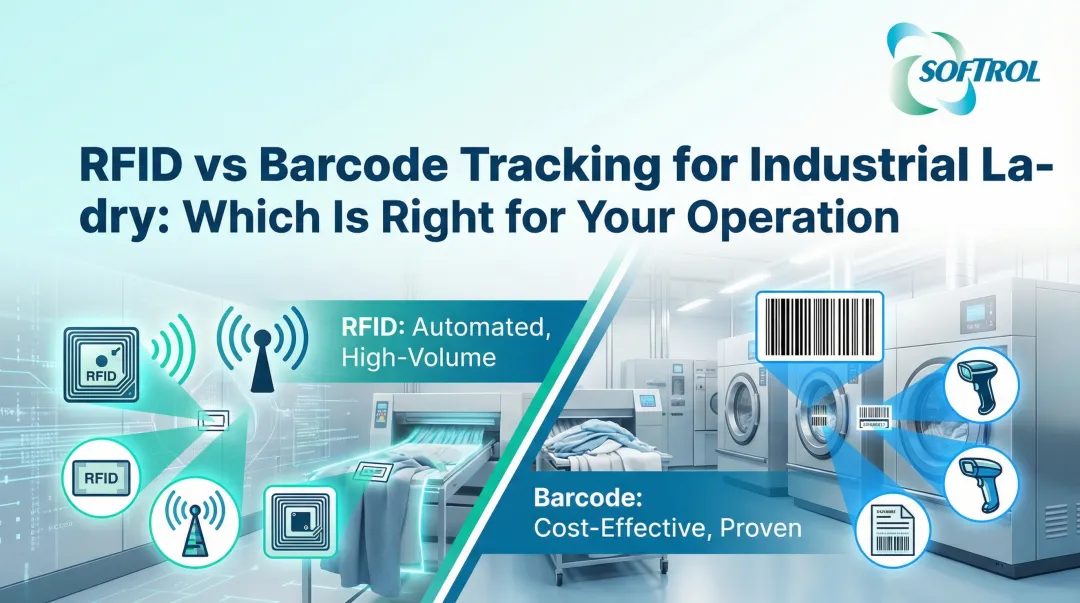
RFID vs Barcode vs Manual Methods in Laundry Plants
Laundry plants compare RFID with barcodes and manual counting because each method carries different costs, labor demands, and accuracy levels across daily production tasks. These differences influence how well a plant controls inventory movement, cycle tracking, and return verification during busy processing windows.
Here are the key comparisons that matter when plants evaluate each option for heavy laundry operations.
Method | Strengths | Limitations | Typical Use Case |
RFID | Near-contactless reads, higher accuracy, strong support for large volumes | Higher upfront cost and added hardware needs | High-volume plants needing steady tracking |
Barcode | Lower entry cost and simple adoption for small teams | Requires line-of-sight and slows down frequent reads | Small plants with slower movement |
Manual Counting | No hardware cost and easy to start for new facilities | High labor demand and high error rate during peak hours | Plants using basic tracking methods |
After comparing these methods, you should consider what your plant loses when tracking stays manual or barcode-based across busy shifts.
Looking for smoother, automated tracking without manual steps? Discover how our solutions can simplify your plant's operations.
Hidden Cost Laundry Plants Pay Without RFID Tracking
Plants that delay RFID often continue losing money through preventable errors, rising replacement spending, and inconsistent item tracking during busy production cycles. These issues remain unnoticed because the plant relies on manual counts that hide the true cost of shrinkage and misrouted items.
Here are the main hidden costs that affect laundry plants when RFID is not in place.
Rising replacement spending: Lost or misplaced items push teams to buy extra stock that increases yearly operating budgets without adding customer value.
Slow manual audits: Staff spend long hours counting items, which reduces available labor during peak processing shifts.
High error rates: Manual checks often miss item movement patterns, leading to misroutes and delayed returns during heavy loads.
Unseen shrinkage: Missing items remain unnoticed for long periods, which limits accurate forecasting for purchasing teams.
Extra buffer stock: Plants hold more backup inventory to cover movement gaps, which increases carrying cost and storage pressure.
Service delays: Missing or late items affect customer orders and create bottlenecks across dispatch and return cycles.
After outlining the risks of staying manual, you should understand how RFID delivers returns across asset flow and labor use.
Also Read: Save Time and Money with Softrol's Auto-Sort Systems
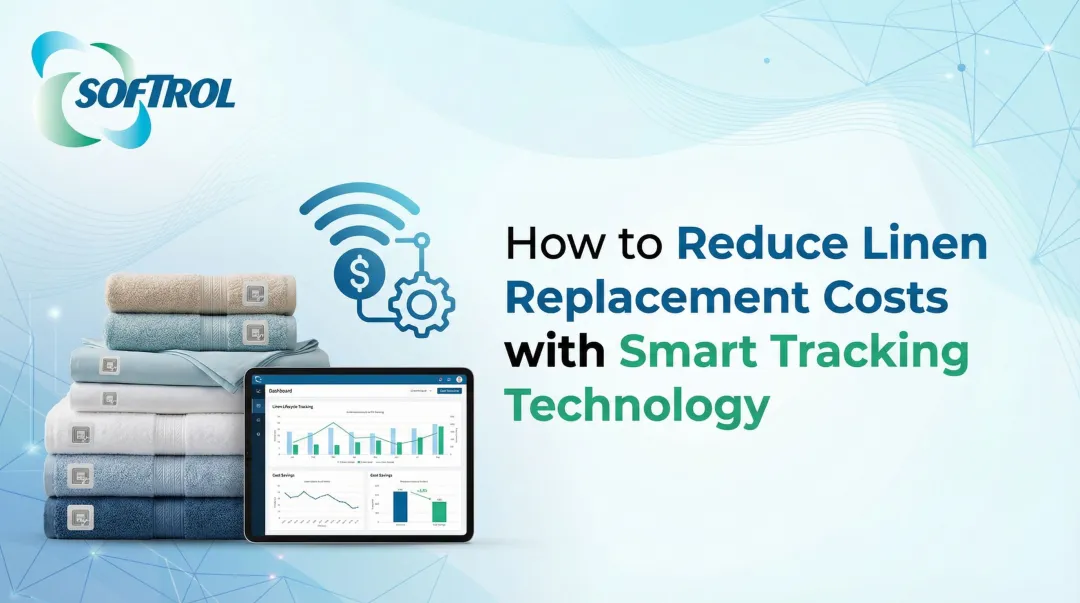
ROI Analysis for High-Volume Laundry Plants
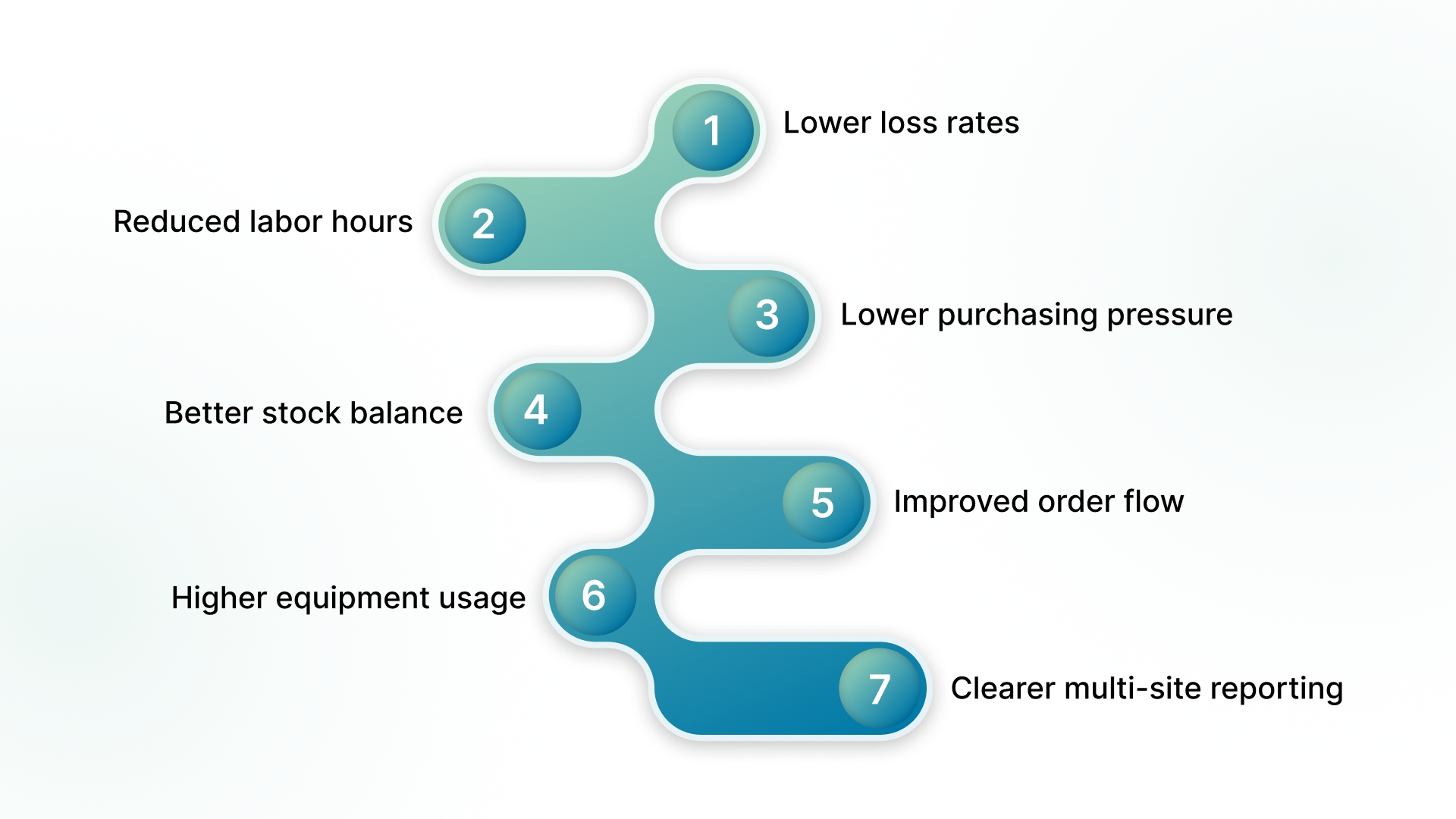
High-volume laundry plants often see measurable gains when RFID reduces shrinkage, lowers manual counting pressure, and supports clearer tracking across soil sort and clean-side movement. These gains matter because manual processes hide loss, raise labor time, and create uncertainty during peak production periods.
Here are the primary ROI drivers that help decision-makers understand the value created by RFID systems.
Lower loss rates: Hotels using RFID have reported linen loss reductions reaching 50%, helping laundry teams control shrinkage across multiple processing zones.
Reduced labor hours: Hotels using RFID have lowered linen management labor by 33%, giving plant teams more usable hours during peak shifts.
Lower purchasing pressure: Hotels using RFID have reduced linen purchasing costs by 15% to 20%, helping plants manage replacement spending with greater clarity.
Better stock balance: Accurate item counts help plants avoid extra purchasing and maintain steadier inventory levels across customer groups.
Improved order flow: Faster confirmation of returns supports smoother dispatch cycles during busy periods with increased customer demand.
Higher equipment usage: Fewer sorting delays help washers and dryers stay active longer across daily production windows.
Clearer multi-site reporting: Shared data helps leadership review usage patterns and plan production with fewer unexpected issues across multiple locations.
Strong ROI potential draws interest, though teams still need clarity on the risks and extra costs that can appear during setup.
Also Read: How Catalyst Chemical Systems Increase Efficiency
Implementation Risks and Hidden Expenses to Watch
RFID can support stronger tracking, but certain risks appear when plants manage tight spaces, fast movement, or older equipment across soil sort and rail paths. These risks raise cost when teams overlook process issues that affect read performance, hardware placement, or tag behavior during heavy production cycles.
Here are the main risks and hidden expenses laundry plants should review before finalizing their RFID setup.
Poor read coverage: Antennas placed too close to metal or tight lanes may create blind spots that reduce read consistency during peak movement.
Tag wear: Heavy washing and rough handling can shorten tag life, increasing yearly replacement costs for busy plants with large item counts.
Rapid trolley cycling: Fast returns in soil sort can trigger tag mismatches, which create tracking errors and require extra manual correction time.
Wiring limits: Hard-to-reach areas may need extra mounting work, raising initial installation hours and cost for dense production lines.
Training gaps: Staff unfamiliar with read zones may miss steps that cause misroutes, which lead to extra work during busy shifts.
System downtime: Hardware or reader issues may require service calls and cause short periods of manual handling until repairs are finished.
Now that the risks are clear, you can review how Softrol systems work with RFID to support smoother flow and stronger tracking across key zones.
Also Read: Laundry Cart Tracking Cuts Down on Loss and Theft
How RFID Connects With Softrol Systems for Commercial and Industrial Laundries
Commercial and industrial laundries often manage large volumes and tight schedules, creating steady pressure across sorting, movement, and delivery tasks for daily operations and production teams.
RFID supports clearer tracking for textile rental and uniform/workwear rental programs while giving plant managers better control over item flow during peak hours.
Here are the ways RFID connects with Softrol systems used across many plant types, including healthcare and hospitality laundries and Institutional and government facilities:
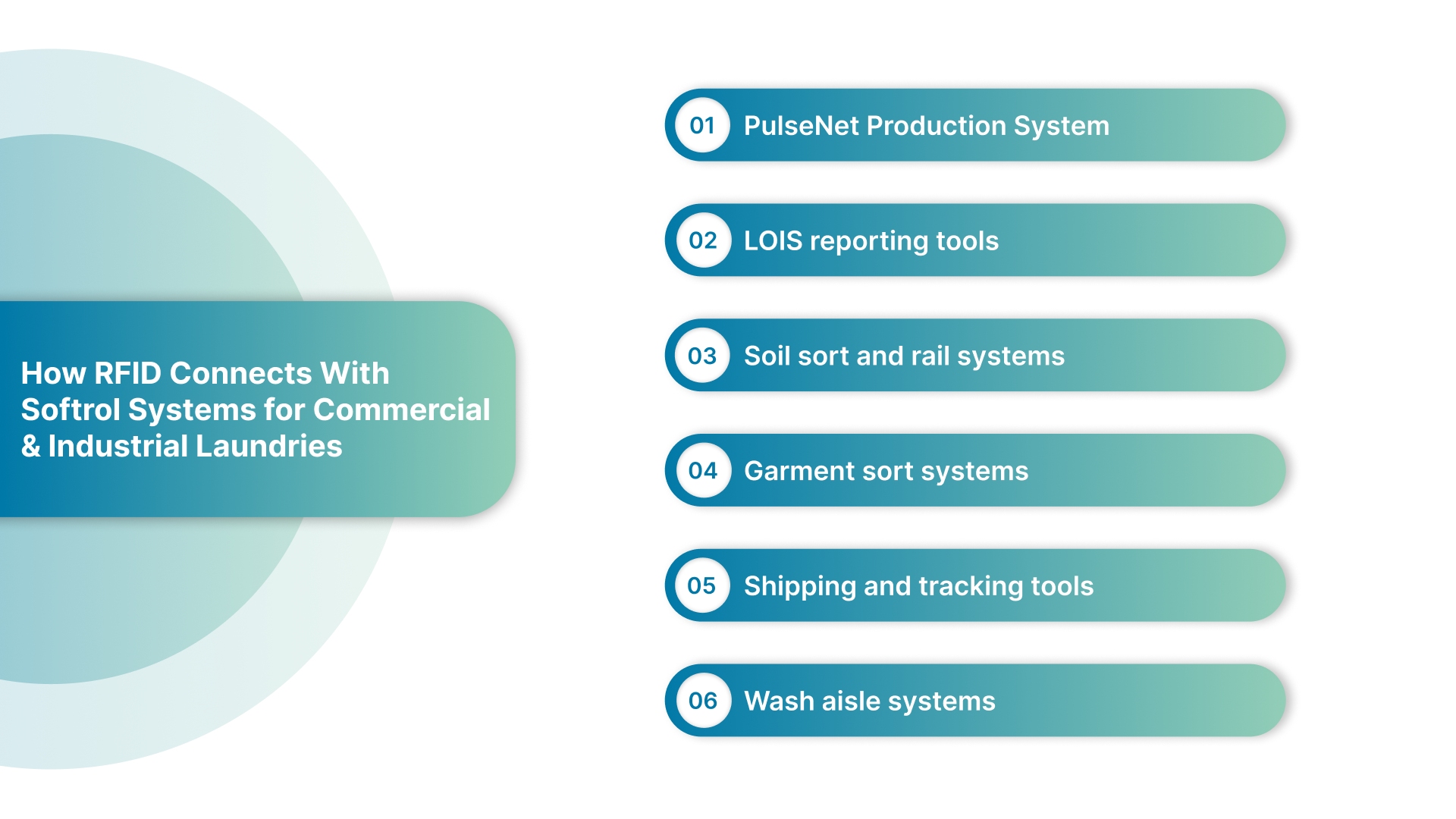
PulseNet Production System: RFID reads help PulseNet support Maintenance and Engineering teams by showing task activity and movement patterns during high-volume periods.
LOIS reporting tools: RFID activity feeds into LOIS, giving IT and CI roles clean data for item counts, performance trends, and range checks across shifts.
Soil sort and rail systems: RFID supports accurate recognition at lift stations and call-off points, which helps Commercial and industrial laundry owners maintain steady movement.
Garment sort systems: RFID tags guide sorting modules, helping supervisors place garments correctly during heavy garment cycles across varied customer groups.
Shipping and tracking tools: RFID reads help Softrak and MTrak confirm returns for multiple service routes, improving item accuracy for uniform rental programs.
Wash aisle systems: RFID activity helps teams coordinate timing with wash controls, giving decision-makers clearer oversight during busy work periods.
Now that you know how RFID supports Softrol systems, let’s look at a plant that saw gains after adding RFID-driven garment sorting.
Case Study: How Vogue Linen Improved Sorting Flow
Vogue Linen Supply is a family-owned plant serving Nevada with uniform rental, towel service, and mat programs for a wide range of customers. The company needed stronger tracking support after market growth created higher movement demands across sorting, storage, and garment handling areas.
Softrol installed a semi-automated garment sorting system using RFID tags and standard hangers to support steady hourly throughput.
Here are the key points that show how Softrol supported Vogue Linen during their system upgrade:
Space limits: Only 6,000 square feet were available for new equipment, requiring a system that worked well inside a tight production area.
Capacity gains: The system processed up to 1,200 garments per hour using one or two operators based on daily production needs.
Reduced overhead: The system required less floor space and lowered maintenance demands, improving long-term cost control for the company.
Future growth: The setup allowed Vogue Linen to expand production as volume increased without redesigning its sorting paths.
Want more examples of plants that improved throughput and daily flow? Explore more success stories to review their results.
Conclusion
RFID gives commercial and industrial laundries clearer control over item movement, lower loss, and stronger visibility across soil sort, rail, wash aisle, and shipping zones. These gains support smoother daily work for supervisors, operators, and leadership teams managing large customer mixes and rising production demands.
If your plant wants steadier tracking or needs support building a clear RFID plan, Softrol can guide your team with proven automation tools and practical experience.
Contact us now to review your goals and discuss the next steps for your laundry operation.
FAQs
How much does RFID cost in bulk?
When purchasing RFID tags in bulk, prices range between $0.10 to $1.00 per tag, depending on durability and volume.
How much does it cost to install RFID?
The cost of RFID installation typically ranges between $5,000 and $25,000, depending on the plant’s layout and customization requirements.
What is cheaper than RFID?
Barcode systems are generally more affordable than RFID, with lower setup costs and simpler equipment, though they require line-of-sight for scanning.
What are the three types of RFID?
The three main types of RFID are active, passive, and semi-passive, each varying in power source, read range, and cost.
How does RFID impact labor costs in laundry plants?
RFID reduces labor costs by automating tracking processes, which minimizes time spent on manual counting, audits, and error correction during high-demand periods.