Laundry operations in high-volume environments, such as healthcare, hospitality, and textile rental industries, are essential for maintaining service quality while minimizing operational costs. Among these, the commercial laundry segment is the most lucrative, registering the fastest growth during the forecast period.
By implementing effective process control from collecting soiled linens to delivering finished products, each step is optimized for maximum throughput, efficiency, and cost-effectiveness, driving growth in the industry.
This guide explores the essential steps in laundry operations and how they can be streamlined for improved productivity and performance.
Key Takeaways
Automated sorting and rail systems streamline material flow, reduce manual labor, and improve pounds-per-labor-hour, enhancing overall throughput in high-volume laundry operations.
Optimizing wash cycles with precise chemical dosing and adjusting settings based on fabric types ensures consistent quality while minimizing rewash rates and chemical waste.
Predictive maintenance systems help avoid unplanned equipment downtime by monitoring real-time data, improving equipment reliability, and increasing operational uptime.
Real-time data monitoring through systems like Softrol’s PulseNet provides actionable insights to track KPIs such as throughput, labor efficiency, and chemical usage, improving decision-making.
Upgrading to energy-efficient washers and moisture-sensing dryers optimizes utility consumption, lowering energy costs while maintaining optimal drying times and fabric care.
What are Laundry Operations?
Laundry operations encompass the entire process of collecting, washing, drying, pressing, folding, and distributing linens and garments. This involves not only the cleaning process but also managing labor, utilities, equipment, and chemicals to meet stringent service levels.
Key Focus Areas in Laundry Operations:
Labor Efficiency: Maximizing pounds-per-labor-hour by automating key processes like sorting and washing.
Utility Optimization: Minimizing water, energy, and chemical consumption without compromising cleaning quality.
Quality Control: Ensuring all linens meet hygiene standards, especially in healthcare settings, where patient safety is critical.
Labor costs and inefficiencies in tasks like soil sorting and cart building can significantly impact high-volume laundries. To address this, Softrol’s Material Handling Solutions seamlessly integrate into your workflow, automating linen sorting and transportation. With automated rail systems and soil sort systems, laundries can optimize labor allocation, boost pounds-per-labor-hour, and streamline throughput.
Understanding the structure of your laundry operation will help you determine whether in-house management or outsourcing fits your specific operational goals.
In-House vs. Outsourcing: What’s Best for Your Laundry Operation?
When deciding whether to manage laundry operations in-house or outsource them, high-volume laundries must consider factors like control, cost, and efficiency. Below is a comparison between in-house and outsourced laundry operations:
Factor | In-House Laundry Operations | Outsourced Laundry Operations |
Control | Full control over quality and timing. | Less control, reliant on vendor performance. |
Labor Costs | Higher upfront labor costs, but can be optimized with automation. | Lower labor costs, but dependent on third-party resources. |
Flexibility | Full flexibility to adjust operations as needed. | Limited flexibility; vendor may impose constraints. |
Equipment Maintenance | High capital investment in equipment and ongoing maintenance. | No investment in equipment, but relies on vendor capabilities. |
Compliance and Standards | Easier to enforce compliance with in-house regulations and industry standards. | Vendor must comply, but may lack flexibility or awareness of specific standards. |
Also Read: Plant Efficiency through Material Handling
Once you’ve decided on the operational model, it’s time to look into the right equipment for your facility’s needs.
4 Types of Laundry Operations and Equipment
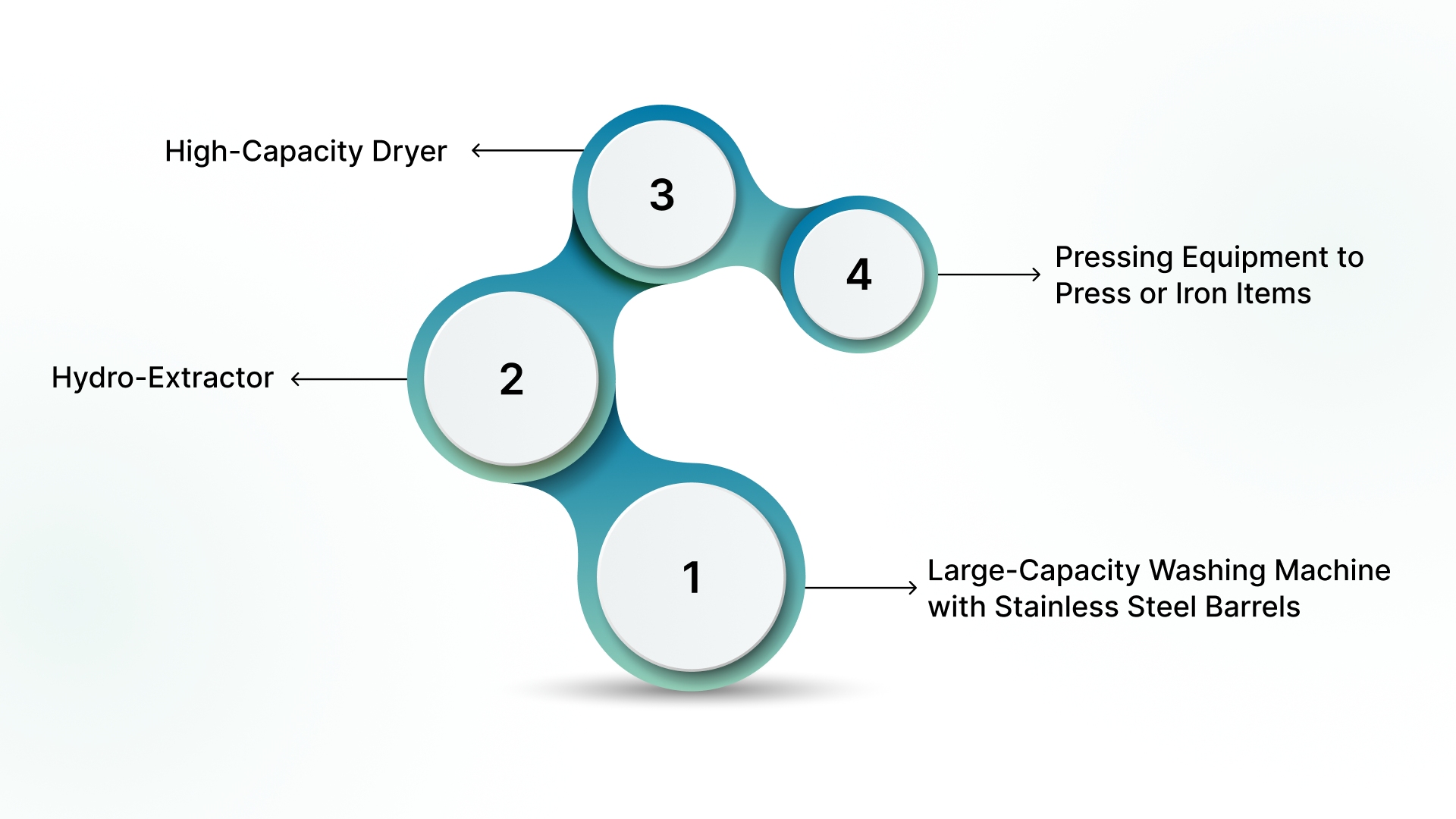
Laundry operations in high-volume settings require specialized equipment to manage the large quantities of linens or garments processed daily. Below are the essential machines commonly used in high-capacity laundries.
Large-Capacity Washing Machine with Stainless Steel Barrels
A large-capacity washing machine is designed to handle large volumes of linens, garments, and textiles, essential for high-demand facilities. With durable stainless steel barrels, these machines are both efficient and long-lasting, making them ideal for laundries processing thousands of items daily.
How Industries Use This Equipment:
Industry | Use Case |
Healthcare | Washes hospital linens, ensuring high hygiene standards. |
Hospitality | Handles large volumes of towels, sheets, and tablecloths. |
Textile Rental | Efficient for large batches of rented linens, flatwork, and towels. |
Government Facilities | Cleans uniforms, bedding, and other fabrics used in institutional settings. |
Hydro-Extractor
The hydro-extractor is used to remove excess water from linens after the wash cycle, reducing drying time. This equipment uses centrifugal force to extract water, making it ideal for high-volume laundries that aim to improve throughput and energy efficiency.
How Industries Use This Equipment:
Industry | Use Case |
Hospitality | Speeds up drying of towels and bed linens, improving turnaround times. |
Textile Rental | Removes excess water from large volumes of flatwork and linens. |
Healthcare | Quickly processes large quantities of medical linens, reducing drying time. |
Industrial Laundries | Ideal for heavy-duty workwear, uniforms, and mats. |
High-Capacity Dryer
A high-capacity dryer is designed to handle large loads of linens and garments, making it essential for high-volume laundries. These machines ensure that textiles are dried efficiently and evenly, minimizing utility costs and improving throughput.
How Industries Use This Equipment:
Industry | Use Case |
Hospitality | Quickly dries large batches of linens for hotels and resorts. |
Healthcare | Ensures medical linens, including sheets and gowns, are dried quickly while maintaining cleanliness. |
Textile Rental | Handles bulk drying of rented linens, towels, and flatwork, improving operational efficiency. |
Government Facilities | Dries uniforms, bedding, and other fabrics for institutional use. |
Pressing Equipment to Press or Iron Items
Pressing equipment is used to remove wrinkles and press linens, garments, and other fabrics to give them a polished, professional finish. This equipment is vital for achieving high-quality results, especially for industries like hospitality and healthcare, where linen presentation is essential.
How Industries Use This Equipment:
Industry | Use Case |
Hospitality | Presses sheets, pillowcases, and tablecloths to create a polished look for hotel guests. |
Healthcare | Presses hospital linens such as sheets, gowns, and towels to maintain hygiene and quality. |
Textile Rental | Presses rental linens and garments to ensure they meet customer standards before re-renting. |
Uniform Rental | Ensures that uniforms are wrinkle-free and ready for distribution to clients. |
Also Read: Plant Productivity with Hybrid Sort System
With the right equipment in place, it's crucial to understand the main cost drivers that impact your laundry operations’ profitability.
Main Cost Drivers of In-House Laundry
Running an in-house laundry facility requires balancing operational costs across labor, utilities, and equipment. Understanding the primary cost drivers can help optimize processes and improve the plant’s bottom line.
Cost Driver | Details |
Labor Costs | High labor requirements for sorting, washing, folding, and delivery. Automating sorting and pressing reduces labor costs. |
Utility Costs | Water, energy, and chemical use are major expenses. Optimize with energy-efficient dryers and automated chemical dosing. |
Equipment Maintenance | Regular maintenance and repairs for washing machines, dryers, and pressing equipment. Implement predictive maintenance to reduce downtime. |
Chemical Costs | Detergents, softeners, and bleach contribute to expenses. Reduce waste by using precise chemical dosing systems and concentrated detergents. |
Also Read: Autosortation Technology: Benefits for Uniform Rental Operators
Keeping track of these costs can be improved with the right KPIs and metrics, allowing you to measure operational efficiency.
KPIs and Metrics Dashboard for Laundry Operations
A real-time KPIs and metrics dashboard helps high-volume laundries track their performance at every stage of the laundry process. Below is a table of key KPIs and metrics that should be tracked in laundry operations.
Performance Metric | KPI Definition | Operational Impact | Optimization Actions |
Pounds per Labor Hour (PLH) | Pounds processed per hour of labor. | Reflects labor efficiency and productivity. | Automate sorting and use high-capacity washers. |
Rewash Rate (%) | Percentage of linens sent for rewash due to insufficient cleaning. | Indicates wash quality issues and extra costs. | Refine wash cycles and chemical dosing to reduce rewash rates. |
Water Usage per Pound | Water consumed per pound of linen processed. | Affects utility costs and sustainability. | Implement water recycling and optimize load sizes. |
Energy Use per Cycle | Energy consumed during wash, rinse, and drying cycles. | Impacts energy costs, especially during drying. | Upgrade to energy-efficient dryers and optimize drying cycles. |
Average Wash Cycle Time | Time taken for a full wash cycle (soak, wash, rinse). | Affects throughput and operational speed. | Optimize wash settings based on fabric types and soil levels. |
On-Time Delivery Rate | Percentage of linens delivered on schedule. | Ensures SLA compliance and customer satisfaction. | Improve throughput with automated systems and scheduling. |
Inconsistent wash cycles and chemical dosing often lead to rewash, increasing operational costs and diminishing quality. This is where Softrol’s Process Control Solutions can integrate automated chemical dosing systems into the wash cycle. With Catalyst Chemical Systems, laundries can reduce chemical waste, improve wash quality, and minimize rewash, driving down costs and enhancing quality control.
After tracking KPIs, it's important to focus on staff management to ensure smooth operations and achieve optimal performance.
Laundry Team Management Staff in Commercial and Industrial Facilities
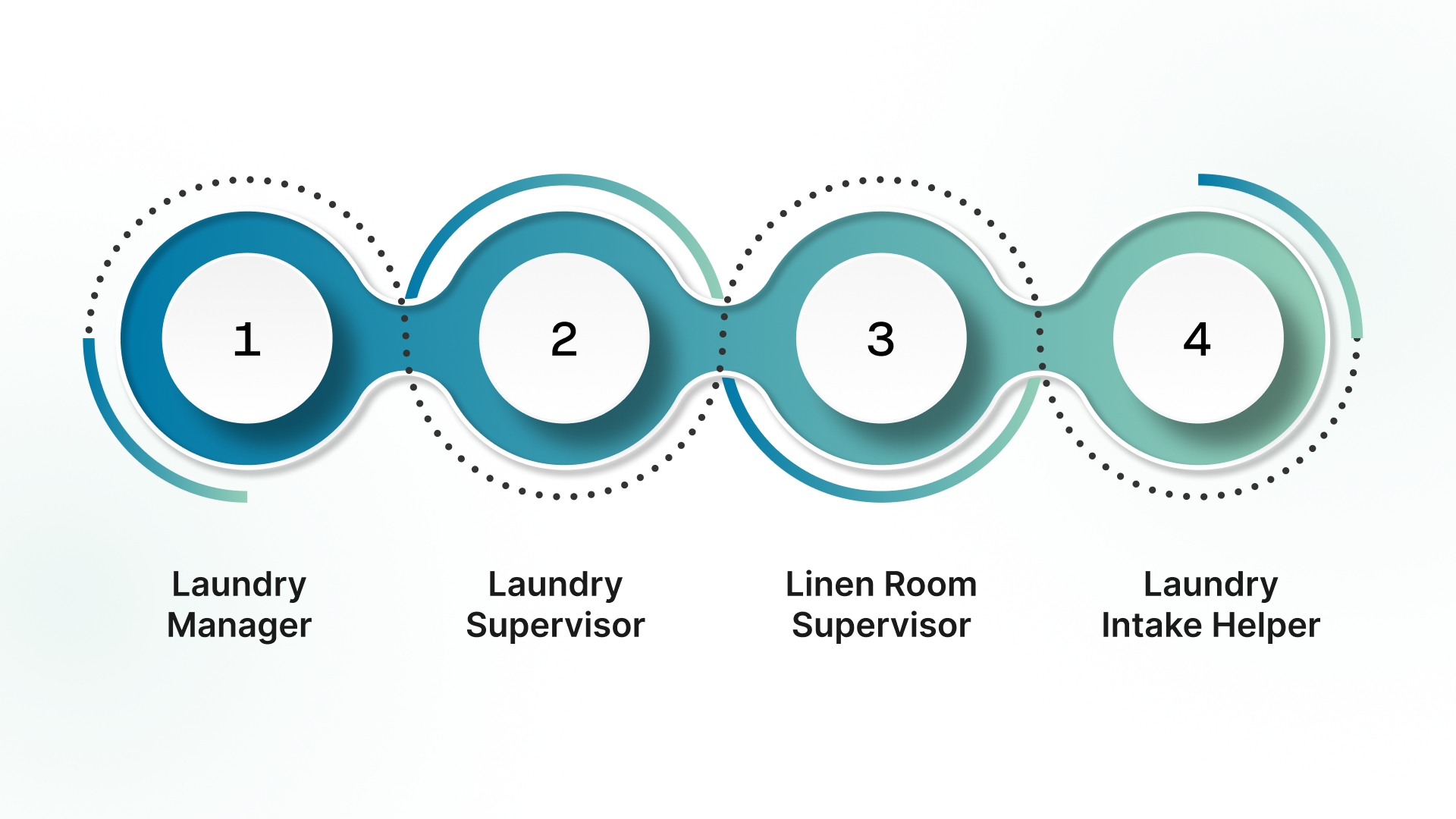
Managing a high-performing laundry team in commercial or industrial laundries requires clear role definitions, efficient workflows, and performance monitoring. Below are the essential roles for managing a laundry team.
Laundry Manager
The Laundry Manager is responsible for overseeing the laundry operations, focusing on both the financial and operational aspects to ensure consistent output, cost control, and quality maintenance across all laundry processes.
Key Responsibilities:
Manage plant P&L, optimize pounds-per-labor-hour, and control labor costs.
Ensure SLAs are met by monitoring turnaround times and linen quality.
Oversee equipment uptime, coordinating preventive maintenance and repairs.
Track utility usage, implementing strategies to reduce water and energy consumption.
Laundry Supervisor
The Laundry Supervisor ensures the efficient operation of daily laundry activities, from sorting to finishing, ensuring that all tasks are performed to specifications and within tight timeframes.
Key Responsibilities:
Supervise wash cycles and manage load balancing to meet production targets.
Ensure consistent wash cycles by adjusting temperature, chemical dosing, and rinse times.
Monitor rewash rates, making adjustments to reduce reprocessing.
Perform quality checks on linens, especially for healthcare and hospitality compliance.
Linen Room Supervisor
The Linen Room Supervisor oversees the receiving, sorting, and storage of all linens, ensuring proper tracking and delivery according to demand in high-volume operations such as hotels or healthcare facilities.
Key Responsibilities:
Maintain accurate inventory management and coordinate linen processing.
Supervise sorting systems by fabric type, color, and soil level.
Monitor storage processes, ensuring linens are properly folded and ready for distribution.
Implement RFID tracking systems for real-time inventory control.
Laundry Intake Helper
The Laundry Intake Helper is responsible for receiving and sorting incoming soiled linens, ensuring that they are accurately categorized for the appropriate cleaning process.
Key Responsibilities:
Sort soiled linens by fabric type, soil level, and customer classification.
Measure linen weight for correct load sizing to ensure optimal wash efficiency.
Coordinate with the Laundry Supervisor to ensure intake matches production targets.
Maintain cleanliness and organization in the dirty linen staging area.
Also Read: How Catalyst Chemical Systems Increase Efficiency
Efficient staff management is crucial, but optimizing the laundry cycle itself is equally important for improved throughput.
Laundry Operations Process in High-Demand Commercial Environments
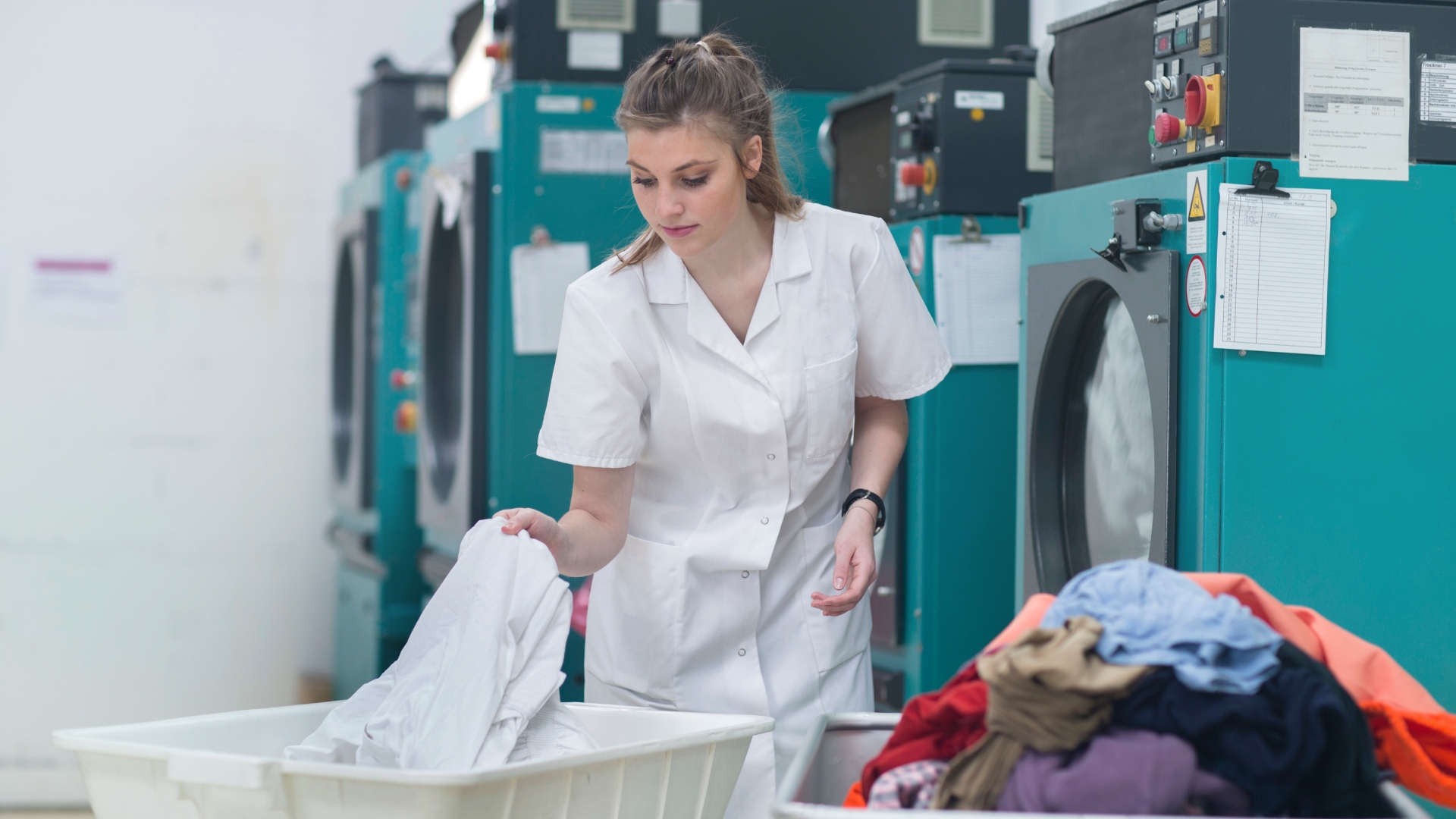
Laundries in healthcare, hospitality, and textile rental services rely on efficient processes to meet stringent quality standards and tight deadlines. Below are the essential steps in the laundry cycle to maintain the highest quality.
1. Collecting Soiled Linen
Efficient linen collection is critical for a smooth workflow, especially in high-volume environments like healthcare and uniform rental services.
Checklist:
Automated collection systems: Reduce manual handling and improve collection speed.
RFID-enabled carts: Track linens in real-time, ensuring accuracy and reducing losses.
Clear collection areas: Organize soiled linen by category to speed up sorting.
Scheduled equipment maintenance: Keep collection systems running smoothly to avoid downtime.
2. Transporting Soiled Linen to the Laundry Department
Efficient transportation of soiled linens ensures that they reach the washing area quickly, avoiding bottlenecks.
Checklist:
Overhead rail systems: Optimize space and transport linens without congesting floor areas.
Automated trolleys: Use location tracking for real-time linen movement monitoring.
Smart routing: Minimize delays by automating trolley movements and reducing unnecessary stops.
Regular transport system checks: Prevent malfunctions and ensure seamless operations.
Take a look at this video on rail systems, which are part of Softrol’s Total Plant Management, designed to enhance plant efficiency, including solutions for both soiled and clean linens.
3. Sorting of Linen and Uniforms
Sorting linens by type, color, and soil level ensures they are treated according to their specific needs.
Checklist:
Automated sorting systems: Classify linens by fabric, soil level, and customer type with precision.
RFID or barcode scanning: Track linens for accurate categorization and improved workflow.
Custom sorting criteria: Set parameters for sorting by fabric type and washing needs.
Monitor sorting performance: Regularly review sorting accuracy to identify bottlenecks.
4. Inspection
Inspection ensures linens meet the required standards before processing. In industries like healthcare, where hygiene is critical, AI inspection systems can automatically detect stains and damage, ensuring only high-quality linens are processed.
Checklist:
AI-powered visual inspection systems: Detect stains, damage, and defects before processing.
Quality checkpoints: Ensure linens meet standards before moving to the next stage.
Real-time reporting: Track defects and quality issues for quick corrective action.
Staff training: Ensure personnel can spot issues during manual inspections if needed.
5. Weighing and Loading
Proper weighing and loading of linens ensures that each washer is loaded to its optimal capacity. Overloading or underloading can waste water, detergent, and energy, leading to inefficiencies in industrial laundries.
Checklist:
Integrated weighing systems: Measure linen weight for correct load sizing.
Automated load balancing: Ensure optimal distribution based on fabric type and soil level.
Monitor load sizes: Track load data to prevent overloading and underutilization.
Adjust for fabric type: Modify load parameters for delicate or heavy-duty fabrics.
Also Read: Save Time and Money with Softrol's Auto-Sort Systems
6. Washing, Hydro-Extracting, and Drying
Washing, hydro-extracting, and drying are energy-intensive stages in the laundry cycle. Using automated wash systems and moisture-sensing dryers helps ensure optimal performance, reduce energy costs, and improve throughput in high-volume facilities like uniform rental laundries.
Checklist:
Automated wash cycle adjustments: Adjust for fabric types and soil levels to optimize performance.
Hydro-extractors: Remove excess moisture, reducing drying times and energy usage.
Energy-efficient dryers: Use moisture-sensing technology to adjust drying times and save energy.
Monitor machine performance: Track wash cycles and drying times to identify inefficiencies.
7. Finishing
Finishing is essential to achieving wrinkle-free, polished linens. Automated pressing systems and modular folding machines improve both speed and consistency, ensuring linens are properly pressed and ready for delivery in sectors like hospitality and healthcare.
Checklist:
Automated pressing systems: Ensure wrinkle-free linens with consistent results.
Modular folding systems: Adapt to different sizes and types of linens for fast, efficient folding.
Steam control: Use automated moisture levels for optimal pressing results.
Real-time monitoring: Track finishing performance to ensure quality standards are met.
8. Storage and Distribution
Efficient storage and distribution are essential to maintain a smooth delivery process. Using automated storage systems and real-time tracking helps ensure linens are available when needed, improving on-time delivery rates in industries like textile rental and healthcare.
Checklist:
Automated storage systems: Maximize space and ensure easy access to linens.
RFID tracking: Monitor inventory levels and track linen movement for accuracy.
Automated sorting for distribution: Ensure linens are sorted and ready for delivery based on customer or linen type.
Track delivery timelines: Use integrated scheduling systems to ensure timely deliveries.
9. Maintenance and Cleaning
Maintenance is key to keeping machinery running efficiently and reducing downtime. Implementing predictive maintenance systems helps monitor equipment health and prevent unexpected failures in high-volume laundries.
Checklist:
Predictive maintenance systems: Monitor equipment health in real-time to identify potential issues early.
Regular cleaning protocols: Clean lint traps, filters, and machine components to maintain efficiency.
Track usage patterns: Analyze machine performance data to plan maintenance schedules.
Staff training: Educate staff on proper maintenance procedures to reduce breakdowns.
10. Documentation and Reporting
Accurate documentation and real-time reporting are essential for performance monitoring and continuous improvement. Cloud-based systems allow for real-time access to metrics like pounds-per-labor-hour, chemical consumption, and utility usage.
Checklist:
Cloud-based reporting systems: Ensure real-time data access and tracking across multiple locations.
Track key KPIs: Monitor throughput, chemical usage, and maintenance schedules.
Automate data entry: Reduce human error and ensure accurate records for reporting and compliance.
Monitor trends: Use data analytics to track performance trends and identify areas for improvement.
Also Read: How Softrol's Productivity Tracking Saves You Money
11. Quality Assurance
Quality assurance is critical in high-volume laundries, particularly in industries with strict hygiene standards like healthcare. Automated systems ensure consistent quality and reduce the chances of defects or stains slipping through.
Checklist:
Automated quality checks: Use AI-powered systems for defect detection.
Random sampling: Perform quality checks on a sample of linens to maintain consistency.
Real-time feedback: Immediately address quality issues with automated alerts.
Standard Operating Procedures (SOPs): Implement clear SOPs for handling quality checks at each step of the process.
Bottlenecks such as rail jams, unbalanced loads, and congestion can cause delays and inefficiencies in laundry operations, leading to costly overtime. Softrol’s Total Plant Integrated Data & Software uses PulseNet Production Systems and automated sorting to streamline material flow, eliminate congestion, and optimize tunnel utilization, reducing downtime and improving throughput.
To ensure the highest cleaning standards, selecting the correct chemicals for each step is essential.
Chemicals Used in Laundry Cleaning and Maintenance
The proper use of chemicals is essential for maintaining cleanliness and fabric integrity in high-volume laundries. Here are commonly used chemicals along with their benefits and how they are applied in different sectors like healthcare, hospitality, and textile rental.
Chemical | Usage | Best Application |
Clax Supremo Plus | Concentrated mainwash detergent | High-volume washing of linens, towels, and medical garments. |
Clax Hypo | Chlorine bleach for whitening | Use on heavily soiled items like hospital sheets and towels. |
Clax Optimo | Peracid bleach for color-safe whitening | Safe for colored linens and uniforms in hotels and laundries. |
Clax Xtra Soft | Fabric softener for smoother linens | Softens linens like hospital bedding, towels, and tablecloths. |
Clax 200 | Surfactant booster to improve washing performance | Use with heavy-duty linens, including industrial uniforms. |
Clax CID | Liquid neutralizer for pH control | Applied during rinse cycle to maintain fabric integrity. |
Clax Profi Forte | Strengthener for enhancing fabric durability | Ideal for frequent-use linens, such as hospital sheets and towels. |
AC 101 | Removes ink stains | Removes stains from uniforms and linens in high-turnover settings. |
AC 102 | Removes oil and tar stains | Effective for workwear and industrial uniforms. |
AC 103 | Removes rust stains | Suitable for processing industrial workwear with metal parts. |
AC 104 | Removes blood and protein stains | Ideal for medical linens and uniforms in healthcare settings. |
AC 106 | Removes dye stains | Use for linens that come in contact with colored dyes. |
Also Read: Virtual Rail Improves Process Decisions Making
Understanding chemical applications is essential to minimizing common problems that may arise in the laundry process
4 Common Problems in Industrial Laundry Operations
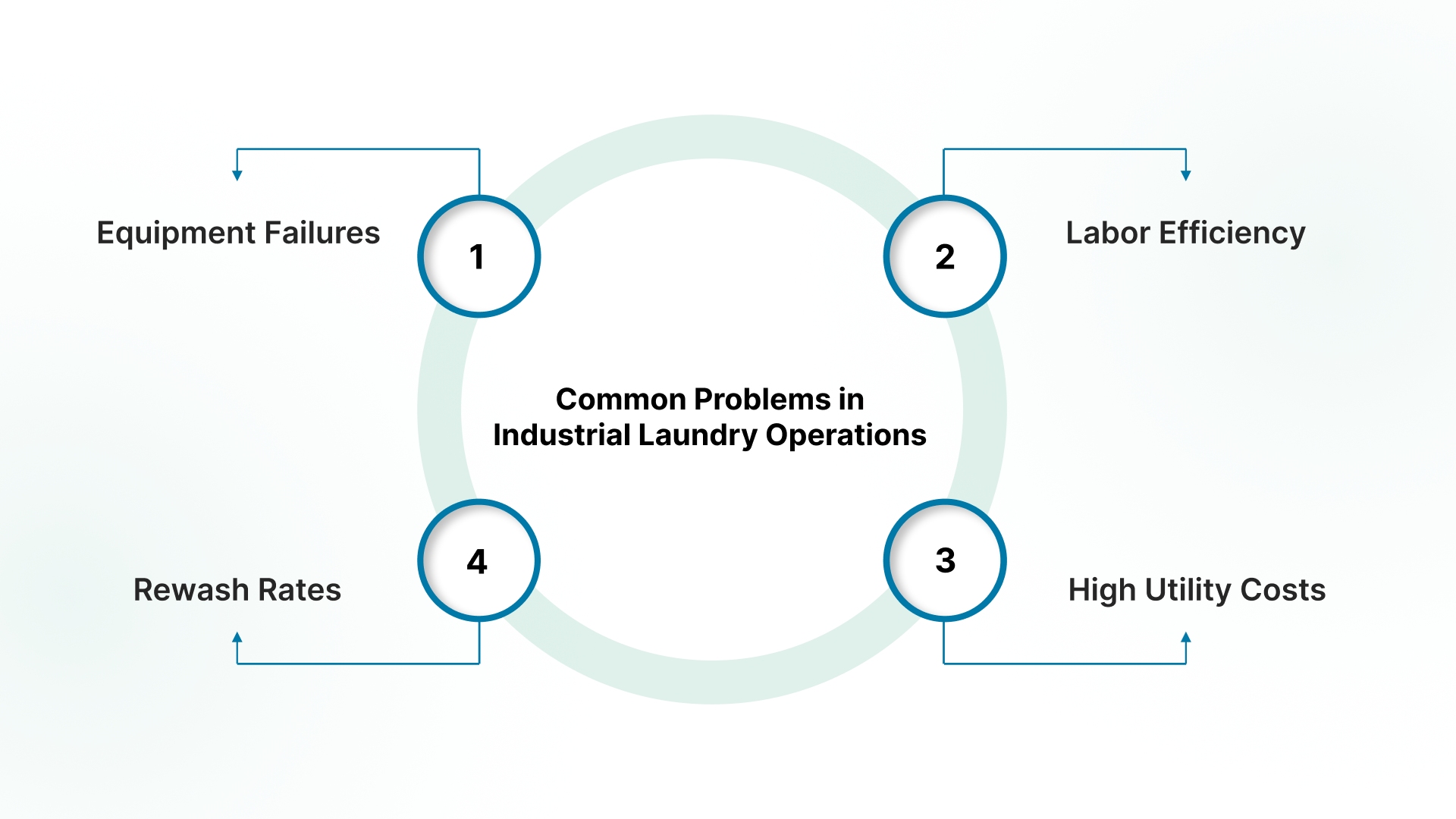
In high-volume laundries, managing large volumes while maintaining high quality and efficiency is a constant challenge. Below are common problems faced by laundry operations:
1. Equipment Failures
Unexpected equipment failures can disrupt laundry workflows, leading to downtime and delayed deliveries.
Solution: Implement predictive maintenance using real-time monitoring systems to track the health of critical equipment.
2. Labor Efficiency
Manual sorting, washing, and drying processes lead to high labor costs and inefficiencies, especially in high-volume laundries that operate around the clock.
Solution: Introduce automated sorting systems and moisture-sensing dryers to streamline labor-intensive tasks. Tracking pounds-per-labor-hour ensures optimal staffing, improving throughput and reducing costs.
3. High Utility Costs
Water, energy, and chemical costs are significant drivers of expenses in laundry operations.
Solution: Optimize wash cycles by using energy-efficient washers and water-saving rinse technologies.
4. Rewash Rates
Rewashing linens is costly and time-consuming, especially when cycles are not optimized or quality standards are not consistently met.
Solution: Automate wash parameters with soft control systems to ensure consistent results.
Also Read: What Are Catalyst Chemical Injection Systems?
Implementing laundry process control systems like Softrol can help solve these issues and streamline your laundry operations.
Upscale Your Laundry Operations with Softrol’s Integrated Solutions
Softrol is a US-based specialist in automation and total plant management for the laundry and textile rental industries, providing integrated hardware, software, and data systems tailored to high‑volume operations. Softrol focuses on helping large‑scale commercial, healthcare, hospitality, and industrial laundries optimize throughput, reduce labor and utility costs, and gain real‑time visibility into their performance.
Softrol’s unique value lies in three core solution pillars:
1. Material Handling Solutions
Softrol’s material handling systems optimize the flow of soiled and clean linens, reducing manual labor, increasing throughput, and improving space utilization. These systems automate sorting, transportation, and storage to streamline the laundry process.
Soil Sort Systems: Automatically classify linens by type, fabric, and customer, reducing manual sorting time and improving throughput.
Laundry Rail Systems: Overhead rail transport systems move linens efficiently, freeing up floor space and improving production efficiency.
Garment Sort Systems: Sort and track finished garments with minimal labor, reducing the need for manual sorting and increasing operational accuracy.
2. Process Control Solutions
Process control systems from Softrol help laundries achieve consistent wash results, optimize chemical usage, and enhance resource efficiency. These systems automate wash cycles, chemical dosing, and dryer operations to maintain high-quality standards while reducing operational costs.
Wash Aisle Systems: Automate wash cycles to optimize detergent, water usage, and cycle parameters for maximum efficiency.
Catalyst Chemical Systems: Control detergent and chemical dosing accurately to reduce waste, improve cleaning quality, and lower chemical costs.
PulseNet Chemical Injection: Automatically adjusts chemical delivery based on real-time conditions, improving consistency and reducing rewash rates.
Read how Softrol's Chemical Dispensing Systems helped Gildan Activewear in this customer story.
3. Total Plant Integrated Data & Software
Softrol’s data systems offer real-time visibility into every aspect of your laundry operation. These integrated systems track KPIs such as pounds-per-labor-hour, chemical usage, and equipment uptime.
PulseNet Production System: Monitor and optimize labor usage and throughput in real time across all workstations.
LOIS (Laundry Operation Information System): Access production data remotely and receive alerts on key performance metrics to maintain operational control.
Shipping & Tracking Systems: Ensure accurate and on-time delivery of finished linens by tracking items in real time and streamlining order fulfillment.
With decades of experience and an exclusive focus on industrial laundry workflows, Softrol positions itself as a long‑term partner for facilities that handle large daily volumes, operate under strict service standards, and use both new and legacy equipment.
Explore Softrol’s brochures for insights on plant automation solutions, covering everything from productivity controls to management information software.
Conclusion
Emphasizing automation, predictive maintenance, and real-time data monitoring allows laundries to meet service-level agreements, reduce utility expenses, and maintain high hygiene standards.
For VPs of Operations, Plant Managers, and Engineering Managers, integrating advanced equipment, optimizing chemical use, and continuously tracking KPIs ensures operational excellence.
Softrol offers Material Handling Solutions, such as automated soil sort systems and overhead rail systems, that streamline the movement of linens, reducing manual labor and increasing throughput. Process Control Solutions, Catalyst Chemical Systems, and wash aisle automation ensure precise chemical dosing and optimize wash cycles, reducing rewash rates.
Contact us today for solutions to enhance your laundry operations.
FAQs
What’s the best way to improve throughput in high-volume laundries?
Optimizing each laundry stage with automated sorting, optimized wash cycles, and predictive maintenance ensures maximum pounds-per-labor-hour and faster turnaround times.
How do I reduce rewash rates in my laundry facility?
Implementing precise chemical dosing, automating wash settings, and regular quality checks reduces rewash, improving efficiency and reducing labor and utility costs.
What equipment upgrades can reduce my laundry operation costs?
Upgrading to energy-efficient washers, moisture-sensing dryers, and automated rail systems helps reduce utility consumption and increase throughput while lowering labor costs.
How can I ensure compliance with healthcare laundry standards?
Use automated wash cycle controls and chemical systems to ensure linens are sanitized properly, maintaining hygiene and meeting strict healthcare regulations and standards.
What role does data play in optimizing laundry operations?
Tracking real-time performance data helps identify bottlenecks, monitor throughput, and adjust workflows, making data-driven decisions to enhance efficiency and cost management.