Many plants feel the strain as volume climbs, but staffing stays tight, creating pressure across sorting, washing, and finishing lines. The LMS market passed $2.5 billion in 2024 and is projected to double by 2033, showing how rapidly operators are adopting stronger control systems.
Stalled loads, missing items, unstable lead times, and unclear shift transitions create daily stress for operations teams. These issues raise labor costs and make customer commitments harder to maintain.
In this blog, we’ll explore how a laundry management system supports high-volume plants, how it connects major production stages, and what outcomes it can help your team reach.
Key Takeaways:
Laundry Management Systems (LMS) boost operational efficiency by providing clear visibility across intake, sorting, washing, finishing, and shipping stages.
Core LMS modules include production tracking, machine connectivity, workflow scheduling, quality management, and labor tracking.
LMS improves key metrics such as throughput consistency, labor productivity, equipment utilization, and lead-time stability.
Adoption requires careful planning around equipment connectivity, network reliability, tagging discipline, and training for smooth integration.
Good LMS solutions support high-volume plants with systems for soil sorting, wash aisle controls, labor productivity, and multi-site reporting.
6 Core Modules in an Industrial Laundry Management System
An industrial plant needs clear visibility across intake, sorting, washing, finishing, labor, and shipping, and each area produces data that matters. A laundry management system brings this information together so teams can act quickly, reduce delays, and keep production moving with fewer surprises.
Here are the core modules that matter most for industrial and commercial laundry plants:
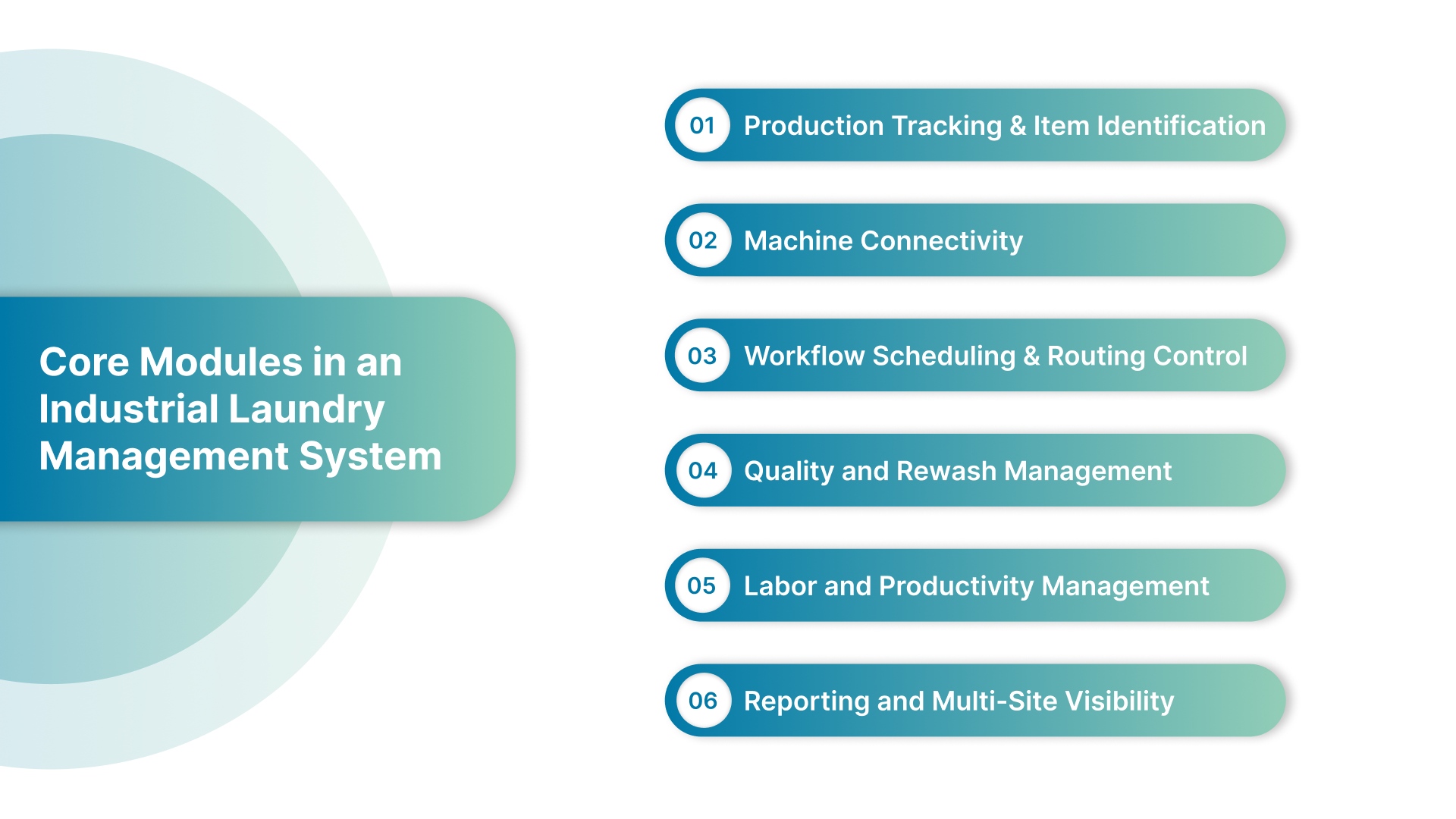
Production Tracking and Item Identification: Tracks batches or individual items through tagging systems, giving managers accurate visibility across intake, sorting, washing, finishing, and shipping.
Machine Connectivity and Operational Monitoring: Captures status, cycle details, and stoppage alerts from washers, dryers, conveyors, and rail systems so teams can act quickly when flow slows.
Workflow Scheduling and Routing Control: Assigns loads to the correct equipment based on volume, soil level, fabric type, and current availability across the plant.
Quality and Rewash Management: Logs inspection results, stains, damages, and rewash details, supporting corrective actions when repeat issues appear across customer groups.
Labor and Productivity Management: Tracks operator activity, work distribution, and labor hours tied to each production zone to support better planning across shifts.
Reporting and Multi-Site Visibility: Consolidates performance data, downtime records, and production trends, giving leadership a dependable view across one plant or several locations.
Now that you’ve seen the modules, let’s walk through how the system moves work across each stage.
Curious how these modules could strengthen production control across your plant? Connect with Softrol experts who can walk you through practical benefits today.
How a Laundry Management System Works in Practice
A laundry management system captures information at every production stage, helping supervisors maintain control during busy shifts. Data collected at each step reduces delays, supports faster decisions, and brings order to processes that traditionally rely on manual notes.
Here is the step-by-step flow:
Intake and Tagging: Items are logged through barcodes or RFID tags, giving the plant a reliable record of incoming volume and customer-specific details.
Soil Sorting: Batches are separated by category, fabric type, and soil level, allowing teams to route work correctly and avoid unnecessary rework later.
Routing to the Wash Aisle: Loads are assigned to washers based on current availability, preventing slowdowns caused by bottlenecks or uneven machine distribution.
Wash and Chemical Processes: The system records cycle data and dosing information, helping production leaders understand where wash aisle delays may begin forming.
Drying and Transfers: Items move through dryers and conveyor systems while the platform tracks timing, movement, and any stalls affecting downstream areas.
Finishing and Inspection: Operators complete pressing, folding, or hanging tasks while logging QC notes that show patterns linked to quality or rewash trends.
Packing and Shipping: Completed items are staged, packed, and assigned to delivery carts while the system records counts, exceptions, and customer order status.
Reporting and Dashboards: Supervisors and managers review plant activity through clear dashboards that highlight shifts, delays, throughput, and production trends.
Once the steps are connected, the impact on plant performance becomes easier to see.
Also Read: Softrol Systems: Providing a Total Plant Management Solution
Operational Impact: Key Metrics an LMS Can Improve
A laundry management system supports measurable gains by giving teams clearer visibility into areas that slow production or create unpredictability. These improvements help plants keep workloads stable, reduce unnecessary stops, and respond faster to issues that affect customer service.
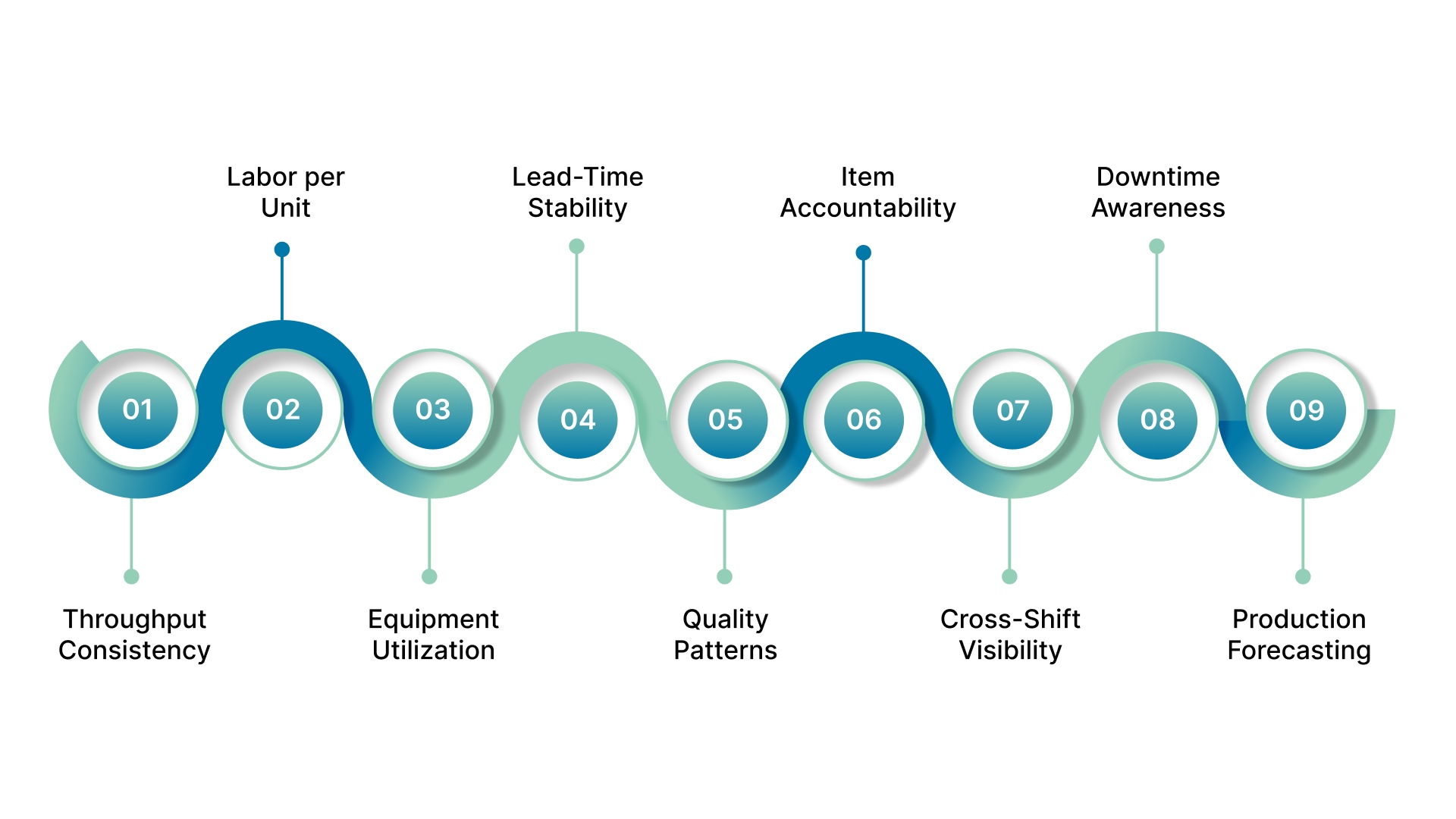
Key metrics an LMS can improve include:
Throughput Consistency: Plants get steadier production flow because supervisors can act sooner when certain work zones begin falling behind.
Labor per Unit: Teams gain better awareness of staffing demands by reviewing operator activity and balancing shifts before workloads become difficult to manage.
Equipment Utilization: Washers, dryers, and finishing stations run with fewer long pauses because managers can see slowdowns forming earlier.
Lead-Time Stability: Work moves through intake, washing, and finishing with fewer unexpected stalls, giving customer-facing teams clearer delivery timelines.
Quality Patterns: QC data allows managers to spot repeated issues tied to fabric type, machine cycle, or operator task, helping reduce unnecessary rewash.
Item Accountability: Plants lower their risk of lost goods through clearer tracking at each stage, creating a more reliable record of customer material movement.
Cross-Shift Visibility: Supervisors gain better awareness of activity across shifts, helping them prevent imbalances that contribute to late carts or stalled batches.
Downtime Awareness: Stoppages become easier to address because teams can review when and where equipment slowed or stopped during any production window.
Production Forecasting: Leaders can plan schedules more accurately because they have clearer insight into historical run times and recurring plant patterns.
With the impact understood, the focus shifts to what plants should plan before adoption.
Reach out to us to learn how our tools help plants read production trends sooner and respond faster when conditions change on the floor.
Practical Considerations for LMS Adoption
Deploying a laundry management system requires clear expectations across operations, engineering, and IT. Each group depends on accurate data, consistent tagging, and predictable workflows to keep production steady.
Key considerations to review include:
Equipment Connectivity: Confirm your washers, dryers, conveyors, and sort systems can share data that helps managers identify slowdowns before they expand into larger delays.
Network Reliability: Ensure your plant network can support continuous data movement so dashboards and alerts remain accurate throughout each shift.
Tagging Discipline: Train staff to tag batches or items consistently so the system captures correct details and prevents confusion later in the process.
Workflow Changes: Review how plant steps may shift once the system goes live, helping teams build confidence before production volumes increase.
Training Plans: Give supervisors and operators simple ways to learn new screens and tasks so adoption does not stall during daily workloads.
Phased Rollout: Start with one area, such as the soil sort or wash aisle, giving teams time to adjust before expanding to finishing and shipping.
Data Validation: Establish routines that confirm counts, QC notes, and batch details remain accurate, supporting better decisions across operations and scheduling.
Preparation helps, but most plants still encounter challenges that surface during daily activity.
Also Read: Laundry Cart Tracking Cuts Down on Loss and Theft
Common Laundry Issues an LMS Can Address
Laundry plants often struggle with missing tags, incomplete records, and delayed reactions during peak hours. These issues grow quickly when teams rely heavily on manual notes or informal tracking.
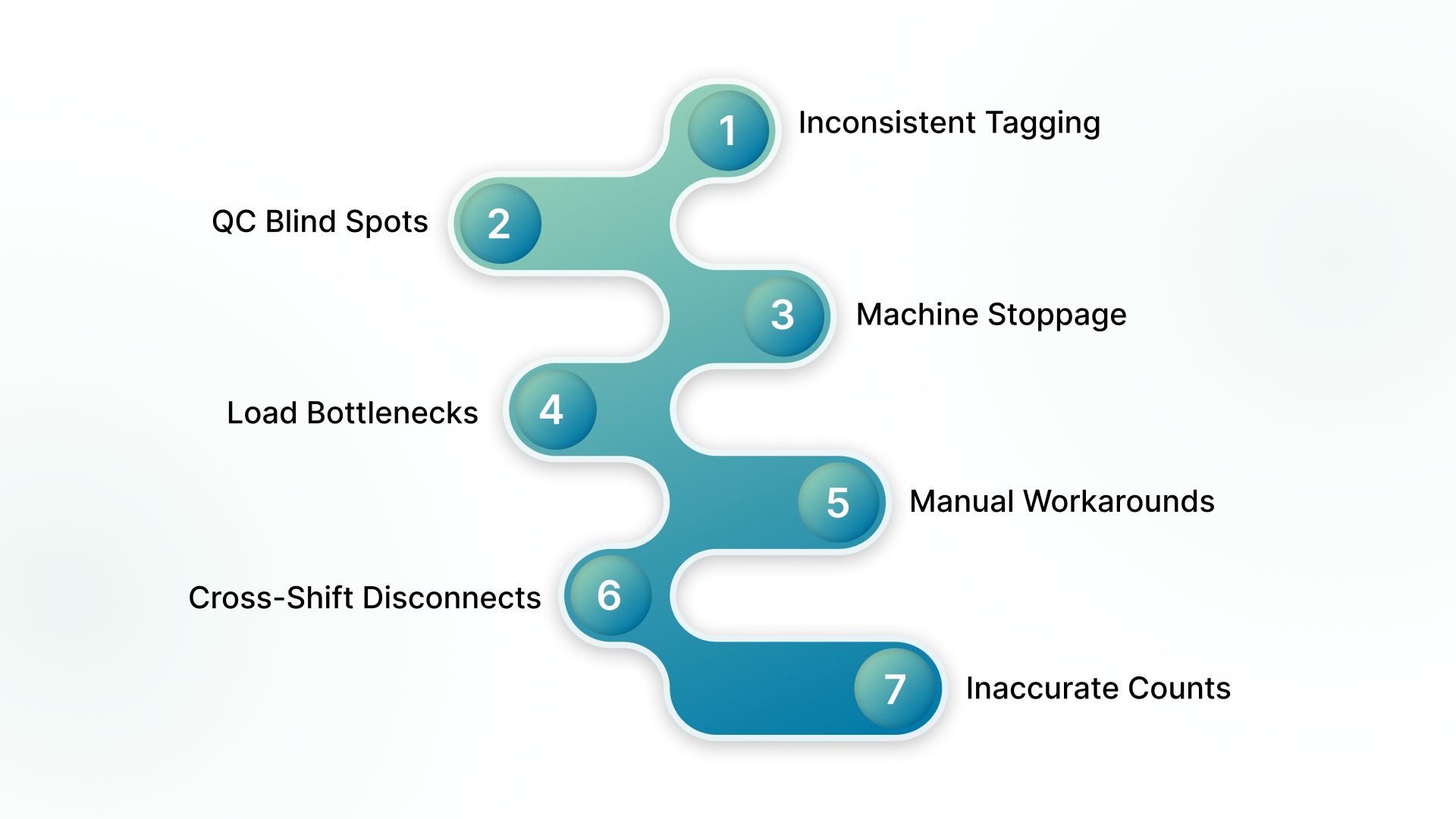
Here are the most common challenges and how an LMS supports your team:
Inconsistent Tagging: Missed tags create tracking gaps that confuse operators, while structured tagging through an LMS keeps item movement clear across all stations.
QC Blind Spots: Without consistent inspection records, recurring problems stay hidden, but an LMS gives staff a way to log issues that guide corrective actions.
Machine Stoppages: Unreported stoppages cause major slowdowns, while an LMS records equipment status information that helps teams respond before queues build.
Load Bottlenecks: Some areas become overloaded when teams cannot see upcoming work, while an LMS highlights blocked zones that need immediate attention.
Manual Workarounds: Staff often create side processes when production spikes, while an LMS encourages consistent routines through clear status updates and guided steps.
Cross-Shift Disconnects: Key details often get lost during shift changes, while an LMS provides a common view that keeps supervisors aligned across all hours.
Inaccurate Counts: Manual counting introduces errors that disrupt orders, while an LMS helps maintain reliable data throughout intake, processing, and shipping.
To support these goals, plants need a supplier that matches their operational needs.
Also Read: Keeping It In The Wash: Garment Sort Systems
Criteria for Choosing a Laundry Management Supplier
Choosing the right supplier requires clarity about data needs, plant size, workflow requirements, and long-term goals. A structured checklist helps teams compare systems without confusion during early discussions or demonstrations.
Evaluation Area | What to Look For | Why It Matters |
Machine Connectivity | Ability to receive data from washers, dryers, conveyors, and sort systems | Supports steady production by helping teams react sooner when equipment slows or stops unexpectedly |
Data Visibility | Clear dashboards covering throughput, labor, QC, and downtime | Gives supervisors information that helps them make quicker decisions during busy shifts |
Multi-Site Support | One system that can manage several locations under a single account | Helps leadership compare performance and identify patterns across all plants |
Tagging Compatibility | Support for barcodes, RFID, or mixed tagging environments | Reduces confusion by keeping item movement consistent across all stations |
Workflow Coverage | Tools covering intake, wash aisle, finishing, packing, and shipping | Ensures each major step records information that supports strong scheduling and planning |
User Experience | Screens and steps that operators and supervisors can learn quickly | Helps plants adopt the system without long training periods that disrupt production |
Reporting Detail | Ability to review shifts, delays, QC notes, and recurring issues | Supports better planning by showing patterns linked to staffing or equipment |
Scalability | Capacity to support growth in volume, automation, or new locations | Helps plants add equipment or facilities without replacing the entire system |
Support and Training | Clear service contacts, structured training materials, and strong customer response processes | Gives plants confidence that they can solve issues quickly during daily operations |
Data Security | Strong controls that protect plant data and customer information | Helps maintain trust by ensuring sensitive information stays protected across all sites |
Among the suppliers serving industrial laundries, Softrol provides systems built for daily production needs.
Also Read: What Are Laundry Reporting Systems?
Softrol Solutions for High-Volume Laundry Operations
Softrol supports laundry plants by offering material handling systems, process control tools, chemical management equipment, productivity platforms, and information systems designed for high daily volume. Each solution works together to help plants maintain stable production, reduce confusion, and respond faster when conditions change. LOIS extends this support by giving leadership a single view of plant performance, alerts, and multi-site activity.
Here are the areas where Softrol supports industrial and commercial laundries:
Management Systems: Total Plant Management tools that give plants a single entry point for production data, bottleneck identification, and reporting across multiple processes.
Soil Sort Systems: Manual and automated options that support correct item placement, reduce sorting mistakes, and help plants prepare batches with greater accuracy.
Rail Systems: Overhead rails that move soil or clean goods between work zones, helping plants reduce manual transfers and maintain predictable flow across departments.
Wash Aisle Systems: Washer and dryer controls available through OEM partners or retrofit kits that capture cycle details and support consistent machine operation.
Chemical Systems: Flow meter-based injection equipment that tracks dosing accuracy and water flush verification, helping teams address chemical issues quickly.
Garment Sort Systems: Modular sortation options designed for varying plant sizes, giving operations a reliable way to manage large garment volumes.
Shipping and Tracking Systems: Tools that record cart builds, returned items, and delivery details, helping teams maintain clarity during outbound shipping.
Productivity Systems: The PPS platform collects labor data, operator activity, and station timing, helping supervisors understand workload balance across each area.
LOIS System: A centralized information system that provides plant performance data, alerts, and multi-site access through any connected device.
Looking for examples of plants that reduced delays and improved consistency? Review our success stories and see the results.
Conclusion
A laundry management system helps plants handle rising volume, tighter schedules, and growing customer demands by giving teams clearer information across intake, processing, and shipping. When production areas share data, leaders gain a dependable view of daily conditions and can plan more confidently.
If you want stronger visibility across your plant or need support across several locations, Softrol can help. Their team can answer questions about automation tools, data systems, and LOIS, giving you a clear path toward stronger decision-making.
Contact us today to discuss your plant goals or request a LOIS demonstration tailored to your operation.
FAQs
What is the best laundry management software?
Softrol’s LOIS system stands out for its ability to centralize data from various stages, making operations more manageable across multiple plants and locations. It offers advanced reporting and real-time alerts, ensuring that supervisors can make timely decisions based on up-to-date information.
What is the RFID system in laundry?
An RFID system in a laundry uses tags that help track items throughout the entire cleaning process. This provides accurate item identification and reduces errors in tracking, and Softrol integrates RFID technology into its solutions to offer clear visibility across every production stage.
How to automate a laundry business?
To automate a laundry business, you need to invest in equipment that connects to a centralized management system. Softrol offers various solutions, including automated sorting and chemical dosing, that help improve consistency and reduce manual labor across different stages of production.
What are the four basic steps to monitoring?
The four basic steps to monitoring include tracking equipment performance, reviewing production flow, analyzing quality data, and ensuring accurate item tracking. Softrol’s systems offer tools to monitor these areas, giving plant managers a comprehensive view of their operations for better decision-making.
What are the 7 steps of laundry?
The seven steps of laundry typically include intake, sorting, washing, drying, finishing, packing, and shipping. Softrol’s solutions integrate all these steps into a single platform, providing detailed reporting and insights to help ensure smooth transitions and consistent quality throughout the entire process.