

The garment industry is adapting to rapidly changing fashion trends and increasing consumer demand. With this shift, manufacturers are under pressure to produce high-quality garments quickly while keeping costs down.
The U.S. textile market reached USD 188.3 billion in 2024 and is expected to grow to USD 277.4 billion by 2033, emphasizing the need for scalable, efficient production systems. To keep up with these changes, garment automation systems have become essential for simplifying tasks like cutting, sewing, and fabric handling.
In this blog, we will explore how these automation technologies are changing garment production, improving efficiency, and helping manufacturers meet rising market demands.
Overview
Garment automation helps production by enhancing speed, accuracy, and consistency. It significantly minimizes human errors and creates a smoother workflow from start to finish.
By automating routine tasks like cutting and sewing, manufacturers can reduce labor dependence, resulting in long-term savings and more efficient resource allocation.
Automated systems ensure consistent product quality, with continuous monitoring that catches defects early. This helps brands deliver top-quality garments consistently.
Automation in garment production cuts down on material waste and energy consumption, contributing to a more sustainable and eco-friendly manufacturing process.
Automation provides the agility needed to quickly shift between different garment types, allowing businesses to respond faster to market demands and scale production as needed.
What Is Garment Automation? Unpacking the Basics
Garment automation refers to the integration of automated systems designed to handle various production tasks in garment manufacturing. At its core, these systems consist of machines and technologies that take over repetitive tasks traditionally performed by workers.
These tasks include fabric cutting, sewing, sorting, and material handling. Key components include robotic arms, AI-powered systems, conveyor belts, automated cutting machines, and vision systems for defect detection.
Types of Automation Systems Used in Garment Production
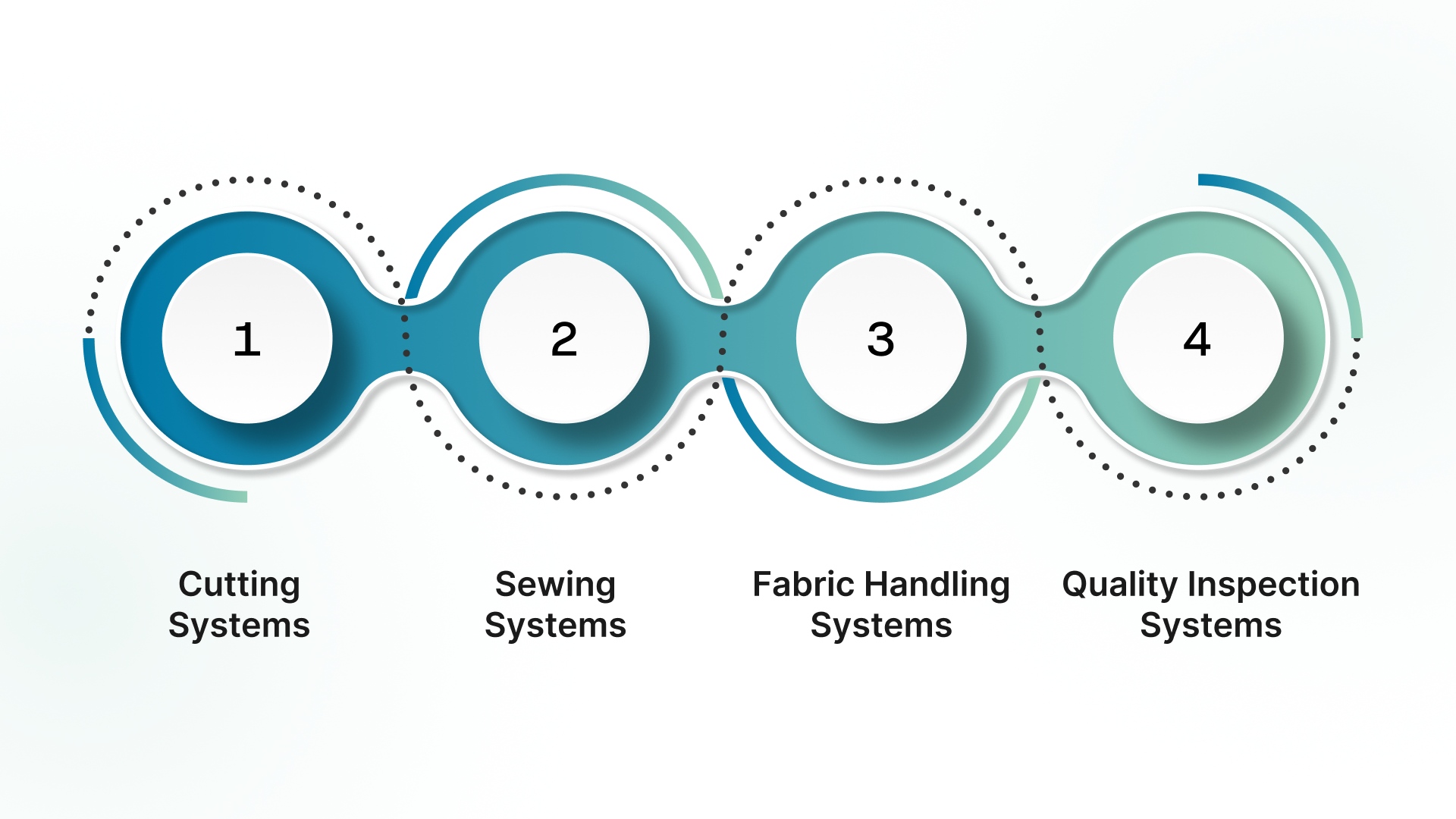
There are several types of automation systems used in garment production, including:
Cutting Systems: Automated cutting machines use computer-controlled blades to cut fabric with high precision, which improves consistency and throughput.
Sewing Systems: Robotic sewing machines are capable of stitching garments autonomously, significantly reducing human intervention.
Fabric Handling Systems: These systems, often including conveyor belts and robotic arms, move fabric through different stages of production with minimal manual effort.
Quality Inspection Systems: Vision-based systems equipped with cameras detect defects in fabric or finished garments to ensure high-quality production.
How It Works: Quick Overview of the Typical Automation Workflow in a Garment Plant
In a typical automated garment production workflow, fabric rolls are fed into a cutting system that precisely cuts the fabric into desired shapes. Once cut, robotic arms handle the fabric, placing it into sewing machines that stitch the pieces together. Then, vision systems continually inspect the product for defects, ensuring quality before the final garment is packaged and sent out.
What are the Technological Drivers of Garment Automation Systems?
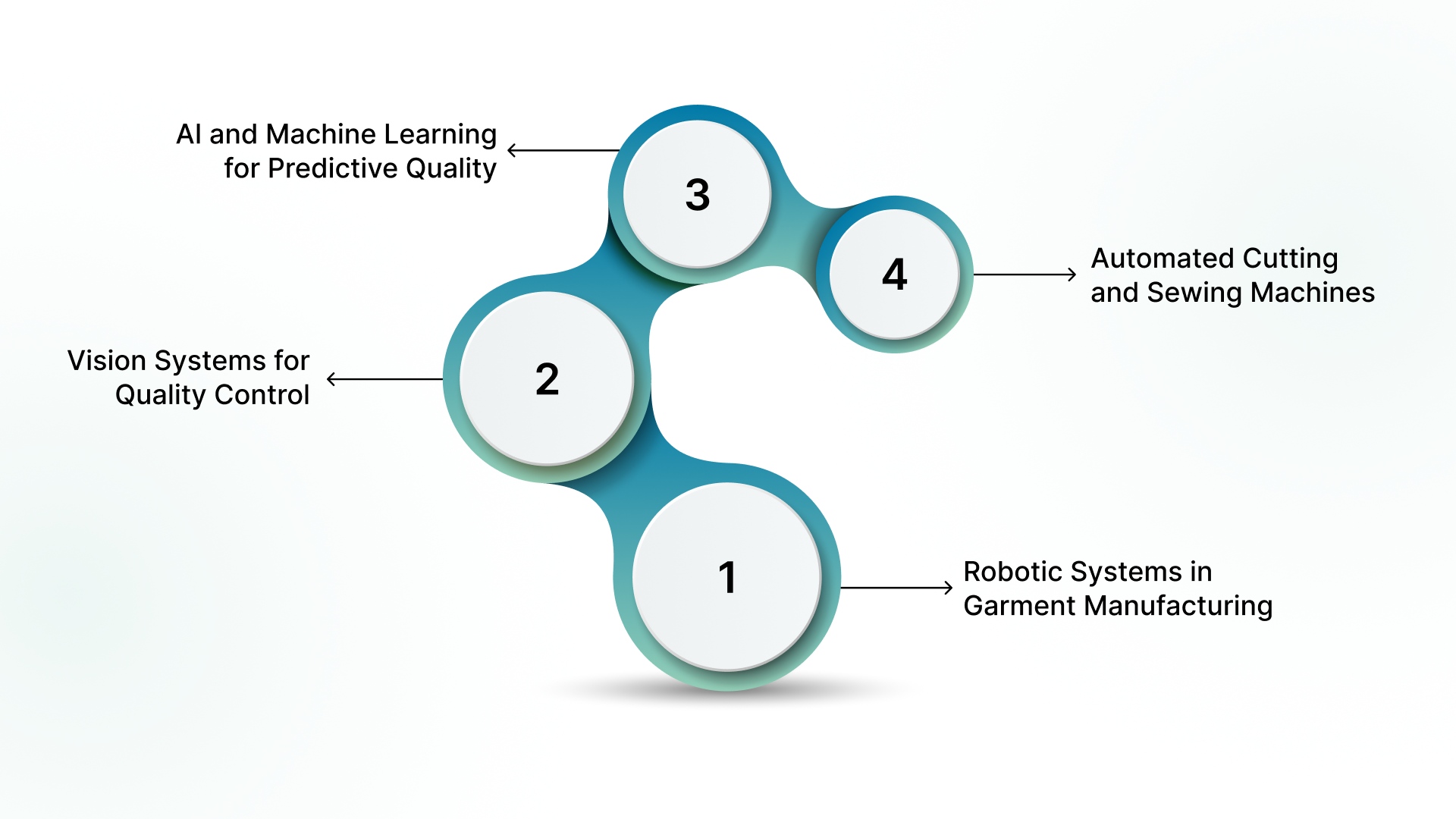
The implementation of garment automation systems is heavily influenced by several technological advancements that increase efficiency, quality, and throughput. Let’s quickly check out these drivers:
1. Robotic Systems in Garment Manufacturing
Robotic arms and systems automate tasks such as cutting, sewing, and fabric handling. For manufacturers looking to simplify material handling, companies like Softrol offer automated solutions that optimize the movement and sorting of garments, helping improve efficiency across production stages.
2. Vision Systems for Quality Control
Vision systems equipped with AI cameras inspect fabrics for defects, ensuring only high-quality materials are used. This helps in reducing scrap rates, which boosts overall production quality.
3. AI and Machine Learning for Predictive Quality
AI-driven systems predict potential defects in real-time by analyzing production data, enabling proactive issue resolution. Softrol’s integrated data platforms, such as PulseNet and LOIS, offer real-time insights into operational performance, helping manufacturers optimize workflows and improve productivity across garment production.
Also Read: PulseNet Virtual Rail Module (PVRM)
4. Automated Cutting and Sewing Machines
Automated cutting and robotic sewing systems help in fabric handling, ensuring precision, reducing waste, and speeding up production. This leads to more efficient and scalable garment manufacturing.
Together, these technologies help garment production by improving efficiency and quality. In the next section, we’ll explore how these innovations advance further, taking garment automation to the next level.
Garment Industry Automation: Intermediate to Advanced Concepts
Once basic automation systems are in place, garment manufacturers can move towards more advanced techniques to drive higher efficiency, flexibility, and throughput. Here’s how:
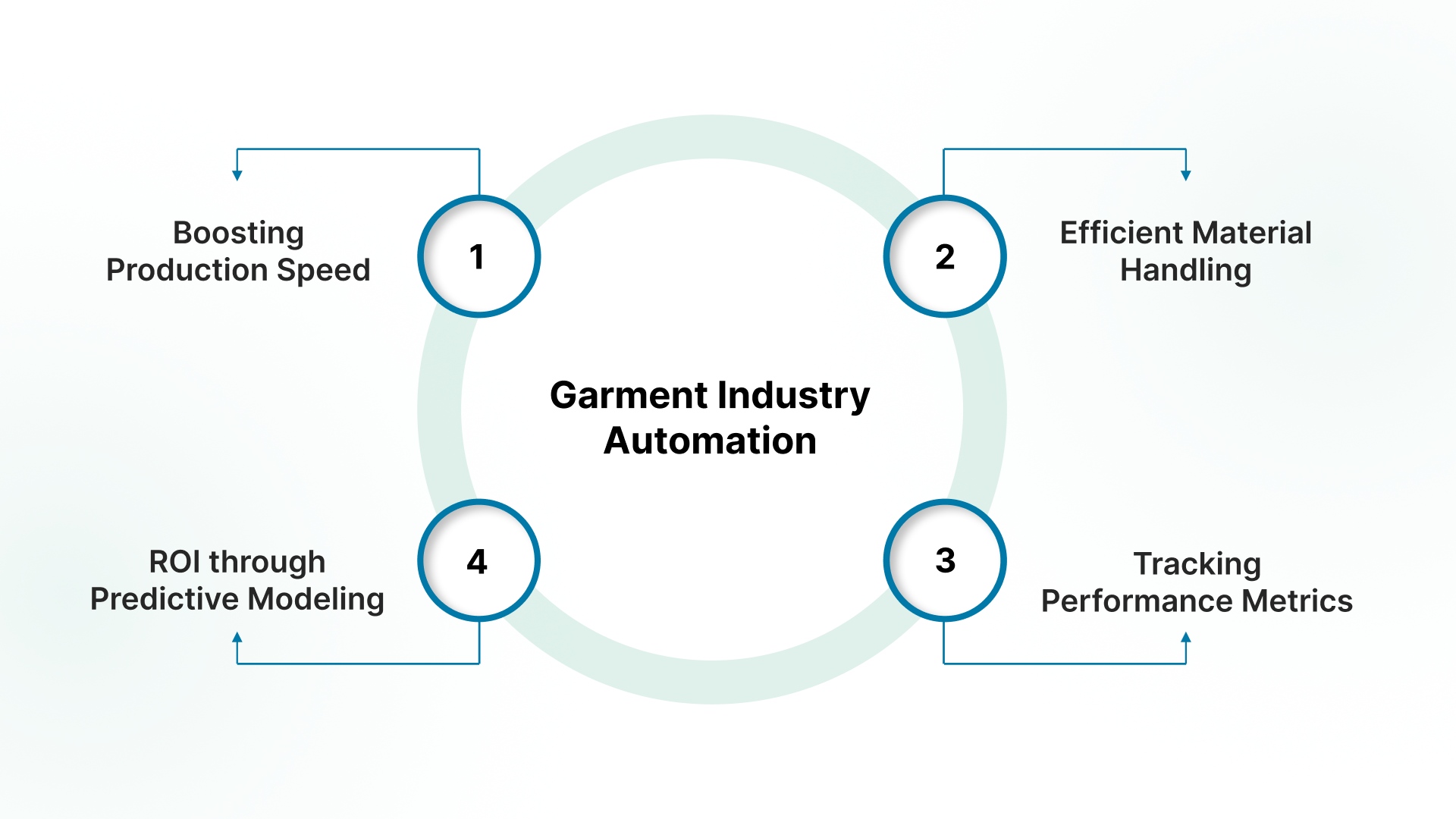
1. Boosting Production Speed
AI-powered robotic systems adapt in real-time to eliminate bottlenecks, dynamically adjusting workflows to maintain constant production flow. It significantly increases throughput and ensures faster, more consistent garment manufacturing
2. Efficient Material Handling
Automation is required for handling various fabric types, including delicate materials. Robotic systems, designed to manage different textiles, move fabric gently and accurately, ensuring minimal damage while improving handling efficiency.
3. Tracking Performance Metrics
To measure automation effectiveness, essential metrics like output per worker and machine utilization are tracked. For example, after implementing automated cutting systems, manufacturers can closely monitor how machine and labor efficiency align with production goals.
4. ROI through Predictive Modeling
Machine learning and predictive analytics assess long-term automation ROI, identifying potential areas for improvement. By forecasting performance and optimizing automation strategies, manufacturers can achieve sustainable growth and consistent operational gains.
Automation brings clear efficiency gains and cost savings, but its real value lies in the tangible benefits it delivers. Now, we’ll dive into how these advantages impact production quality and sustainability.
Key Benefits of Implementing Garment Automation
Garment automation offers a range of operational benefits that can significantly impact a company’s bottom line. Let’s discuss the benefits in detail:
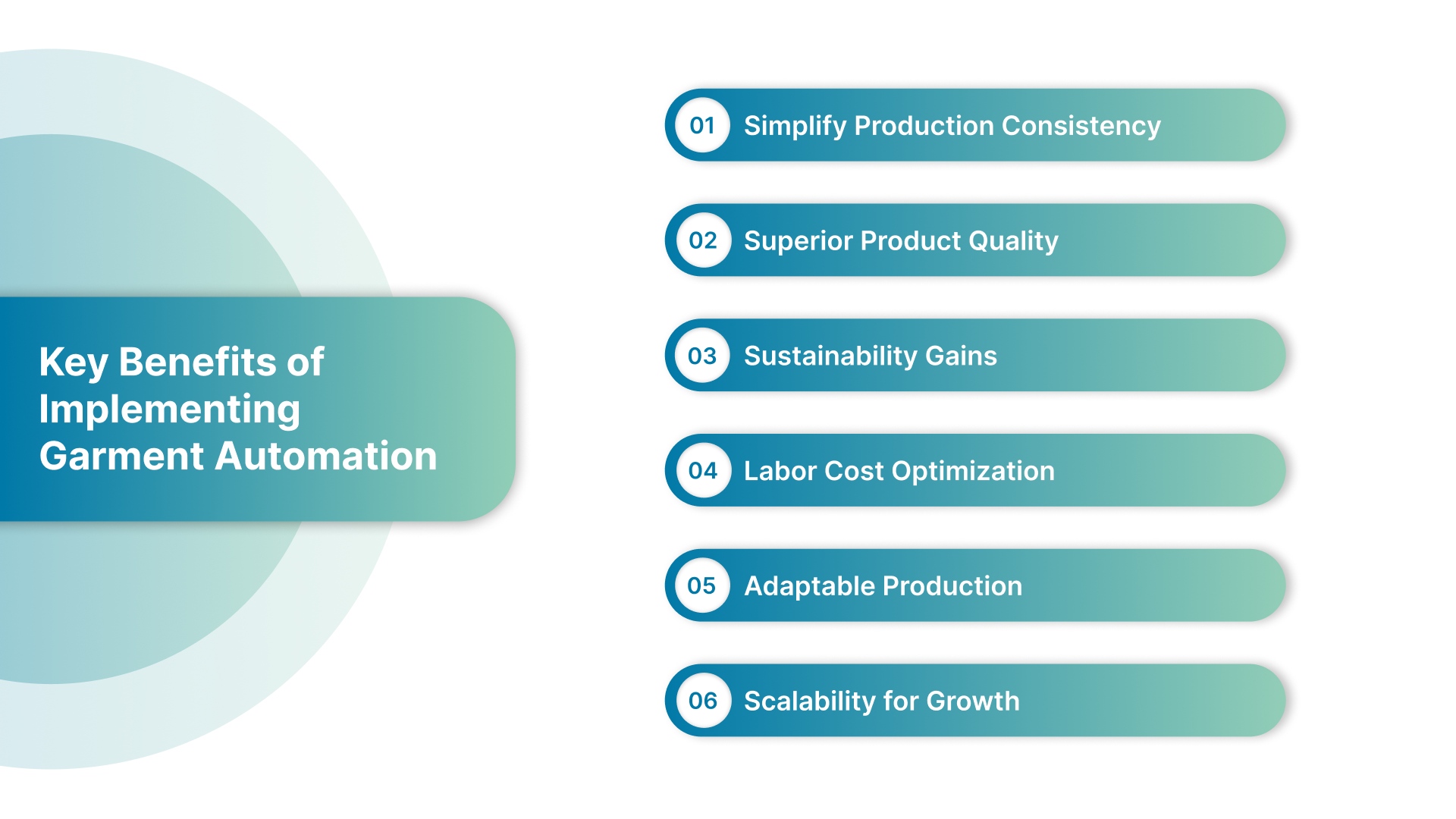
1. Simplify Production Consistency
Automation ensures high precision across every garment, reducing human error and enhancing uniformity. This consistency minimizes the need for rework and defects, enabling manufacturers to deliver a steady, reliable supply of quality products.
Softrol’s automated material handling and process control systems are designed to simplify production workflows, ensuring that every step from fabric handling to sorting is seamless and efficient.
2. Superior Product Quality
Automated systems, powered by AI and robotic precision, continuously monitor production to ensure consistent quality.
This results in fewer defects and product inconsistencies, improving customer satisfaction and reducing returns or scrap rates.
Also Read: Laundry Material Handling Systems
3. Sustainability Gains
Automation significantly reduces material waste by optimizing cutting and fabric handling processes.
In addition, energy-efficient machines consume less power, lowering operational costs and contributing to the environmental sustainability of the manufacturing process.
4. Labor Cost Optimization
By automating repetitive tasks such as sewing, cutting, and material handling, manufacturers can reduce reliance on manual labor. This translates into lower wage expenses and fewer worker-related complications, contributing to substantial cost savings.
Softrol’s automation solutions help reduce the labor required for material handling, sorting, and process control, making your operations more efficient and cost-effective.
5. Adaptable Production
Automation systems offer flexibility, enabling manufacturers to seamlessly switch between different garment types and respond to changing customer demands.
This capability reduces downtime and allows for quicker transitions between production runs, ensuring faster time-to-market.
6. Scalability for Growth
As production demands rise, automated systems can be easily scaled to accommodate increased volume.
This scalability eliminates the need to constantly expand the workforce, making it easier for manufacturers to grow without compromising efficiency or quality.
While the benefits of garment automation are clear, manufacturers must also address certain challenges to fully realize these advantages.
Overcoming the Challenges of Garment Automation Systems
Implementing garment automation systems presents several challenges that manufacturers must handle to achieve successful adoption and integration. From handling delicate fabrics to managing integration with older machinery, these hurdles can impact the efficiency and ROI of automation investments.
1. Material Handling Issues with Delicate Fabrics
Automation systems often struggle with handling soft, delicate, and multi-textured fabrics due to their unique properties. To address this, manufacturers must utilize robotic arms with advanced sensors and soft grippers, enabling precise handling without damaging materials.
2. Upfront Cost vs Long-term Value
The initial investment in automation systems can be substantial, especially for high-tech solutions like robotic sewing or automated cutting machines. However, the long-term savings in labor costs, reduced waste, and improved throughput often make the investment worthwhile, even if the ROI takes a few years to realize.
3. Balancing Maintenance with Production Needs
Automated systems require regular maintenance to ensure consistent performance. Manufacturers must balance the need for periodic system downtime with the pressure for continuous, high-output production. This way, maintenance doesn’t disrupt overall efficiency.
4. Workforce Transition and Reskilling Needs
As automation reduces reliance on manual labor, it’s importance to reskill the workforce. Manufacturers must invest in training programs to ensure workers can operate, maintain, and troubleshoot automated systems, which guarantees a smooth transition to more automated operations.
5. Integrating with Legacy Equipment
Many garment manufacturers rely on older machines that are incompatible with modern automation technologies. Retrofitting legacy systems with automation components offers a cost-effective way to modernize production lines. However, it requires careful planning to ensure compatibility and minimal disruption to ongoing operations.
Overall, overcoming these challenges requires strategic planning and investment, but the rewards in efficiency and scalability are substantial.
Future Perspectives: The Evolution of Garment Automation
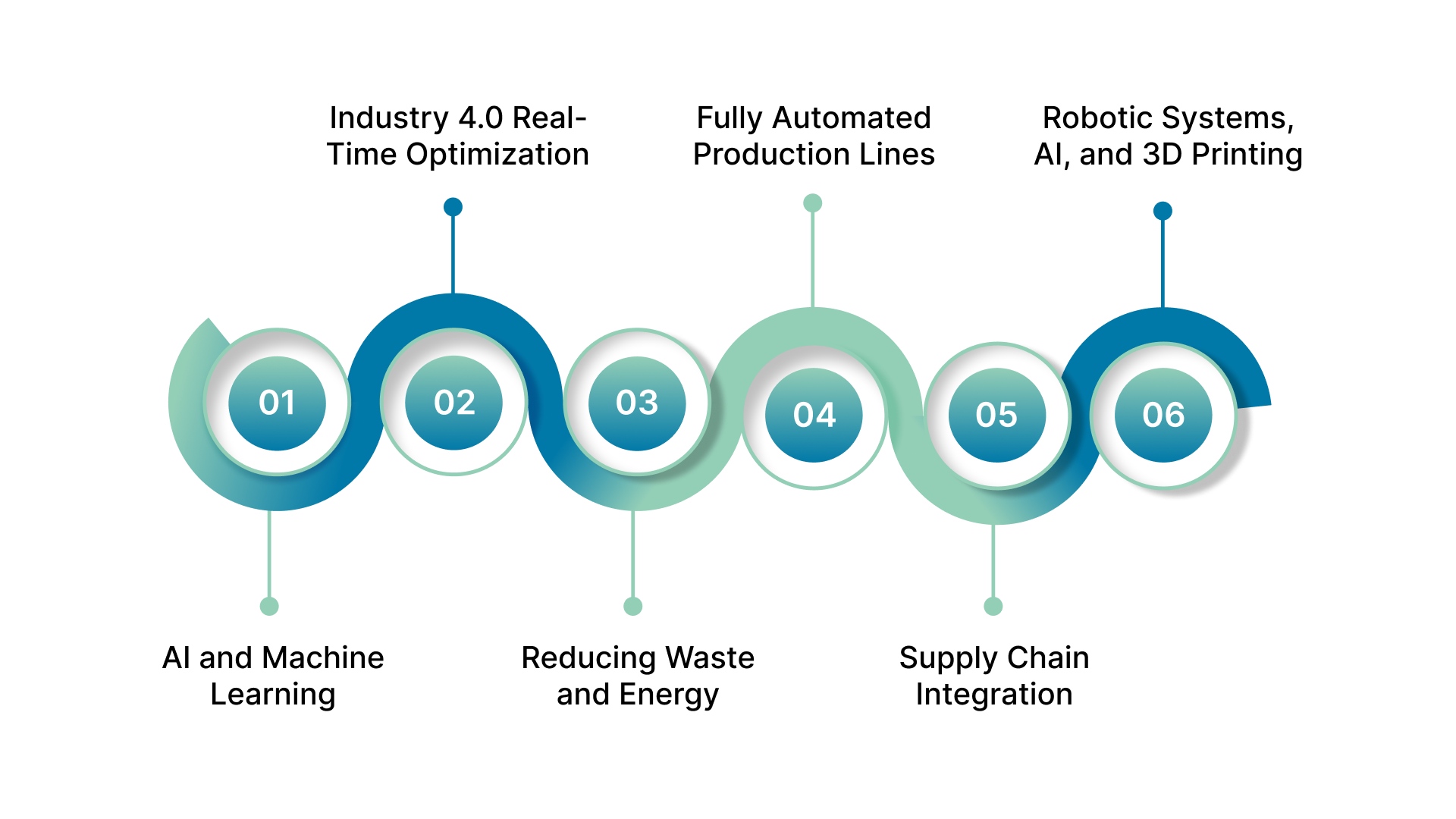
The future of garment automation is filled with innovation, where technologies like AI, robotics, and IoT will redefine production processes. They will offer manufacturers unprecedented efficiency, flexibility, and sustainability. Here’s what to expect:
AI and Machine Learning: AI analyzes production data to predict defects, enabling proactive quality control and preventing delays in production.
Industry 4.0 Real-Time Optimization: IoT integration will allow manufacturers to monitor and optimize every aspect of production in real time, driving smarter decision-making.
Reducing Waste and Energy: Future automation systems will focus on eco-friendly practices. It will minimize material waste and energy consumption, aligning with circular economy principles.
Fully Automated Production Lines: Smart factories will automate complete production lines, from material handling to quality control, with human oversight at a high level.
Supply Chain Integration: Automation will integrate with supply chains to improve response times, reduce lead times, and enable faster production adjustments.
Robotic Systems, AI, and 3D Printing: Emerging technologies like AI-driven robots and 3D printing will redefine garment manufacturing. This will enable faster, more flexible, and customizable production.
The future of garment automation holds immense promise, with these technological advancements setting the stage for more efficient, sustainable, and agile production. But the current question would be how to make the right choice?
Making the Right Choice: How to Select the Best Garment Automation System
When selecting a garment automation system, manufacturers must consider several factors to ensure the system fits their needs.
Key Selection Criteria for Garment Automation Systems:
Efficiency and scalability: Ensure the system can grow with your business.
Ability to integrate with legacy equipment: The system should easily integrate into existing operations without requiring a complete overhaul.
Flexibility: The system must handle various fabrics and production runs.
Vendor Evaluation: Evaluate vendors based on their experience with garment automation systems, reputation in the industry, and the ability to provide long-term support.
By focusing on efficiency, scalability, integration capabilities, and vendor reliability, manufacturers can make informed decisions. This way, they can enhance productivity and future-proof their operations.
Also Read: Laundry Reporting Systems
Why is Softrol the Ideal Choice for Garment Automation?
Softrol stands out in the garment and laundry automation industry for its specialized, scalable solutions that address the unique challenges of high-volume production. With over 30 years of experience, Softrol is committed to optimizing workflows and improving operational efficiency across the laundry and textile rental sectors.
Our technology focuses on simplifying material handling, advanced process control, and providing real-time data integration for improved decision-making.
Here’s how Softrol Works for Your Business:
Comprehensive Automation: Softrol’s material handling, wash aisle, and garment sorting systems ensure seamless operations from start to finish.
Data-Driven Insights: Our integrated platforms, like PulseNet and LOIS, provide real-time visibility, enabling managers to act proactively.
Proven ROI: Customers benefit from reduced labor costs, minimized downtime, and optimized throughput, making automation an investment that pays for itself over time.
Softrol is dedicated to modernizing plants, offering customizable solutions for both new builds and retrofits that integrate seamlessly with existing operations. With Softrol, manufacturers can improve quality, reduce operating costs, and drive sustainable growth.
Conclusion
Garment automation systems are significantly enhancing the manufacturing process, driving higher productivity, maintaining consistent quality, and reducing costs. Technologies like robotics, AI, and automated cutting systems allow manufacturers to manage operations and meet growing demand more effectively.
At Softrol, we offer tailored automation solutions focused on material handling, process control, and data integration across your entire operation. Our systems help you optimize workflows, minimize downtime, and seamlessly integrate new technologies with existing equipment.
If you’re looking to improve your garment production efficiency, Softrol can be of help. Reach out today to learn how our solutions can boost your productivity, reduce costs, and keep you competitive in the garment industry.
FAQs
1. How does garment automation impact small-scale manufacturers compared to large-scale ones?
Garment automation boosts efficiency and product consistency for both small and large manufacturers. While small-scale manufacturers benefit from reduced labor and increased competitiveness, large-scale manufacturers gain higher throughput, waste reduction, and scalability, optimizing operational costs.
2. Can clothing production be automated?
Yes, clothing production can be automated. Modern technology allows for the automation of several stages, such as cutting, sewing, and material handling. Advanced systems can handle repetitive tasks with precision, increasing production speed and consistency in large-scale manufacturing environments.
3. How does automation help in the fashion industry?
Automation helps the fashion industry by simplifying production processes, improving consistency, reducing labor costs, and increasing production speed. It allows for greater flexibility, better quality control, and faster response to changing consumer demands.
4. What are the latest advances in garment manufacturing tech?
Recent advances in garment manufacturing include AI-powered robotics for sewing and automated cutting systems. There are also vision-based defect detection and IoT-integrated machines that enable real-time monitoring and data-driven decisions, enhancing efficiency and product quality.