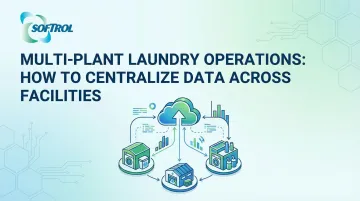
Introduction
Managing multiple laundry facilities creates operational blind spots that no amount of phone calls or spreadsheets can solve. When you're overseeing three, five, or ten plants spread across different cities, you can't be everywhere at once. Relying on individual plant managers for updates leads to incomplete information, inconsistent reporting standards, and delayed responses to critical issues.
Without centralized data, multi-plant operators run into the same problems repeatedly:
- Customer experiences vary between locations with no easy way to identify the gap
- Resources sit idle at one facility while another plant struggles with capacity
- Performance benchmarking becomes guesswork without consistent reporting
- Operational improvements at one plant never reach the others
According to industry research, the industrial laundry equipment market is projected to grow from $2.68 billion in 2026 to $3.87 billion by 2034. That consolidation trend puts more pressure on multi-site operators to solve these coordination problems — not paper over them.
This article covers what centralized data systems actually look like in practice, how to build one, and what to watch out for along the way.
Key Takeaways
- Centralized data systems give you real-time visibility across every facility from one dashboard, replacing inconsistent manager reports with objective, comparable data
- Core components: cloud-based management software, RFID or barcode tracking, standardized KPIs, and reliable network infrastructure at each site
- Successful rollout follows five steps: audit existing systems, select scalable software, standardize processes, train staff, and phase deployment by location
- Long-term success requires technology that integrates with existing equipment, clear data governance policies, and consistent processes plant-wide
Why Multi-Plant Laundry Operations Need Centralized Data
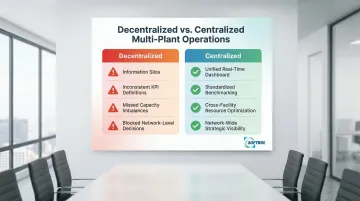
Decentralized operations create information silos where each plant operates as an independent entity with its own systems, reporting methods, and data standards. This fragmentation makes it impossible to get an accurate, real-time picture of total business performance. When Plant A tracks productivity in pounds per labor hour while Plant B measures loads per shift, meaningful comparisons become impossible.
Lack of visibility across facilities leads to grossly inefficient resource allocation. One plant may be running overtime shifts while another has excess capacity—but without centralized data, there's no way to identify these imbalances until it's too late. Customer orders that could be redistributed to underutilized facilities instead create bottlenecks and missed delivery commitments.
Inconsistent processes between facilities create several critical problems:
- Variable customer experiences depending on which plant handles their order
- Billing errors when different locations use different pricing or calculation methods
- Inability to maintain quality standards consistently across all locations
- Compliance risks for healthcare laundries requiring HLAC accreditation
Without centralized data, operators have no way to benchmark performance across plants—no visibility into which facility leads on pounds per labor hour, rewash rates, or on-time delivery. That blind spot makes it impossible to replicate what's working or address what isn't before it compounds.
Decentralized data also blocks strategic decision-making at the network level. Without aggregated insights, operators can't negotiate supply contracts based on total volume, identify expansion opportunities, or optimize workflows across facilities. Each plant ends up functioning as a separate business rather than part of a coordinated operation.
Key Components of a Centralized Data System
Cloud-Based Management Software
Cloud-based management software provides a single platform that consolidates data from all facilities in real-time, accessible from any internet-connected device. Unlike legacy on-premise systems that require physical server access, cloud platforms let corporate leadership monitor operations without being on-site.
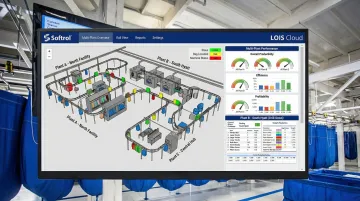
Softrol's LOIS (Laundry Operation Information System) applies this directly — users access multiple plant sites from one account and monitor critical functions 24/7 from smartphones, tablets, or PCs.
Automated Data Collection Systems
Automated data collection eliminates manual entry errors and provides continuous operational information streams. Machine sensors, RFID readers, and barcode scanners capture data at the source without requiring staff to record information manually. Modern RFID tags are engineered to survive over 200 wash cycles, withstanding pressures up to 60 bar and temperatures exceeding 90°C, making them reliable for industrial laundry environments.
Standardized Data Definitions and KPIs
Every plant must track the same metrics using identical definitions to enable meaningful comparisons. When one facility calculates "pounds per labor hour" including supervisors while another excludes them, the data becomes meaningless. Adopting standards like GS1 EPCIS ensures interoperability between equipment vendors and prevents inconsistent data capture across facilities.
Network Infrastructure
Without reliable connectivity between all plants, real-time data sync breaks down — whether you're relying on dedicated internet connections, VPNs, or cellular networks based on location. SD-WAN (Software-Defined Wide Area Network) technology is well-suited to multi-site laundry operations, aggregating multiple connection types to maintain high availability and optimize traffic routing.
Role-Based Access Controls
Not everyone in the organization needs the same data view. Role-based access controls match visibility to responsibility:
- Plant managers see detailed operations for their specific facility
- Corporate leadership accesses aggregated dashboards across all plants
- IT and compliance teams control permissions without disrupting daily access
This structure protects data security while ensuring each team gets the operational picture they actually need.
Step-by-Step: Implementing Data Centralization Across Facilities
Step 1: Audit Current Systems and Data Needs
Conduct a comprehensive inventory of existing software, equipment control systems, and data collection methods at each facility. Document what equipment you have, what software it runs, and what data it currently captures. Identify critical information gaps—what data do you need but aren't currently tracking?
Research integration capabilities of existing equipment. Can your current washers, dryers, and conveyors connect to centralized platforms, or will they require retrofit sensors? Equipment from major manufacturers often includes connectivity options, but legacy systems may need middleware solutions.
Step 2: Select a Scalable Centralized Platform
Evaluate laundry management software solutions based on multi-plant capabilities, cloud accessibility, integration with your existing equipment brands, and ability to scale as you add facilities. The platform must provide unified dashboards showing all locations with facility-by-facility drill-down capabilities.
Verify that the solution offers mobile access so managers can monitor operations remotely and receive alerts for critical issues at any facility. Systems that send real-time email alerts and support access from any browser eliminate the need for specialized software installations.
Step 3: Standardize Processes and Data Definitions
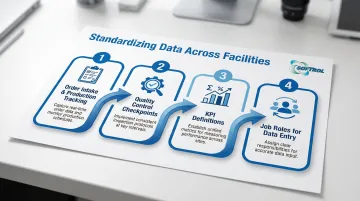
Consistent data only comes from consistent processes. Standardize the following across every facility:
- Order intake and production tracking — use the same intake forms and production logging methods at each plant
- Quality control checkpoints — align inspection criteria and defect classification so results are comparable
- KPI definitions — specify exactly how each metric is calculated (for example, does "pounds per labor hour" include maintenance staff, or production workers only? Is weight measured dry, wet, or at billing?)
- Job roles for data entry — assign the same responsibilities at each plant so collection is consistent regardless of location
Document these decisions in a shared operations manual and treat it as a living document that updates as processes evolve.
Step 4: Phase Implementation and Train Staff
Deploy the centralized system in phases, starting with one or two pilot facilities before expanding to all plants. This approach minimizes risk and lets you refine processes based on real-world experience.
Provide hands-on training for plant managers and staff on new systems, emphasizing how centralized data benefits their daily operations and the overall business. Staff buy-in is critical—if plant managers view centralization as corporate micromanagement rather than a tool for their success, adoption will fail.
Schedule weekly check-ins during the first 90 days to surface technical issues early and confirm each location is collecting data consistently before you move to the next site.
Technologies That Enable Multi-Plant Data Centralization
RFID and Barcode Tracking Systems
RFID and Barcode Tracking Systems enable real-time monitoring of individual garments, carts, and orders across all facilities. Operators can track item movement between plants and catch bottlenecks or losses as they happen.
Softrol's SofTrak RFID technology monitors garments throughout their full lifecycle:
- Initial assignment and customer delivery tracking
- Return processing and re-entry into the wash cycle
- Cross-facility movement and loss identification
These systems comply with ISO/IEC 18000-63 standards, ensuring interoperability across equipment from different manufacturers.
IoT-Enabled Equipment
IoT-Enabled Equipment with built-in sensors and connectivity automatically transmits operational data—cycle times, utility consumption, maintenance needs—to centralized platforms without manual intervention. Modern laundry equipment often includes these capabilities, though legacy machines may require retrofit solutions. OPC UA-based edge gateways can successfully bridge older equipment to modern IIoT platforms, converting proprietary protocols into standard formats for secure transmission.
Cloud-Based Dashboards and Reporting Tools
Cloud-Based Dashboards and Reporting Tools provide real-time access to multi-plant performance data from any internet-connected device. Softrol's LOIS system includes Pan-N-Zoom technology, letting operators view entire rail systems to scale and then drill into individual components for detailed operational data, I/O status, and maintenance information. A plant manager in one city can spot a conveyor issue at a facility three states away — and act on it — without leaving their desk.
Common Challenges When Centralizing Multi-Plant Data
Most multi-plant operations run into the same three obstacles when centralizing data. Knowing what to expect makes the rollout significantly smoother.
Legacy equipment integration is the most common technical hurdle. Older plants may have equipment that lacks connectivity entirely, requiring retrofit solutions or middleware. Some machines use proprietary protocols that won't communicate with modern platforms without a translation layer.
Change resistance from plant managers can quietly derail an otherwise solid implementation. Managers accustomed to operating autonomously often view centralized monitoring as a loss of control. Involve them early: show how centralized data helps them spot problems faster, benchmark their own performance, and back resource requests with objective numbers.
Data quality and consistency problems surface when plants have historically tracked information differently. One facility might log production at shift start, another at shift end, and a third continuously. Clear data governance policies and regular audits close that gap. Assign a data steward at each facility to enforce consistency with corporate standards.
Measuring Success: KPIs for Multi-Plant Operations
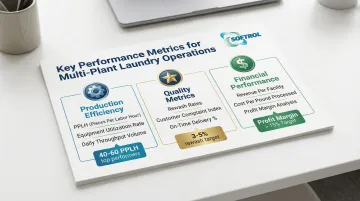
Track these production efficiency metrics consistently across all plants to surface performance gaps and replicate best practices:
- Pounds per labor hour (PPLH): Top-performing facilities achieve 40-60 PPLH; rates below 40 indicate labor costs are too high relative to revenue
- Equipment utilization rates: Target above 90% to maximize equipment ROI and identify bottlenecks
- Throughput per facility: Measure actual production capacity versus theoretical capacity
Quality metrics show which locations are holding the line — and which need attention:
- Rewash rates: Industry benchmarks range from 3-5%, with rates above 5% significantly eroding margins
- Customer complaints per facility: Track complaint frequency and type by location
- On-time delivery percentages: Measure delivery performance consistently across all plants
Centralized data makes these financial KPIs trackable across every facility, informing resource allocation and investment priorities:
- Revenue per facility: Compare revenue generation across similar-sized plants
- Cost per pound processed: Identify facilities with excessive operating costs
- Profit margins by location: Determine which facilities are most profitable and why
Frequently Asked Questions
What data should be centralized across laundry facilities?
Essential centralized data includes production volumes, labor hours, equipment performance, quality metrics (rewash rates, customer complaints), customer order status, inventory levels, and financial performance. If the information drives facility comparisons or operational decisions, it belongs in a central system.
How do you integrate data from plants with different equipment brands?
Modern laundry management platforms offer APIs and integration capabilities for major equipment manufacturers. Legacy equipment may require retrofit sensors, middleware solutions, or manual data entry bridges until replacement becomes feasible.
What's the ROI timeline for a centralized laundry data system?
Industrial data platforms have demonstrated ROI of up to 465% with payback periods under 6 months. Most multi-plant operators see measurable returns within 12-24 months through labor efficiency gains, reduced rewash, better capacity utilization, and sharper operational decision-making.
Can I centralize data without replacing existing equipment?
Yes. Most operations centralize data without replacing a single machine. Software platforms connect to existing systems, and for older equipment that lacks native connectivity, the transition typically involves configuration work rather than capital replacement.
How do I ensure data security across multiple laundry locations?
Use cloud platforms with encrypted data transmission, role-based access controls, and regular security audits. Secure inter-facility connections via VPN or dedicated lines, and verify compliance with IEC 62443 standards for industrial control systems.
What KPIs should I track across all my laundry plants?
Core KPIs include production efficiency (pounds per labor hour), quality metrics (rewash rate, customer complaints), on-time delivery rates, equipment utilization, cost per pound processed, and revenue per facility for meaningful performance comparisons.