What is the laundry management process?
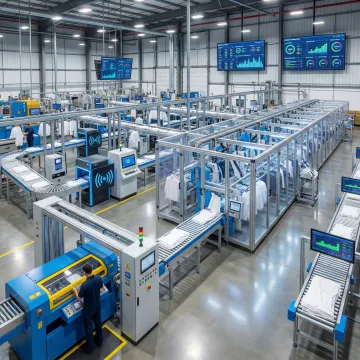
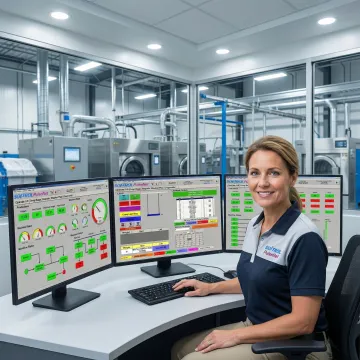
The laundry management process encompasses the entire workflow from soiled goods intake through sorting, washing, drying, finishing, and delivery. Modern automated systems like Softrol's integrate RFID tracking for real-time inventory visibility, automated sorting to eliminate manual handling, wash aisle automation for single-operator control, and comprehensive monitoring software. This creates a data-driven process where every garment is tracked, every machine is monitored, and management has instant access to productivity metrics, enabling efficient labor allocation, quality control, and customer service.
How much can automated systems reduce labor costs?
Softrol's automated solutions have demonstrated labor reductions of 70-77% in sorting operations and productivity increases of up to 35% within the first four months. Specific savings depend on your current operation size, processes, and volume, but most customers see significant ROI through reduced workforce requirements, improved throughput, and better resource allocation enabled by real-time monitoring and automated material handling.
What types of laundry operations benefit from automation?
Industrial laundries, healthcare textile services, uniform rental operations, hospitality laundry facilities, and institutional laundries all benefit significantly from automation. Any operation processing high volumes of tracked garments or seeking to reduce labor costs, improve accuracy, and gain real-time operational visibility is an ideal candidate for Softrol's integrated automation solutions.
How long does it take to implement an automated laundry system?
Implementation timelines vary based on system complexity and facility requirements, typically ranging from a few weeks for software solutions to several months for comprehensive automation including sorting systems, rail handling, and wash aisle integration. Softrol provides detailed project planning with milestone reviews, ensuring minimal disruption to your operations during installation and thorough training for your team.
Can automation systems integrate with existing laundry equipment?
Yes, Softrol's automation solutions are designed for flexible integration with existing equipment. Our systems interface with various washer and dryer brands, and our modular approach allows phased implementation. Whether you're adding RFID tracking to your current operation or implementing comprehensive automation, Softrol engineers design solutions that work with your existing infrastructure while providing upgrade paths for future expansion.
What kind of training and support is provided?
Softrol provides comprehensive training during system installation, covering operation, troubleshooting, and maintenance for your team. After installation, 24/7 technical support is available via phone or email, with a ticketing system that tracks and resolves issues efficiently. Our support includes remote diagnostics, on-site service when needed, and ongoing consultation to optimize your system performance as your operation evolves.
How does RFID tracking improve inventory management?
RFID tracking provides real-time visibility of every tagged garment throughout your operation. You can instantly locate items, track usage history, monitor rotation cycles, identify overdue returns, assign garments to specific customers, and generate detailed reports. This eliminates manual counting errors, reduces losses, enables accurate billing, and provides the data needed for proactive inventory planning and customer service.
What reporting and analytics capabilities are available?
Softrol's LOIS (Laundry Operation Information System) provides comprehensive, customizable reporting accessible 24/7 from any device. You can monitor real-time production metrics, employee productivity, machine utilization, inventory status, customer deliveries, and maintenance schedules. The system sends automated alerts for critical issues and provides historical data analysis to identify trends, optimize processes, and make informed business decisions based on accurate operational data.