Have you ever watched soil sort back up, staff fall behind, and your wash aisle lose pace even before the first hour ends? That pressure hits fast when volume rises and sorting can’t keep up.
You deal with labor gaps, mix complexity, and constant service demands. Sorting becomes the place where delays start, errors increase, and the rest of the plant pays the price. Whether you're an owner, operations manager, or plant manager, these challenges directly affect your bottom line and daily productivity.
In this blog, we’ll explore why sorting matters for high-volume laundries, the key sorting technologies used across plants, the challenges of manual sorting, how leaders approach sorting upgrades, a real case example, and where a specialized vendor fits into a modern plant strategy.
Key Takeaways
Manual sorting in high-volume laundries can lead to errors, delays, and increased labor costs.
Automation in sorting helps reduce errors, improve flow, and lower labor demands during peak times.
Sorting technology, like conveyor-based systems and RFID, improves flow, accuracy, and labor use in laundry operations.
Key sorting technologies reduce errors, improve throughput, and balance workloads during peak production times.
Before upgrading, laundry plants need to assess factors like throughput, labor, space, and system compatibility.
Common Problems Linked to Traditional Sorting

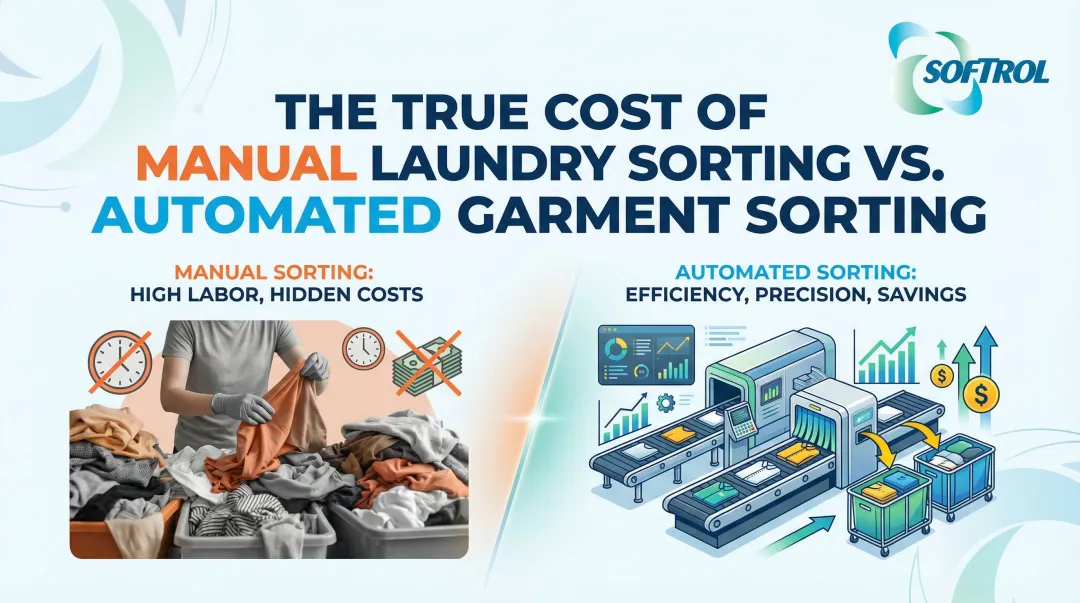
Traditional sorting relies heavily on manual decisions, limited visibility, and physical strain, which leads to slowdowns, especially during busy shifts. Mistakes reach customers through incorrect deliveries or missing garments, affecting service reliability.
Here are the common issues faced by laundries using traditional sorting methods:
High Error Risk: Manual checks increase mis-sorts during busy hours when staff rush tasks or manage large item batches with limited support.
Unsteady Flow: Soil-side delays create gaps that reach the wash aisle, causing tunnels and dryers to wait for loads during peak activity.
Labor Pressure: Heavy manual work adds strain and creates variation between shifts, leading to inconsistent productivity and higher labor hours.
Limited Visibility: Supervisors often lack clear information about bottlenecks, which delays decisions that could protect throughput during demanding periods.
Quality Impact: Incorrect classification raises rewash risk, which increases chemical use and forces plants to recover time during later shifts.
Customer Concerns: Sorting mistakes reach customers through wrong returns, missing garments, or incorrect deliveries that affect service reliability.
By adopting advanced sorting systems, laundry operations can counter the inefficiencies and challenges common to manual processes.
Also Read: Which Garment Sort System Is Right for Your Plant?
How Sorting Technology Helps High-Volume Laundries Stay Productive
Sorting technology reduces manual workload and supports faster, more accurate decisions, helping laundries maintain consistent flow and performance. Whether you're in maintenance/engineering, overseeing equipment reliability, or part of the IT/Continuous Improvement (CI) team, implementing sorting technology delivers measurable benefits.
Here are the main benefits of implementing sorting technology in high-volume laundry operations:
Steadier Flow: Automated routing helps maintain predictable movement through soil sort, reducing gaps that normally slow tunnel loading and downstream activity during busy periods.
Lower Error Rates: Identification tools reduce mis-sorts that disrupt customer orders and limit operators’ ability to manage throughput during high-volume shifts.
Better Labor Use: Technology reduces repetitive handling and classification tasks, helping teams direct labor hours toward steps that contribute more to production output.
Clearer Decisions: Real-time data helps supervisors spot issues earlier, adjust routes quickly, and avoid delays that commonly affect the wash aisle or finishing areas.
More Predictable Pacing: Consistent sorting rules help the plant avoid sudden spikes in work-in-process, which often disrupt department scheduling across the day.
With an understanding of sorting technology's impact, you now look at the specific systems that drive productivity and accuracy.
Curious about how your plant could benefit from automated sorting systems? Reach out to our team for a tailored solution.
4 Sorting Technologies Used Across High-Volume Laundries
Sorting technologies help plants manage high volumes, optimize routing, and reduce labor pressure during busy shifts. These systems maintain predictable production pacing while ensuring greater accuracy in sorting.
Here are the four main sorting technologies used across laundry facilities:
Conveyor-Based Sorting Systems
Conveyor-based systems support consistent movement by routing items based on customer needs, product categories, or downstream processing steps required for each load. These systems help reduce repetitive handling and support better flow when volume rises during busy shifts.
The main impacts appear in areas such as:
Flow Stability: Conveyor movement helps reduce delays by keeping load progression consistent during changing production periods.
Labor Support: Lower manual handling helps shift staff effort toward higher value tasks across the soil and clean areas.
Routing Accuracy: Clear routing rules help reduce mis-sorts and support predictable work-in-process movement through the plant.
Throughput Consistency: Better movement helps protect wash aisle pacing by supporting steady loading across different product mixes.
RFID and Barcode-Driven Sorting
RFID and barcode systems help plants maintain reliable identification for linen and garments throughout sorting, classification, and dispatch steps. These tools support clear routing decisions while reducing reliance on manual checks that often vary between shifts.
Operators adopting these systems often focus on benefits such as:
Traceability: Item identification helps track movement and support clearer records when customers request order verification.
Routing Clarity: Automated checks help confirm each item’s next step, reducing errors tied to visual sorting during busy periods.
Return Accuracy: Stronger identification supports clean returns for uniform rental programs with higher SKU complexity.
Error Reduction: Reliable scanning helps reduce rework caused by missed tags or inconsistent manual classification.
Loop-Based or Rail-Based Sorting for Garments
Garment sorting systems help uniform rental plants manage large SKU ranges and strict return requirements without increasing labor demands during peak hours. These systems route finished pieces by wearer, customer, or route and support consistent accuracy across multiple shifts.
These systems help operations teams address issues such as:
Order Accuracy: Clear routing helps reduce mistakes when building orders for customers with high uniform volume.
Labor Balance: Automated garment routing helps manage workload without raising staffing requirements during busy cycles.
SKU Management: System-driven routing helps plants handle wide SKU ranges without slowing down production flow.
Dispatch Timing: Better sorting accuracy supports timely cart building and more predictable outbound schedules.
Soiled Sorting Technologies
Soiled sorting tools help plants manage classification before the wash aisle, where mistakes can create rework, quality issues, or unnecessary chemical use. These systems separate goods by soil level, fabric type, or customer needs to support steadier wash aisle load planning.
Common gains appear in areas such as:
Quality Control: Clear sorting rules help reduce rewash caused by incorrect classification or inappropriate formula selection.
Tunnel Pacing: Balanced loads support stronger tunnel performance by removing delays tied to inconsistent soil-side preparation.
Utility Impact: Better classification supports consistent formulas, which can help reduce avoidable chemical and water use.
Workload Predictability: Clearer separation supports more reliable flow toward finishing, reducing unpredictable spikes in workload.
After reviewing available sorting technologies, focus on what specific criteria need to be addressed before moving forward with any upgrades.
Also Read: Keeping It In The Wash: Garment Sort Systems
What Medium–Large Laundries Should Review Before Upgrading

Medium and large laundry plants face production demands that place heavy pressure on sorting, flow management, and staffing decisions. Sorting upgrades need clear planning so the system matches production goals without creating new bottlenecks. These areas help leaders focus on the factors that matter most for daily performance.
These considerations guide how plants shape sorting strategies across soil and clean workflows:
Throughput Requirements: Plants must review peak-hour volume, customer mix, and wash formula diversity to confirm whether current sorting practices can handle shifts without recurring delays.
Soil-Side Congestion: If soil unload areas consistently reach capacity, the plant may need structured sorting paths to prevent tunnel delays and repeated rework cycles.
Downstream Impact: Sorting choices influence wash aisle pacing, rail storage behavior, and clean-side staging, so any new approach must support predictable load arrival.
SKU and Customer Complexity: High-mix routes, specialty garments, and varied linen types require sorting rules that protect accuracy without increasing staff movement or manual checks.
Workflow Design: Plants must review current choke points, such as tote accumulation, slow scanning areas, and inconsistent classification zones, before selecting sorting technology.
System Connectivity: Sorting tools should send clear data to wash control, chemical systems, and production tracking platforms to support reliable decision-making across shifts.
Data Expectations: Leaders should confirm which KPIs need real-time updates, including classification counts, labor usage, or load progression status, to support daily review.
Retrofit Feasibility: Many plants run older equipment, so sorting upgrades must match available space, wiring paths, and workflow habits without creating long shutdowns.
Floor Space Limits: Soil-side and clean-side areas often compete for room, making overhead movement or revised workstation layouts useful for gaining workable space.
Labor Pressure: Plants with labor constraints should look for sorting methods that reduce repetitive handling and support consistent performance across varying skill levels.
Training Requirements: Supervisors must evaluate how easily staff can learn new sorting processes, especially when multiple shifts operate with different experience levels.
Maintenance Planning: Sorting equipment requires predictable service intervals, so leaders must confirm access paths, downtime windows, and spare part expectations before moving forward.
Scalability Needs: Multi-site groups or growing plants should select modular systems that support additional routes, stations, or customer categories without significant redesign.
Safety Considerations: Sorting zones must allow safe operator movement, predictable load paths, and clear scanning access to reduce preventable injuries or workflow interruptions.
Budget Strategy: Plants should weigh whether sorting upgrades will be staged or completed at once, especially when balancing capital limits with growing production demands.
Once you’ve established the factors to consider, it’s crucial to evaluate how industry leaders, like Softrol, can support your laundry's specific needs.
Also Read: Misconceptions of Garment Autosortation
How Softrol Supports Commercial Laundry Operations
Softrol supports high-volume commercial/industrial laundries, with systems designed to improve soil handling, garment routing, wash control, chemical accuracy, and plant-wide visibility. Each system addresses common delays, labor pressure, and quality issues that plants experience during demanding production periods.
These solutions help plants strengthen flow, reduce manual decisions, and support clearer insight across all production zones:
Soil Sort Systems: Smart Station-guided soil sorting provides load details, sorting instructions, and weight feedback, helping staff build consistent batches that protect tunnel pacing during busy shifts.
Garment Sort Systems: Directed, hybrid, and auto sort options route garments by wearer, customer, or route, helping healthcare & hospitality laundries reduce sorting mistakes and maintain accurate outbound preparation for large volumes of linens.
Rail Systems: Overhead rail movement reduces manual transfers, supports predictable flow, and increases floor space while RFID tracking helps maintain accurate routing during high-volume activity.
Wash Aisle Systems: Control solutions for tunnels, washers, and dryers support consistent cycles, reduce operator guesswork, and help maintain steady equipment performance across long production days.
Chemical Systems: Flow meter-based injection tracks dosing accuracy and flush verification, helping teams correct chemical issues early before they affect quality or increase rewash.
Shipping and Tracking: Tools for cart building, returns, and delivery records help plants reduce outbound mistakes and provide faster answers when customers request item details.
Productivity Systems: PPS captures labor activity, operator timing, and station data, helping supervisors balance workloads and compare performance across different shifts in textile rental & uniform/workwear rental operations.
Management Systems: Total Plant Management tools combine production, chemical, wash aisle, and shipping data into one view, helping leaders identify bottlenecks and respond quickly to production issues.
LOIS System: Web and mobile dashboards provide alerts and multi-site access, helping managers review production activity and make timely decisions even when away from the plant.
To further illustrate the impact of sorting systems, let’s examine how Mission Linen achieved improvements in sorting and flow using Softrol’s solutions.
How Mission Linen & Uniform Service Improved Sorting and Flow
Mission Linen needed stronger garment sorting performance because its previous system demanded heavy labor, frequent adjustments, and constant supervision to meet daily production targets. The team required a more reliable approach that could support higher throughput, reduce manual tasks, and open floor space for future growth.
Softrol’s updated system delivered measurable gains across labor, throughput, and plant flow:
Labor Reduction: The new SoftSort system required only three employees to manage primary sort, final sort, and goods transition, replacing a setup that previously demanded thirteen operators.
Throughput Support: The dual-induct SoftSort design supported production goals by moving up to 3,500 final-sorted garments per hour across multiple customer categories.
Floor Space Impact: The system design allowed installation without disrupting existing operations and created new usable floor space once the older equipment was removed.
Maintenance Relief: Garment movement no longer requires specialized carriers, reducing hardware adjustments and lowering maintenance hours across multiple shifts.
Cross-Department Gains: Labor savings extended beyond sorting because balanced flow created steadier pacing for wash aisle, tunnel hanging, and related downstream tasks.
Payback Acceleration: The expected return improved when labor reductions appeared in several departments, speeding the projected payback period significantly.
Want to see how other businesses have transformed their workflows? Check out more success stories and learn how sorting technology has made a real difference.
Conclusion
Sorting plays a direct role in how well your plant manages volume, protects quality, and maintains predictable performance across soil, wash, finishing, and shipping areas. Stronger sorting systems help reduce manual decisions, support steadier flow, and give supervisors clearer insight into production activity during demanding shifts.
If you want to review sorting options that match your plant’s volume, layout, and staffing needs, contact our team for a focused discussion with an automation specialist.
FAQs
How long does it take to implement sorting technology in a laundry plant?
The implementation timeline depends on the system's complexity, plant size, and available space. Typically, installations take between 4 and 12 weeks, with testing and adjustments extending the timeline as needed.
What are the main cost factors when upgrading sorting systems?
Costs vary based on system type, facility size, and custom requirements. Key factors include equipment purchase, installation, training, and maintenance. It's important to budget for potential retrofits and space adjustments as well.
How can sorting systems ensure data security and compliance?
Modern sorting systems adhere to industry standards for data protection, using secure data storage and transmission methods. Compliance with regulations like GDPR or HIPAA is built into system design, ensuring safe handling of customer information.
What maintenance is required for sorting systems?
Routine maintenance includes inspecting components like conveyors, scanners, and RFID systems. Regular checks, software updates, and cleaning are crucial for maintaining system performance and minimizing downtime, with maintenance intervals depending on the system's use and complexity.
How do sorting technologies impact labor costs over time?
Sorting systems reduce manual labor by automating classification and routing tasks. Over time, this leads to lower labor costs as fewer staff are needed for sorting tasks, allowing employees to focus on higher-value activities within the plant.