
Incorporating remote monitoring technology into commercial laundry machines is becoming essential as the requirement for effective laundry services increases, especially in the healthcare, hospitality, and textile rental industries. The automatic laundry segment is projected to grow at a 5.2% CAGR, thanks to advancements like programmable wash cycles, integrated sensors, and real-time monitoring.
These features reduce manual intervention, minimize operational errors, and cut labor costs. In high-volume operations, remote monitoring not only enhances machine performance but also allows for predictive maintenance, reducing downtime and extending the lifespan of equipment.
In this article, we’ll delve into how remote monitoring is transforming commercial laundry operations, improving productivity, and driving cost savings.
Key Takeaways
Remote monitoring reduces downtime and optimizes machine utilization, improving pounds per labor hour (PLH) and throughput in commercial laundry operations.
Automating diagnostics, improving chemical dosing, and minimizing energy consumption significantly reduce operational costs, making remote monitoring a key tool for profitability.
Remote monitoring systems provide real-time data on machine performance, helping Plant Managers make informed decisions and optimize staffing and resource usage.
By ensuring consistent wash cycles and accurate chemical dosing, remote monitoring helps maintain high service standards while reducing rewash rates and textile wear.
Remote monitoring aids in water and energy conservation by ensuring optimal usage, supporting sustainability initiatives in commercial laundry operations.
11 Benefits of Remote Monitoring in Commercial Laundry Machines
Remote monitoring offers a comprehensive solution for maintaining, managing, and optimizing commercial laundry machines, providing a range of advantages for high-volume facilities.
Operational Control and Convenience
Remote monitoring systems enable operators and managers to make seamless adjustments without the need for on-site inspections, ensuring optimal performance and reducing downtime. It provides Plant Managers with more flexibility, enhancing operational control while reducing the need for manual intervention.
Reduced Downtime with Diagnostics
Conducting diagnostic checks remotely allows Engineering Managers to identify potential issues before they result in significant downtime. With real-time alerts and detailed diagnostic data, maintenance can be planned proactively, minimizing machine downtime and keeping operations running smoothly.
Streamlined Management
Managing multiple machines in large facilities can be challenging, especially when equipment is spread across different areas or locations. Remote monitoring systems integrate machine data into a central dashboard, enabling VPs of Operations and Plant Managers to oversee all operations from one place.
Manual processes in high-volume laundry operations can create inefficiencies and increase labor costs. Softrol’s Material Handling Solutions, including Soil Sort Systems and Garment Sort Systems, automate key tasks, reducing manual labor while boosting throughput. With RFID-enabled tracking, you gain real-time insights into productivity, improving operational efficiency and reducing scrap rates.
Smaller Footprint
Remote monitoring systems often operate on cloud-based platforms, reducing the need for extensive physical infrastructure. For Plant Managers and VPs of Operations, this means that monitoring systems can be easily scaled without requiring additional on-site space. This is ideal for high-volume laundries looking to maximize floor space
Easy Installation & Preprogramming
Installing remote monitoring systems and preprogramming features allows maintenance managers to set up automated maintenance schedules and performance parameters, ensuring machines run optimally without manual intervention. This helps to reduce installation time and costs and quickly brings legacy systems up to date.
Accurate Chemical Dosing
For healthcare and industrial laundries, maintaining accurate chemical dosing is crucial to achieving optimal wash quality. Remote monitoring systems ensure that detergents and chemicals are dispensed precisely, reducing waste and improving wash consistency. This system helps reduce costs and ensures compliance with health and safety regulations
Extended Linen Lifespan
By maintaining accurate wash cycles and consistent chemical usage, remote monitoring can extend the lifespan of linens. For textile rental and linen supply companies, this translates to fewer replacement costs and a higher ROI on textile investments. Monitoring ensures that linens are cleaned and cared for according to their specific wash requirements, reducing wear and tear.
Increased Employee Safety
In high-volume laundries, remote monitoring reduces the need for manual handling and on-site machine inspections, minimizing worker exposure to potentially hazardous environments. By automating maintenance alerts, workers can focus on more value-added tasks, enhancing overall safety and productivity while reducing the risk of injury from machine malfunctions.
Enhanced Employee Productivity
With remote monitoring, employees can focus on high-priority tasks without being bogged down by manual inspections or rework. The system provides real-time feedback on machine performance, enabling workers to address issues quickly, increasing employee productivity. Managers can use this data to ensure staffing levels align with workload demands, improving labor efficiency across the board.
Inefficient material flow and unbalanced workloads can cause delays and downtime. Softrol’s Total Plant Integrated Data Solutions, like PulseNet Productivity Systems (PPS) and LOIS, provide real-time tracking of machine utilization and material flow. These tools allow Plant Managers to identify bottlenecks and improve throughput, ensuring smoother operations and quicker turnarounds.
Reliable Reporting
Remote monitoring systems provide detailed reports on machine usage, energy consumption, wash cycle data, and maintenance needs. These reports allow data analysts and plant managers to make informed decisions on resource allocation, maintenance schedules, and cost management, ensuring smoother operations and improved service levels.
Sustainability
Sustainability is a critical concern for industries like hospitality, healthcare, and textile rental laundries. Remote monitoring helps reduce water and energy consumption by reducing waste and supporting green initiatives. For VPs of Operations, this leads to cost savings and enhances the company’s commitment to environmental sustainability.
Also Read: How Softrol Helps You Stay on Track
Now, let’s look at how it impacts different industries within commercial laundry operations.
Impact of Remote Monitoring in Commercial Laundry Machines by Industry
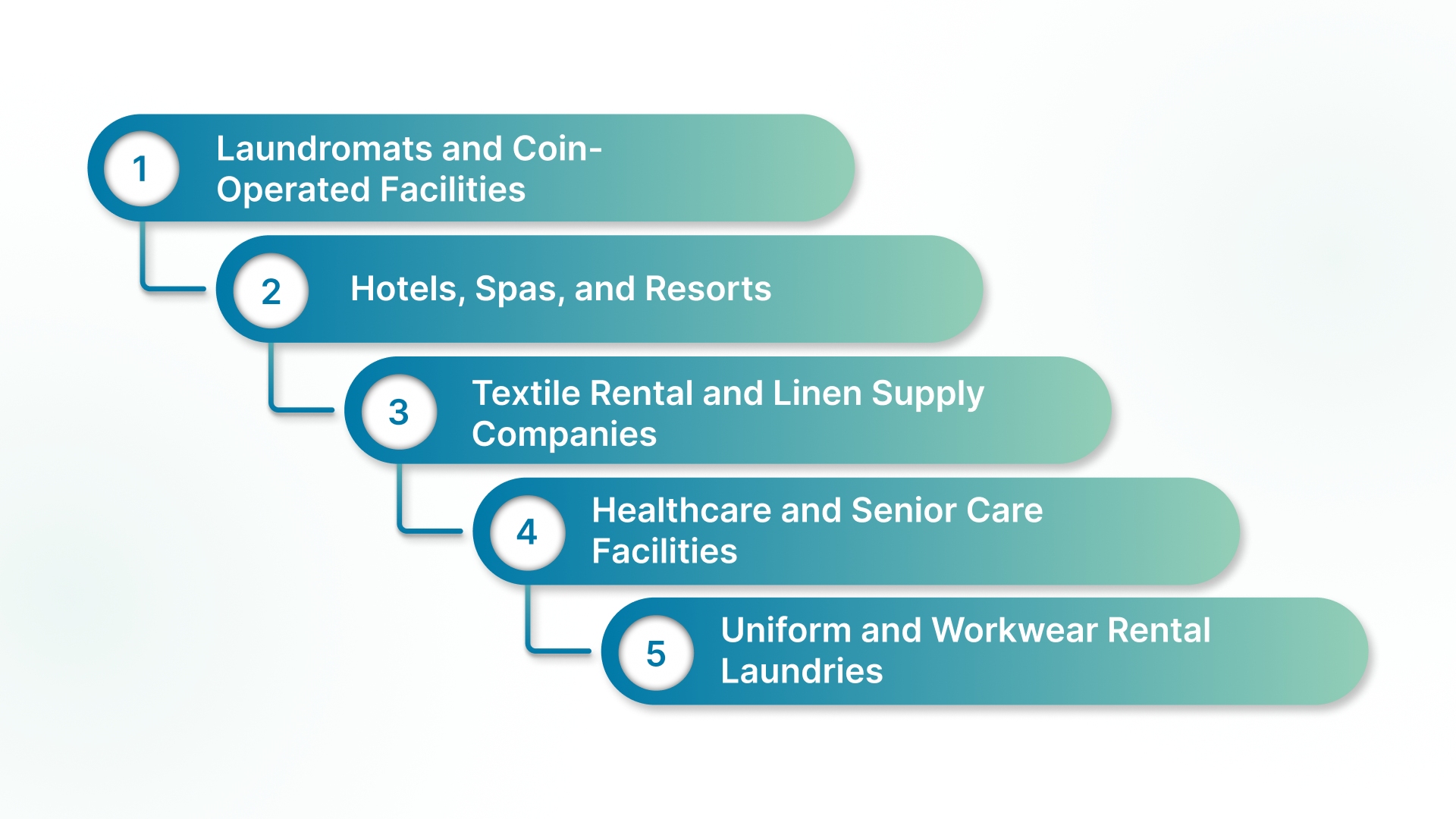
Remote monitoring systems are adaptable to various industries, offering unique advantages depending on the operational needs of each sector. Below are key benefits for industries that process large volumes of linens and garments.
Laundromats and Coin-Operated Facilities
Remote monitoring helps laundromat owners optimize operations by reducing machine downtime and improving customer satisfaction.
Faster Turnover: Mobile features and remote monitoring reduce downtime between loads, ensuring maximum utilization of machines.
Dynamic Pricing: Adjust rates based on demand to optimize profitability.
Usage Insights: Identify peak usage times and most-used machines to optimize staffing and machine placement.
Check out our brochures and see how Softrol’s remote monitoring can improve your laundry operations.
Hotels, Spas, and Resorts
For the hospitality industry, remote monitoring ensures high standards in linen quality and inventory management, improving guest satisfaction.
Consistent Cleaning Standards: Set cycles to ensure that every load meets the high standards expected by guests.
Audit-Ready Records: Maintain logs for hygiene checks and operational audits, ensuring compliance.
Resource Control: Monitor and adjust water, energy, and detergent usage for better resource management.
Textile Rental and Linen Supply Companies
For textile rental services, remote monitoring ensures maximum linen utilization and better inventory management, reducing operational costs.
Optimized Linen Rotation: Track linen usage and life cycle, ensuring proper replacement schedules and maximizing linen lifespan.
Operational Efficiency: Monitor and optimize wash cycle duration, chemical usage, and water consumption.
Inconsistent wash results often lead to costly rewashes and quality control issues, wasting resources and time. Softrol’s Process Control Solutions, such as Wash Aisle Systems and Catalyst Chemical Systems, offer precise control over chemical dosing and wash cycles, ensuring consistent results. By reducing chemical waste and improving wash efficiency, you can enhance quality while cutting operational costs.
Healthcare and Senior Care Facilities
In healthcare laundries, maintaining sanitization is crucial. Remote monitoring ensures compliance and enhances operational oversight.
Verified Sanitization: Ensure that each wash meets the required disinfection levels and provide documentation for compliance.
Inventory Oversight: Track linens from use through wash, reducing shortages and ensuring timely replacements.
Uniform and Workwear Rental Laundries
For uniform rental laundries, remote monitoring enhances inventory accuracy, wash quality, and service delivery.
Inventory Management: Real-time tracking helps maintain accurate stock levels, ensuring timely deliveries and reducing stockouts.
Consistent Quality: Ensure uniforms meet cleaning standards, reducing rework and ensuring high service quality.
Also Read: How We Provide Reliable Chemical Delivery to Our Customers
Let's now examine the essential components of a reliable remote laundry monitoring system.
5 Key Features of Remote Monitoring Systems in Commercial Laundry
Remote monitoring systems offer a wide array of features designed to improve laundry operations. Here are the most important features:
Real-time Data: Monitor performance, water, energy, and chemical consumption in real-time.
Automated Alerts: Receive notifications for potential issues, reducing downtime.
Cloud Integration: Access performance data remotely through cloud-based platforms.
Machine Diagnostics: Run diagnostics to proactively address machine issues before they escalate.
Maintenance Scheduling: Automatically schedule maintenance to prevent unexpected downtime.
Also Read: PACE: Your Strategy to Improve Plant Operations
Remote monitoring adapts to various sectors; here’s how to implement it effectively for your commercial laundry.
How to Implement Remote Monitoring for Your Commercial Laundry
Implementing a remote monitoring system in your laundry operations involves several key steps to ensure smooth integration and maximize the system’s benefits.
Assess Your Needs: Identify which machines or areas require remote monitoring.
Choose the Right Software: Select a system that integrates well with your existing laundry management software and hardware.
Install Sensors and Trackers: Ensure that each machine is equipped with RFID tags or sensor trackers for real-time data collection.
Integrate with Maintenance and Management Systems: Sync monitoring data with your existing management systems for streamlined operations.
Train Your Team: Ensure employees are trained to use the new system and understand its features and functions.
Also Read: Using Plant Automation to Mitigate Contact-Based Risks
Next, we’ll review best practices for managing data remotely in commercial laundry systems.
5 Best Practices for Monitoring Commercial Laundry Machine Data Remotely
For optimal results, adhere to these best practices for remote monitoring:
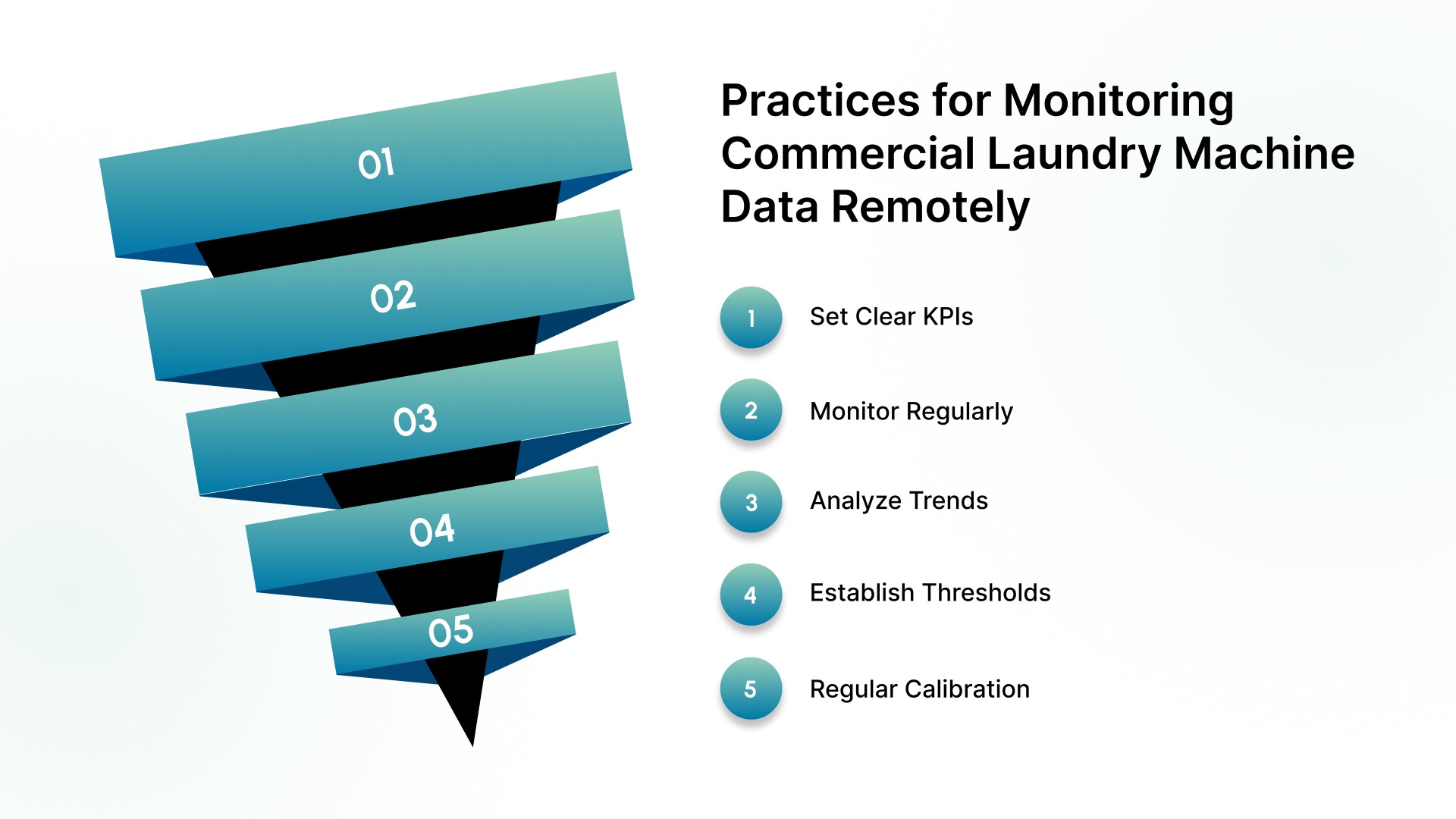
Set Clear KPIs: Define efficiency metrics such as pounds per labor hour (PLH), energy consumption, water usage, and machine uptime to track progress and reduce operational costs.
Monitor Regularly: Check the system daily to identify potential issues, such as vibration irregularities or chemical dosing discrepancies, before they escalate into costly repairs or downtime.
Analyze Trends: Use the data to identify patterns and optimize machine performance and resource usage. This can lead to better throughput and lead-time stability, ensuring high-quality service and optimal machine utilization.
Establish Thresholds: Set alerts for key metrics like water consumption, chemical efficiency, and temperature to maintain optimal operation and avoid waste.
Regular Calibration: Ensure sensors and equipment are calibrated regularly to maintain accuracy in data reporting and optimize wash quality with minimal chemical use.
Also Read: PAB: Efficiency for Steam Tunnel Users
Now, let’s address common troubleshooting steps for remote laundry management.
Troubleshooting Common Issues in Remote Commercial Laundry Management
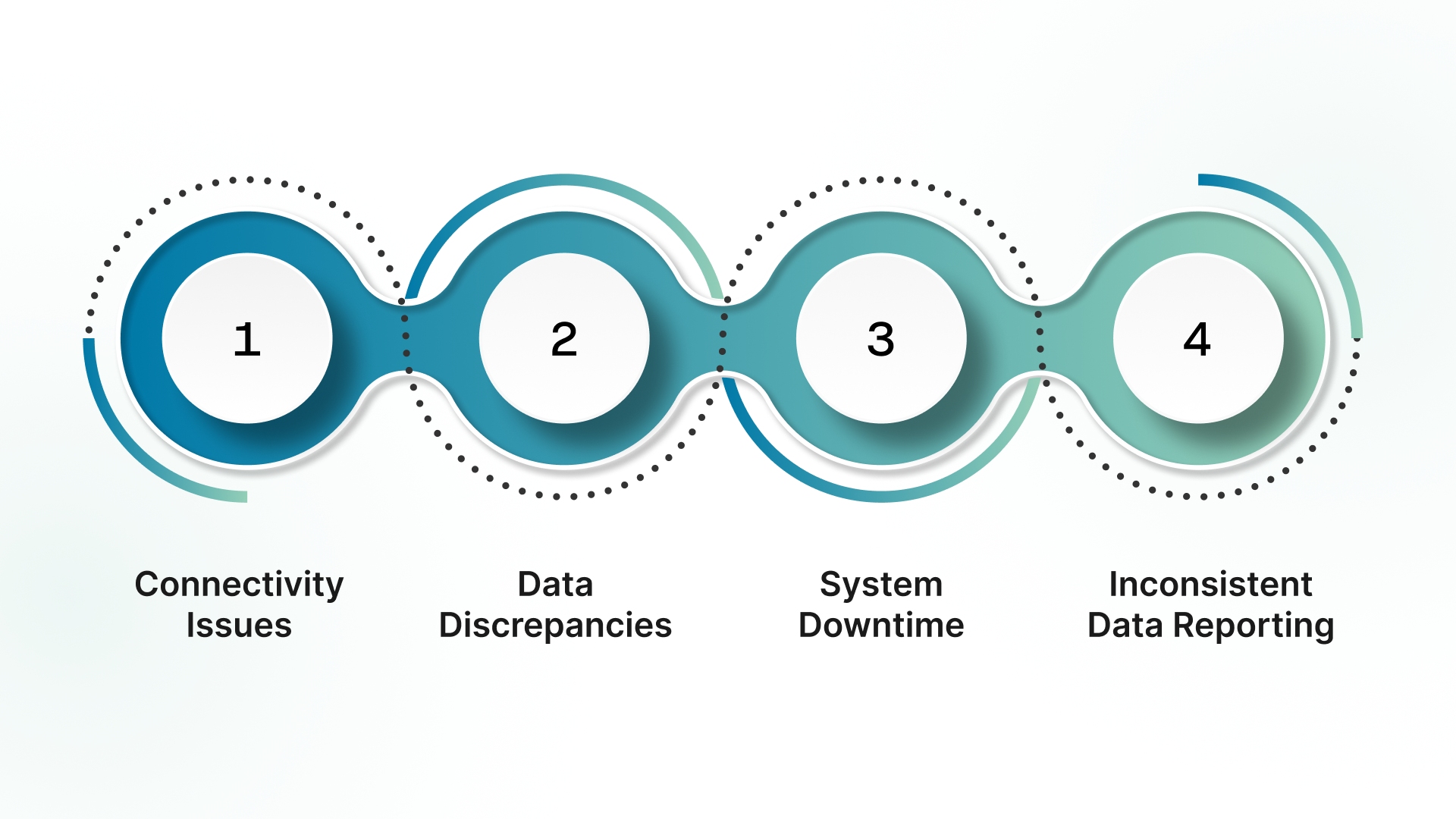
While remote monitoring offers many benefits, issues can arise. Here’s how to troubleshoot:
Connectivity Issues
If there’s a connection issue, ensure the machines are properly connected to the network and cloud platform, ensuring uninterrupted data flow and real-time performance tracking.
Solution: Restart network components, check router settings, and ensure devices are within the connectivity range.
Data Discrepancies
If data discrepancies occur, check that the sensors are calibrated properly and that all machines are tagged correctly to ensure accurate inventory tracking and resource management.
Solution: Recalibrate sensors and perform regular system audits to ensure data accuracy.
For seamless remote monitoring, ensure you have the right replacement parts. Softrol provides quick OEM replacements to keep up your laundry systems’ performance.
System Downtime
In case of system downtime, perform regular software updates to ensure system compatibility and prevent interruptions that could affect production throughput and service delivery timelines.
Solution: Schedule automatic software updates and ensure backup systems are in place to maintain business continuity.
Inconsistent Data Reporting
If the system produces inconsistent reports, verify that all integration points are active and working as expected.
Solution: Cross-check system configurations and integrate error-handling mechanisms to ensure data flows consistently to the central database.
Also Read: LOIS: Taking Your Plant Productivity to the Next Level
Now, let’s see how Softrol’s commercial laundry solutions can improve your plant operations.
How Softrol’s Commercial Laundry Solutions Can Upgrade Your Plant Operations
Softrol is a leader in industrial automation for commercial laundries, providing solutions that integrate hardware, software, and real-time data systems to optimize plant performance. By using Softrol’s advanced technology, laundry facilities can gain better visibility, improve operational efficiency, and reduce maintenance costs. Here’s how Softrol’s core solutions can transform your laundry operations:
1. Material Handling
Softrol’s Material Handling solutions reduce manual labor and enhance material flow across the plant, optimizing productivity:
Soil Sort Systems: Automates sorting by customer and product classification, improving sorting accuracy and machine utilization while reducing mis-sorted loads.
Laundry Rail Systems: Automates the transport of soil and clean goods, reducing manual cart movements and improving material flow for better space utilization and labor savings.
Garment Sort Systems: Automates garment sorting for large-scale operations, increasing sorting speed and reducing staffing needs while improving sorting accuracy.
Virtual Rail: Provides real-time visualization of the monorail system, allowing supervisors to monitor work-in-process, identify bottlenecks, and optimize system flow.
2. Process Control
Softrol’s Process Control solutions ensure consistent wash quality, reduce rewash rates, and lower chemical and utility costs:
Wash Aisle Systems: Advanced controls for tunnel washers, extractors, and dryers to maintain consistent wash formulas, reduce quality issues, and optimize equipment sequencing.
Catalyst Chemical Systems: Precise chemical dosing with flow-meter verification, ensuring accurate chemical usage while reducing chemical waste and enhancing wash quality.
3. Total Plant Integrated Data
Softrol’s Total Plant Integrated Data solutions provide actionable insights to optimize labor efficiency, equipment performance, and overall operational control:
PulseNet Productivity Systems (PPS): Tracks operator productivity and machine performance, helping plant managers optimize labor utilization and improve overall machine uptime.
Plant Management Systems: Aggregates plant data across all departments, providing a consolidated view of performance, allowing managers to make data-driven decisions.
Shipping & Tracking Technologies: Streamlines the tracking of finished goods and generates manifests to reduce shipping errors and improve inventory management for better operational flow.
LOIS (Laundry Operation Information System): A web and mobile-accessible platform that consolidates data across material handling, process control, and productivity for enhanced decision-making and operational control.
See how Aramark Uniform Services reduced labor costs by 70% with Softrol’s SoftSort System; read the full success story for more details.
Conclusion
The benefits of remote monitoring in commercial laundry machines allow Plant Managers, VPs of Operations, and Engineering Managers to make data-driven, real-time decisions that boost output and raise service standards. Be it healthcare, hospitality, or textile rental, remote monitoring helps position your laundry business for long-term success.
Softrol offers Material Handling, Process Control, and Total Plant Integrated Data solutions with which your laundry operations can achieve optimal equipment uptime, lower operational costs, and better quality control, helping your laundry business meet its performance and service level goals.
Contact us today to learn more about how we can help you reduce costs, increase productivity, and improve your laundry’s overall performance.
FAQs
How can remote monitoring improve productivity in high-volume laundry operations?
Remote monitoring optimizes equipment performance, minimizes downtime, and provides real-time insights into throughput, helping increase pounds per labor hour (PLH).
What are the cost-saving benefits of implementing remote monitoring systems?
By automating diagnostics, optimizing chemical usage, and reducing downtime, remote monitoring helps reduce labor costs, energy consumption, and operational waste in high-volume facilities.
Can remote monitoring help with real-time inventory management in laundry facilities?
Yes, remote monitoring systems provide real-time updates on inventory levels, helping track linen and uniforms and prevent shortages, reducing operational inefficiencies.
What are the main challenges of implementing remote monitoring in commercial laundry?
The main challenges include network connectivity issues, integration with legacy equipment, and ensuring accurate data synchronization, but these are overcome with proper setup and training.
How does remote monitoring enhance quality control in commercial laundry machines?
Remote monitoring ensures accurate chemical dosing, controls wash cycles, and reduces human error, helping maintain consistent quality, reduce rewashes, and improve overall service delivery.