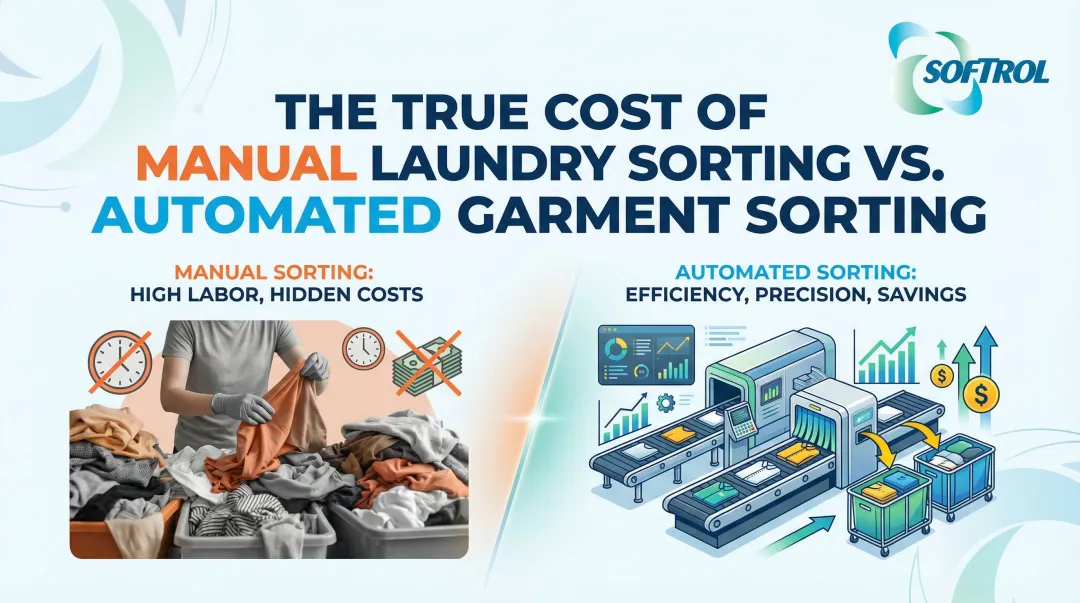

Ever felt your sort area slowing the entire plant, even when the rest of production runs well? Many commercial and industrial laundries face the same strain as volume grows, labor tightens, and mis-sorts eat into time and output.
Sorting often becomes the pressure point for plant managers, owners, and engineering teams. The work is repetitive, hard to staff, and quick to fall behind during peak loads. When mix-ups rise or orders run late, the impact hits uniform rental, textile rental, and institutional facilities fast.
In this blog, we’ll explore how automated garment sortation works, why the system matters for high-volume plants, how each sorting mode fits different operations, what other facilities report after upgrading, the strengths many teams miss during evaluation, and what to consider before moving forward.
Key Takeaways:
Automated sortation helps commercial and industrial laundries handle higher volumes with fewer delays across daily production.
Plants gain clearer routing and fewer mix-ups when sorting follows a structured process supported by guided or automated movement.
Directed, Hybrid, and AutoSort modes give teams flexible paths that match current labor limits and growth plans.
Case studies show strong gains in throughput, labor reduction, and space use across textile rental and uniform rental operations.
Early planning around equipment fit, training, data needs, and maintenance helps teams build a smoother path toward automation.
What the Softrol Garment Sortation System Does
Garment sorting plays a direct role in how commercial and industrial laundries handle labor, space, and order accuracy across daily production cycles. The Softrol Garment Sortation system supports uniform rental, textile rental, and institutional or government facilities that need consistent garment handling without adding more staff pressure.
Here are the core functions that matter most for high-volume operations:
Automated or Guided Movement: The system moves garments along defined routes, supporting accurate grouping for uniform rental, textile rental, and institutional processing.
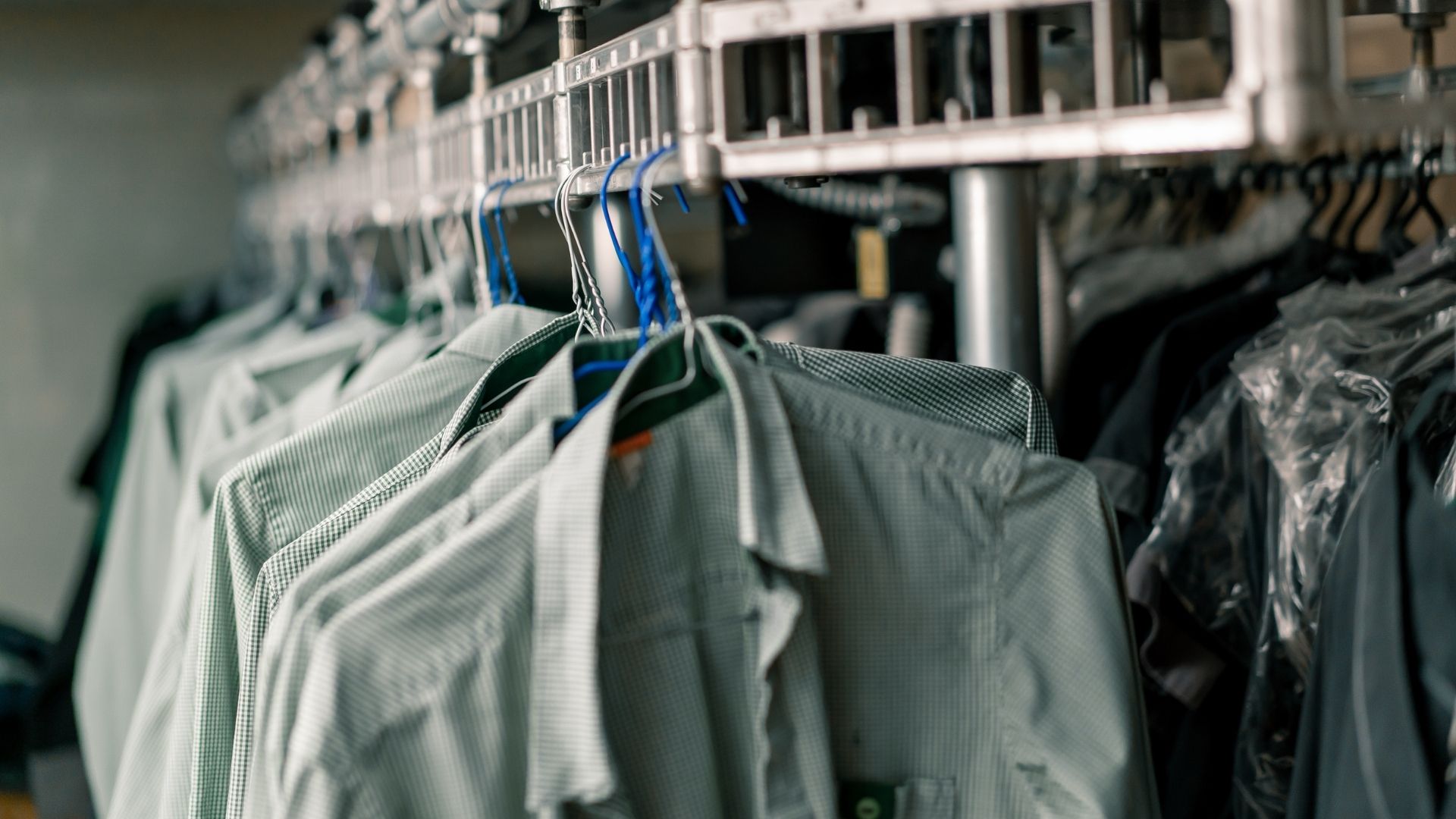
Overhead Storage Use: Garments remain on overhead rails, helping plants open floor space while supporting steady movement across busy production areas.
Scan-on-the-Fly Reading: Items are identified through quick scanning, enabling accurate routing without slowing operators or interrupting production flow.
Data and Tracking Tools: The system captures garment information that helps operations, engineering, and IT teams monitor movement patterns and sort accuracy.
Scalable Sortation Modes: Plants can choose directed, hybrid, or fully automated sorting paths that match current throughput while leaving room for future growth.
Once you understand the core functions, it becomes easier to see how the system influences labor planning, routing accuracy, and daily production timing.
Also Read: Keeping It In The Wash: Garment Sort Systems
Business Impact for Plants and Buyers
Sorting performance directly affects how commercial and industrial laundries handle volume swings, labor pressure, and daily delivery commitments. Many production issues start at the sort area, which makes consistent routing and garment accuracy a priority for plant managers, operations leaders, and IT or engineering teams.
Here are the operational outcomes that matter most across production teams:
Throughput Stability: Plants gain steadier production flow because garments move through sortation with fewer delays that normally create backups across downstream areas.
Labor Reallocation: Teams can shift staff toward tasks with higher value since the sorting process requires fewer hands during high-volume periods.
Accuracy and Order Reliability: Better routing supports correct garment placement, which reduces mix-ups and lowers the risk of sending incomplete sets to customers.
Visibility for Operations and IT: Data captured during sortation helps managers and technical teams review movement patterns, address routing errors, and adjust staffing plans.
Scalability for Multi-Site Operators: Standard sorting methods help large networks maintain similar workflows across locations, which supports consistent production habits during daily operations.
Before selecting a system, you should review how each sorting path fits daily volume, staffing levels, and your long-term growth direction.
Also Read: Auto-Sortation Myths with Softrol Systems
Fit Guide: Directed, Hybrid, and AutoSort
Plants select a sorting mode based on labor limits, daily workload, and the level of control needed across commercial and industrial laundries. Each option supports a different stage of growth, giving textile rental, uniform rental, and institutional facilities a clear path that matches current demand.
Here are the core differences across the three sorting paths:
Factor | Directed Sort | Hybrid Sort | AutoSort |
Description | Manual path with guided scanning for accurate routing. | Guided primary sort paired with automated final steps. | Fully automated routing, grouping, and bundle movement. |
Best Fit For | Plants keeping a manual workflow with better accuracy. | Facilities with growing volume needing partial automation. | High-volume plants requiring consistent sorting with limited staff. |
Labor Use | Needs more hands during peak periods. | Reduces strain during final grouping. | Keeps labor needs low across daily cycles. |
Growth Path | Suits slow, steady volume increases. | Fits plants preparing for higher demand. | Supports long-term scale for multi-site operators. |
Once you compare the modes, you can better see how similar facilities apply each option and the results they experience during daily work.
Also Read: Plant Productivity with Hybrid Sort System
Real-World Use Cases and Success Story Themes

Sorting needs differ across commercial and industrial laundries, which means plants often face unique pressure points tied to labor limits, routing accuracy, and customer expectations. Uniform rental, textile rental, hospitality, healthcare, and government facilities often rely on sorting as a stabilizing step that carries major influence over daily performance.
Here are the use cases most frequently seen across busy facilities:
Uniform Rental Operations
These plants benefit when grouping accuracy stays consistent, especially when handling thousands of garments per day across multiple customer accounts. Aramark’s Sacramento facility demonstrated this need clearly by sorting over 3,800 garments per hour, which helped reduce sorting labor from 10 employees to 2.
Hospitality and Resort Laundries
Staff apparel moves in large batches with strict turnaround timing, which requires a steady sorting flow during peak occupancy cycles. Plants often report less pressure on afternoon processing once routing delays are reduced.
Healthcare Laundries
Medical sites need accurate grouping because misplaced garments can slow deliveries across units with consistent daily demand. Crown Health Care Laundry Services addressed this need by building a new Atlanta plant using a high-volume sorting setup handling 13,500 pounds per hour with multiple sort lines supporting stable throughput.
Government and Public Service Facilities
These operations depend on clear garment separation for departments with varied needs. Sorting support helps avoid mix-ups that normally occur when handling mixed garment types across shared collection points.
Growing Independent Laundries
Expanding plants often need a scalable option that works inside limited floor space without major construction steps. Vogue Linen in Nevada used a semi-automated system processing up to 1,200 garments per hour with one or two operators, fitting the setup neatly inside a 6,000-square-foot area during a period of rising rental volume.
Multi-Site Industrial Operators
Networks with several locations gain stability when sorting follows the same process across facilities. Shared standards help managers and engineering teams maintain predictable performance across varied plant sizes.
Once you understand how facilities apply the system, it helps to highlight features that teams sometimes overlook during early discussions.
If you want more context across varied plant sizes, you can review the complete list of success stories detailing past sorting and material handling projects.
What Softrol Brings That Many Plants Miss
Many commercial and industrial laundries focus on basic sorting needs and overlook features that influence long-term output, labor planning, and system stability across daily operations. These details often matter most to owners, plant managers, engineering teams, and IT leaders who need predictable performance during growth or staffing pressure.
Here are the strengths that many plants only notice after deployment:
Modular System Design
Plants can expand sorting capacity without major construction steps, which helps owners and operations leaders adjust to growth across uniform and textile rental markets. This approach supports commercial and industrial laundries needing upgrades that match rising volume without forcing large shifts in daily routines.
Long-Term Reliability
Rail components and control hardware support long service life, which helps plant managers and engineering teams maintain steady production across extended shifts. This reliability matters for institutional or government facilities that depend on consistent schedules and cannot absorb repeated routing delays.
Support and Training
Operators and maintenance staff receive guidance that shortens the learning curve, which helps teams stabilize performance during early production cycles. This support gives IT and CI roles clearer visibility into system behavior, which helps them manage tracking data and workflow consistency.
Fit With Other Plant Systems
Sorting connects well with rail movement, wash aisle controls, and tracking tools, which help operations leaders maintain clear garment movement across departments. This fit reduces friction for engineering and IT teams who prefer predictable communication between systems across commercial and industrial laundries.
Before moving forward, you may want to review several points that help ensure the project aligns with your capacity needs and staff expectations.
Key Considerations Before You Automate Sorting
Automation brings meaningful gains, but the setup process requires planning across labor, data, equipment, and long-term production goals. Commercial and industrial laundries, textile rental operators, uniform rental plants, and institutional or government facilities often benefit when early decisions involve operations leaders, engineering teams, and IT staff.
Here are the factors teams should review before moving forward:
Fit With Existing Equipment
Plants should confirm how rails, conveyors, and tracking tools will work with new sorting controls, which helps engineering teams avoid surprises during the project. This step also supports IT and CI roles that need clear data pathways before the first garment enters the system.
Capital and Growth Planning
Owners and operations leaders should match the sorting mode to expected volume, which prevents overspending on capacity that the plant may not need immediately. This planning helps commercial and industrial laundries prepare for growth across textile rental and uniform rental markets.
Deployment and Training Needs
Teams should create a structured training plan for operators and maintenance staff, which reduces early confusion during the first weeks of production. Plant managers benefit when training timelines align with scheduled downtime or seasonal volume changes.
Ongoing Maintenance Planning
Engineering teams should confirm service requirements and spare-part availability, which helps avoid extended downtime during busy periods. Institutional or government facilities with strict delivery schedules benefit from clear maintenance routines that keep production stable.
If your team is considering an upgrade, you can contact Softrol to discuss goals, expected throughput, and the sorting path that fits your operation.
Conclusion
Sorting performance influences daily production more than many teams expect, especially as volume increases across commercial and industrial laundries. Plants that depend on accurate routing usually see clearer production flow once sorting becomes more structured and predictable.
Owners, plant managers, operations leaders, engineering teams, and IT groups often gain better control when sorting aligns with growth plans across textile rental, uniform rental, and institutional or government facilities. Careful planning helps teams select a path that supports current needs without unnecessary complexity.
If your plant wants to review options or explore a sortation plan that fits your volume and space, you can contact Softrol for guidance. Our team can help assess goals, review workflow details, and outline a setup that matches your operational direction.
FAQs
How much space should a plant reserve before planning a sorting upgrade?
Space planning usually starts with ceiling height, support structure, and clear paths for rail movement. Plants also review access for maintenance and future expansion. A brief site review helps determine whether overhead systems, floor-supported frames, or mixed layouts fit best.
Can a sorting system support both RFID and barcodes during the same shift?
Many plants run both methods during transitions or mixed garment cycles. Sorting controls read each tag type independently, allowing production teams to move older items through barcodes while newer garments use RFID. This helps plants shift identification methods without disruption.
What does maintenance usually involve for a sorting system?
Teams review sensors, rail movement, and wear points during routine checks. They look for alignment issues, buildup on moving parts, and signs of mechanical stress. Planned intervals help prevent delays during busy production hours and support consistent routing across shifts.
Can a sorting system connect with existing software used by operations or IT teams?
Sorting controls often share data through standard communication methods, allowing garment movement details to flow into production or tracking software. IT teams can monitor activity, check for reroutes, and support supervisors who rely on accurate movement records during daily planning.
How long does installation usually take for a new sorting system?
Installation time depends on plant size, structural work, electrical planning, and the availability of clear space. Many plants schedule installation during lower-volume periods to reduce impact on production. Strong coordination between operations, maintenance, and project teams helps prevent extended downtime.