Introduction: The Critical Role of Compliance in Healthcare Laundry Operations
Healthcare textiles present a unique infection control challenge. Heavily contaminated linens can harbor bacterial loads of 10⁶–10⁸ CFU/100 cm², including dangerous pathogens like Staphylococcus aureus and Pseudomonas. While the CDC notes that properly processed laundry carries negligible disease transmission risk, the emphasis is on "properly processed"—a standard that requires rigorous protocols beyond typical commercial operations.
Healthcare laundries face regulatory pressures from multiple directions: OSHA bloodborne pathogen standards, CDC infection prevention guidelines, and increasingly, healthcare facility partners who demand third-party verification of safety practices. The Healthcare Laundry Accreditation Council (HLAC) addresses this directly, providing the industry's leading accreditation framework for building compliance into every layer of patient safety operations.
TLDR: Key Takeaways on HLAC Accreditation
- HLAC accreditation validates over 600 standards covering personnel training, textile processing, facility design, and quality control
- Accreditation is voluntary but increasingly required in healthcare facility RFPs and partnership agreements
- The process involves rigorous on-site inspection with 3-year validity requiring ongoing compliance monitoring
- Automated tracking and data management tools simplify documentation and support ongoing quality assurance
- Investment delivers ROI through reduced liability, competitive contract advantages, and operational efficiency improvements
What is the Healthcare Laundry Accreditation Council (HLAC)?
The Healthcare Laundry Accreditation Council is a nonprofit 501(c)(3) organization founded in 2005 to create third-party accreditation specifically for healthcare laundries. Unlike general commercial laundry operations, healthcare facilities require specialized textile processing that addresses infection prevention and patient safety concerns.
HLAC's mission centers on protecting patient and staff health through standardized textile processing protocols that cover the complete cycle, from soiled textile collection through clean delivery. The organization inspects and accredits laundries processing reusable textiles for hospitals, nursing homes, and other healthcare facilities based on professionally recognized standards.
While accreditation remains voluntary, it has become a de facto requirement in many healthcare contracts. Major health systems now explicitly include HLAC accreditation in their RFPs. UNM Hospitals, for example, requires that contractors "must be HLAC and TRSA accredited."
In practice, HLAC-accredited facilities must demonstrate compliance across:
- Soiled textile handling and containment protocols
- Wash process validation and temperature controls
- Clean linen packaging, transport, and storage standards
- Staff training and infection prevention documentation
For commercial laundries pursuing healthcare contracts, accreditation is no longer optional in competitive bids—it's the baseline expectation.
Core HLAC Standards Your Operation Must Understand
Personnel Training and Safety Protocols
HLAC mandates comprehensive employee training programs aligned with federal OSHA requirements. All personnel must receive documented training on bloodborne pathogen exposure control, including proper use of Personal Protective Equipment (PPE), hepatitis B vaccination availability, and post-exposure procedures.
Training documentation requirements are strict:
- Records must be kept for 3 years from training date
- Documentation must include dates, topics covered, trainer qualifications, and competency validation
- Facilities must demonstrate 100% completion of required training by all relevant staff
- Training must cover infection control, standard precautions, hand hygiene, and cross-contamination prevention
Softrol's LOIS (Laundry Operation Information System) helps facilities maintain these training records through real-time monitoring and automated documentation, sending alerts when training renewals are due.
Textile Handling and Transportation Standards
HLAC requires functional separation of clean and soiled textiles in carts and vehicles at all times. This prevents cross-contamination during the most vulnerable points in the textile lifecycle.
Key handling protocols include:
- Minimal agitation of soiled textiles to prevent airborne contamination
- Fluid-resistant containers/bags for all soiled textile transport
- Secure closure of bags to prevent leakage during transport
- Cart cleaning and disinfection after emptying soiled textiles before reuse for clean items
- Clean textiles wrapped in fluid-resistant bundles or placed in covered carts during transport
Automated material handling systems like Softrol's rail systems support these protocols by maintaining physical separation throughout processing, with distributed control sections specifically designed for sort/soil/dryer/clean zone separation.
These physical handling controls set the foundation — but what happens inside the wash aisle determines whether textiles actually meet HLAC's microbiological threshold.
Processing Standards: Wash, Dry, and Finish
HLAC defines "hygienically clean" as textiles free of pathogens at levels that could cause human illness. Visual cleanliness alone isn't enough; the standard requires verified microbiological results:
Microbiological Requirements:
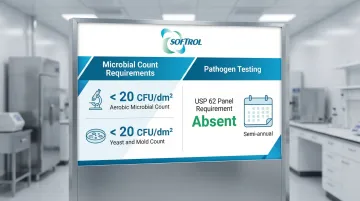
- Aerobic Microbial Count: < 20 CFU per square decimeter
- Yeast and Mold Count: < 20 CFU per square decimeter
- Pathogen Testing: Absence of specific pathogens (USP 62 panel) verified semi-annually
Process Controls: The CDC recommends hot water at 160°F (71°C) for minimum 25 minutes, or lower temperatures (70–80°C for 10 minutes) combined with appropriate chemical disinfection. The combination of dilution, temperature, and chemistry achieves the required >8 log10 microbial reduction.
Softrol's Catalyst Chemical Systems support this through flow meter-based injection technology that delivers volumetric accuracy, water flush verification, and alarms for chemical delivery failures. Every processing step generates documented proof of proper chemical application.
Environmental and Facility Design Requirements
Physical plant design is critical to maintaining hygienic integrity. HLAC mandates physical or functional barriers between soiled and clean areas, with specific airflow requirements:
Airflow Standards:
- Soiled areas: Negative air pressure relative to clean areas, venting directly outside
- Clean areas: Positive air pressure to prevent contaminant intrusion
- Soiled sorting: Minimum 10 Air Changes per Hour (ACH)
- Clean storage: Minimum 2 ACH
Environmental Conditions:
- Clean storage temperature: 72–78°F
- Humidity control (typically <70%) to inhibit microbial growth
- Daily monitoring and documentation of air pressure differentials
Quality Control and Documentation
HLAC requires ongoing monitoring, testing, and record-keeping to demonstrate consistent compliance:
| Requirement | Frequency | Acceptance Criteria | Retention Period |
|---|---|---|---|
| Microbiological Testing | Quarterly | < 20 CFU/dm² | 5 Years |
| Pathogen Panel (USP 62) | Semi-Annually | Absent | 5 Years |
| Training Records | Upon Hire/Annual | 100% Completion | 3 Years |
| Pressure Differentials | Daily | Negative (Soiled)/Positive (Clean) | Audit Cycle |
Initial certification requires 6 passing test results over 3 consecutive months (2 samples/month) prior to application. Managing that volume of records manually creates real risk. Softrol's LOIS platform processes operational data continuously, giving managers instant access to compliance documentation from any device — so nothing gets missed between audits.
The HLAC Accreditation Process: What to Expect
HLAC uses an inspection-based accreditation model where trained inspectors evaluate facilities against predetermined standards. The basic inspection fee is $5,900 (USA/Canada), with accreditation valid for three years upon successful completion.
Timeline and Process
- Submit your application with required documentation and fees
- Schedule the inspection — typically within weeks of approval
- Complete an on-site evaluation covering all operational areas, documentation review, and staff interviews
- Receive an accreditation decision based on meeting 100% of "Must" statements and 90% of "Shall" statements
Weighted Evaluation Factors
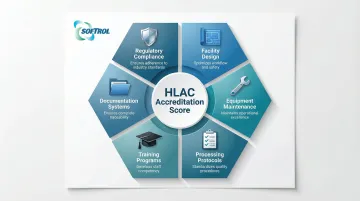
Inspectors score each facility across six areas, and performance in all of them contributes to the final accreditation decision:
- Regulatory compliance with OSHA and CDC guidelines
- Facility design including physical separation and airflow systems
- Equipment maintenance and calibration
- Processing protocols and quality control procedures
- Training programs and safety protocols
- Documentation systems and record retention
Preparing for Inspection
Start gathering documentation well before your scheduled date. Inspectors consistently focus on these areas:
- Complete training documentation for all personnel
- Six months of microbiological testing results showing consistent compliance
- Daily pressure differential monitoring logs
- Chemical dispensing system calibration records
- Textile handling protocol documentation
- Facility layout diagrams showing clean/soiled separation
HLAC reserves the right to perform unannounced re-inspections. Failures in functional separation or airflow trigger automatic re-inspection at a $2,500 fee — treat these two areas as non-negotiable priorities.
Benefits of HLAC Accreditation for Healthcare Laundry Operations
Enhanced Patient and Staff Safety
Accreditation validates that your facility meets proven infection prevention protocols, reducing the risk of healthcare-associated infections (HAIs) transmitted through contaminated textiles. The same standards protect laundry workers who handle potentially infectious materials daily — a population often overlooked in HAI prevention discussions.
Competitive Contract Advantages
Healthcare facilities now require or prefer HLAC-accredited partners. Major health systems like UNM Hospitals explicitly mandate HLAC accreditation in their RFPs, making accreditation a prerequisite for bidding on high-value contracts.
Operational Benefits
Accreditation provides:
- Reduces process variability through standardized workflows across every shift
- Limits liability exposure with documented compliance tied to industry standards
- Catches quality issues early through structured assurance frameworks
- Drives efficiency improvements through the process optimization accreditation demands
That last point has real numbers behind it. When healthcare laundry operations pair accreditation-driven process discipline with automation technology, results compound quickly: Mission Linen documented a 77% reduction in sort labor, and Faultless Linen recorded a 35% increase in Pounds Per Operator Hour within four months of implementation.
Implementing and Maintaining HLAC Standards in Your Operation
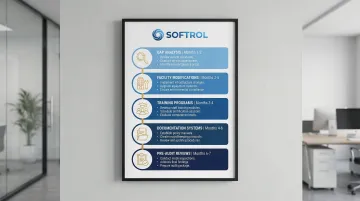
Step-by-Step Preparation Roadmap:
Gap Analysis (Months 1-2)
- Compare current operations against HLAC standards
- Identify facility design deficiencies requiring modification
- Assess training program completeness and documentation
- Evaluate quality control testing protocols
Facility Modifications (Months 2-6)
- Install physical barriers between soiled and clean areas
- Upgrade HVAC systems to meet airflow requirements
- Implement pressure monitoring systems
- Designate and mark clean/soiled zones clearly
Training Programs (Months 3-4)
- Develop comprehensive training curriculum covering all HLAC requirements
- Document training delivery with dates, topics, and competency validation
- Ensure 100% completion across all personnel
- Establish ongoing training schedule and renewal tracking
Documentation Systems (Months 4-6)
- Implement microbiological testing program with quarterly sampling
- Establish chemical dispensing monitoring and calibration protocols
- Create daily pressure differential monitoring logs
- Set up 3-5 year record retention system
Pre-Audit Reviews (Months 6-7)
- Conduct internal mock audits using HLAC standards checklist
- Address identified deficiencies
- Verify six consecutive months of passing microbiological tests
- Review all documentation for completeness
Even with a solid roadmap, most operations encounter predictable obstacles during implementation. Understanding these friction points ahead of time helps you allocate resources before they become audit risks.
Common Compliance Challenges:
Physical Separation: Retrofitting existing facilities for proper clean/soiled separation often requires significant capital investment. For operations constrained by floor space, rail systems like Softrol's rail twister enable compact layouts with 90-degree turns — achieving required separation without major structural overhauls.
Training Consistency: Maintaining 100% training completion across shift workers with varying schedules requires systematic tracking. Real-time monitoring systems with automated alerts ensure no employee falls through the cracks.
Documentation Accuracy: Manual record-keeping creates gaps and errors. Automated tracking systems like Softrol's AutoPulse create comprehensive "data records" that track every processing step, with information passed from machine controller to machine controller along with the goods—eliminating documentation gaps that could compromise compliance.
The right technology makes the difference between compliance as a burden and compliance as a byproduct of normal operations.
Technology Solutions for Compliance Maintenance:
Modern automation platforms simplify ongoing compliance:
- Real-time monitoring systems provide 24/7 oversight with alerts for process deviations or out-of-spec conditions
- Automated data collection eliminates manual entry errors and creates complete audit trails
- Centralized documentation platforms store all compliance records with instant accessibility for inspections
- Preventative maintenance tracking ensures equipment calibration and testing schedules are maintained
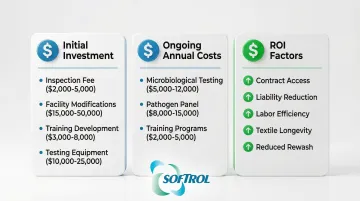
Cost Considerations:
Initial Investment:
- Inspection fee: $5,900
- Facility modifications: $10,000–$100,000+
- Training program development: $5,000–$15,000
- Testing equipment and initial testing: $3,000–$8,000
Ongoing Compliance Costs:
- Quarterly microbiological testing: $1,500–$3,000 annually
- Semi-annual pathogen panel testing: $1,000–$2,000 annually
- Annual training programs: $3,000–$8,000
- Re-inspection fee (every 3 years): $5,900
ROI Factors:
- Access to healthcare contracts requiring accreditation
- Reduced infection risk liability
- Operational efficiency improvements (documented 35–77% labor reductions in customer implementations)
- Extended textile life through standardized processing
- Reduced rewash rates
Compliance Team Structure:
Sustained compliance requires designated ownership across four functional areas — not just a single point of accountability:
- Compliance Manager — owns overall accreditation responsibility and serves as the primary inspector contact
- Training Coordinator — manages program delivery, documentation, and competency validation
- Quality Assurance Lead — coordinates testing, analyzes results, and drives corrective actions
- Documentation Specialist — handles record retention, audit preparation, and data management
- Facility Manager — oversees physical plant maintenance, airflow monitoring, and equipment calibration
Frequently Asked Questions
What are the proper requirements for handling laundry?
HLAC requires segregation of soiled linens with minimal agitation, proper bagging in fluid-resistant containers, secure closure during transport, and functional separation from clean textiles at all times. Clean linens must be wrapped in fluid-resistant bundles or placed in covered carts that remain securely closed during transport.
What are the CDC guidelines for laundry?
The CDC recommends washing with detergent in water at ≥160°F (≥71°C) for 25 minutes, or using lower temperatures (70-80°C) with appropriate chemical disinfection. Guidelines emphasize minimal agitation of soiled linens and use of fluid-resistant bags to prevent contamination during handling.
What are the OSHA guidelines for handling contaminated laundry?
OSHA's Bloodborne Pathogens Standard (29 CFR 1910.1030) mandates that employers provide PPE (gloves, gowns, masks), ensure contaminated laundry is bagged at point of use without sorting or rinsing in patient areas, and deliver annual training on bloodborne pathogen exposure control.
What are the 5 standards of infection control?
Core CDC infection prevention practices relevant to laundry operations include:
- Hand hygiene before and after handling textiles
- Proper PPE use (gloves, gowns, masks) when processing soiled items
- Environmental cleaning and disinfection of processing areas
- Respiratory hygiene and cough etiquette in shared workspaces
- Safe sharps handling — critical during sorting, where needles may be present in contaminated linens
Who is responsible for linen in a hospital?
Responsibility is shared across three departments: Environmental Services handles distribution and collection, Infection Prevention owns policy oversight, and Laundry Management drives processing standards and compliance. All three must coordinate for effective linen management.
What is the National Standards of healthcare cleanliness 2025?
The UK's National Standards of Healthcare Cleanliness 2025 focus on environmental cleaning standards for NHS facilities. While sharing patient safety goals with HLAC, these standards address broader healthcare environmental cleanliness, whereas HLAC specifically accredits the textile processing cycle itself.
Moving Forward with HLAC Compliance
HLAC accreditation demands real investment — in facility design, staff training, quality systems, and documentation. The payoff is equally concrete: expanded contract eligibility, reduced liability exposure, and the operational consistency that comes from standardized processes.
Automation technology plays a direct role in sustaining that consistency. Systems like Softrol's LOIS platform give laundry managers real-time visibility into wash cycle data, chemical dosing, and production throughput — turning compliance documentation from a manual burden into an automated output. SofTrak RFID tracking adds item-level accountability across the entire textile lifecycle, supporting the traceability records HLAC auditors expect to see.
For healthcare laundries, the question is no longer whether accreditation is worth pursuing — it's how to build the operational infrastructure to earn it and maintain it.