What are some ways to track patient care equipment?
Patient care equipment can be tracked using RFID technology, barcode systems, or GPS-enabled devices. RFID tracking provides real-time visibility and automated scanning, while barcode systems offer cost-effective manual tracking. Our LOIS system enables 24/7 monitoring of equipment location, usage, and maintenance status from any device, ensuring critical assets are always accounted for and properly maintained.
How to track hospital equipment?
Hospital equipment tracking requires a comprehensive system combining RFID tags, automated scanning points, and centralized management software. Our SofTrak system provides complete visibility into equipment location, usage history, maintenance schedules, and assignment to specific departments or patients. Real-time alerts notify staff of missing items, overdue returns, or maintenance requirements, reducing losses and improving asset utilization.
What is a scrubEx machine?
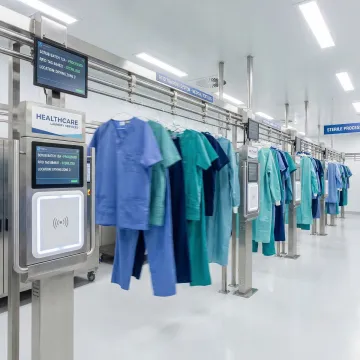
A scrubEx machine is an automated dispensing system that provides healthcare workers with clean scrubs and tracks uniform usage. Our equivalent solution, the PPS Cart system, goes beyond basic dispensing to provide real-time capture of return products, automated manifest creation, electronic delivery tracking, and comprehensive variance reporting. This ensures accurate inventory management and reduces garment loss while maintaining hygiene compliance standards.
RepScrubs typically use automated dispensing kiosks where healthcare workers scan credentials to receive clean scrubs and return soiled ones. Our advanced tracking systems integrate RFID technology to automatically record every transaction, track garment lifecycle, monitor usage patterns, and generate detailed reports. This automation eliminates manual counting errors, reduces administrative burden, and provides complete visibility into scrub inventory and distribution across your facility.
What are the benefits of using scrubEx?
Automated scrub management systems reduce garment loss by up to 70%, eliminate manual tracking errors, ensure consistent availability of clean uniforms, and provide detailed usage analytics. Our systems additionally offer real-time inventory monitoring from any device, automated ordering when stock runs low, integration with invoicing for cost tracking, and comprehensive reporting to optimize par levels and reduce carrying costs while maintaining infection control standards.
What is surgical instrument tracking?
Surgical instrument tracking uses RFID or barcode technology to monitor the location, sterilization status, and usage history of each surgical tool throughout its lifecycle. While our core expertise is in healthcare textiles, our tracking methodology applies similar principles—providing item-level visibility, automated scanning, real-time location updates, maintenance alerts, and complete audit trails to ensure compliance and prevent loss of valuable assets.
What is the typical implementation timeline for a healthcare garment tracking system?
Implementation timelines vary based on facility size and system complexity, typically ranging from 8 to 16 weeks. This includes initial assessment, system design, equipment installation, staff training, and go-live support. Our turnkey approach includes milestone reviews throughout the process, and our 24/7 support team ensures smooth operation from day one. We work closely with your team to minimize disruption to ongoing operations during the transition.
How does RFID tracking reduce costs compared to manual garment management?
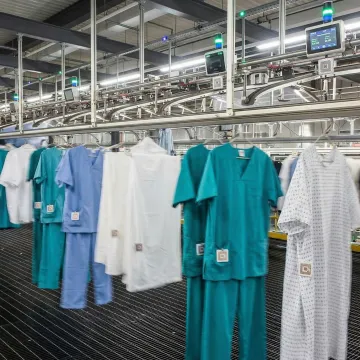
RFID tracking eliminates manual counting and sorting labor, reduces garment loss through real-time visibility, optimizes inventory levels to prevent over-purchasing, and automates invoicing and reporting. Customers typically see workforce reductions of 70% in sorting operations, 30-50% reduction in lost garments, and productivity increases of up to 35% within the first four months. The system pays for itself through labor savings, reduced inventory loss, and improved operational efficiency.